

This is a guest post by Sandie Markle.
Sandie Markle is the founder of Blueberri, where she helps food creators and food tech companies optimize recipe content for discoverability, monetization, and emerging platforms. With more than a decade of experience in content strategy, structured content, and food technology, she specializes in helping creators understand how content systems, metadata, and platform partnerships create new opportunities for growth.
Food bloggers were told to think about monetization in a very specific way. The advice was usually some version of the same formula. They had to increase pageviews, grow ad revenue, land more sponsored posts, and stack affiliate links wherever possible. That strategy worked for a while. In many ways, it still does.
But the food internet has changed. It almost feels archaic to call it the “internet”. Recipe content has become infrastructure for an entirely new generation of food tech. Meal-planning apps need recipes. Grocery platforms need recipes. Smart kitchen devices need recipes. AI cooking assistants need recipes. Personalized nutrition tools need recipes. Voice assistants also need recipes. Are you seeing a pattern?
Not just any recipes, either. They need organized, structured, reusable recipe content that can move across platforms and systems without breaking. Which means many food bloggers are already sitting on something incredibly valuable. Their recipe libraries.
The challenge is most creators still see those libraries as collections of blog posts rather than long-term content assets. When creators begin treating their content as reusable infrastructure instead of one-time publishing, entirely new partnership opportunities open up.
The internet changed faster than creator advice did
For most of the blogging era, recipes were designed primarily for two audiences, humans then search engines. Today, recipe content has to work across apps, recommendation engines, grocery integrations, AI systems, smart displays, voice assistants, multi-platform publishing workflows, and personalized meal-planning experiences. Recipes are no longer being designed for a single destination, which changes how creators need to think about structure and portability. That means recipes can no longer live as isolated blog posts. Or at least, they shouldn’t.
This is one of the core ideas behind Create Once, Share Everywhere™ (COSE™), the framework I use to help creators and food tech companies think about scalable content systems. The more places content needs to go, the more structure matters.
A recipe that’s organized properly can move between systems more easily. An inconsistent recipe, missing metadata, or difficult-to-parse content becomes harder for platforms to use. Yup, this is the part where content operations suddenly become surprisingly important to people who just wanted to share mac and cheese recipes online.
Welcome to modern publishing.
Does this idea feel new?What food tech companies are actually looking for
Food tech companies need trustworthy recipes that are consistent, organized, and easy to work with across multiple systems. They care about clean metadata, structured ingredients, searchable archives, and reusable instructions because all of those elements help recipes move more smoothly between platforms. Even more important, they need creators who understand how people actually cook, shop, meal plan, and make decisions in the real world.
In other words, they need content systems. That’s where experienced food bloggers have an enormous advantage. Many bloggers have unknowingly spent years creating exactly the kind of operational structure food tech platforms now depend on.
Many startups can’t build that overnight. Creators already have it.
Recipe libraries are becoming operational assets
One of the biggest shifts happening in food media right now is that recipes aren’t viewed as single-destination content anymore.
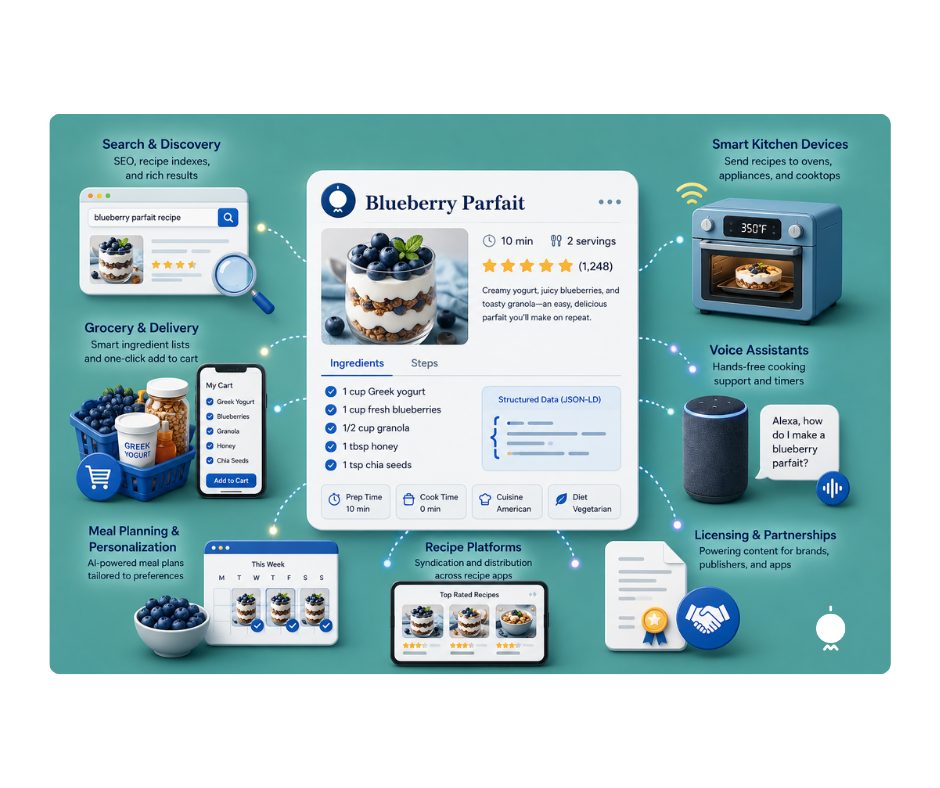
A single recipe might now power a blog post, a grocery shopping experience, an AI recommendation engine, a smart kitchen interface, a recipe app, a voice assistant, a newsletter, a meal-planning workflow, and even a wearable nutrition tool all at the same time. That portability fundamentally changes how creators should think about the long-term value of their content.
The same content moves across multiple experiences. That portability increases value.
What counts as a tech partnership?
One of the biggest misconceptions creators have is assuming partnerships only mean sponsored posts or affiliate campaigns. Food tech partnerships are often much broader.
Recipe licensing
Recipe licensing is one of the most common tech partnership opportunities.
A platform pays to use your recipes within its product or ecosystem. That could mean your recipes appear inside a meal-planning app, support grocery integrations, power wellness experiences, or become part of a cooking assistant, subscription platform, or AI-powered food experience.
Creators can find these opportunities through recipe apps, meal-planning platforms, grocery technology companies, wellness and nutrition startups, cooking assistants, and food-focused AI companies. In some cases, companies actively recruit creators. In others, creators initiate the conversation.
Why haven’t you heard about these opportunities? They aren’t typically advertised. Many are relationship-driven, negotiated privately, or covered by NDAs. They’re also the kinds of conversations that happen within trusted creator communities, masterminds, and industry groups where confidentiality is expected. That’s one reason those groups can be so valuable.
That doesn’t mean every creator should expect a licensing deal tomorrow. It does mean creators shouldn’t assume sponsorships, affiliate programs, and display advertising are the only ways to monetize their work. Sometimes the value of a recipe extends beyond the audience it attracts and into the products, platforms, and experiences it can help power.
Sometimes the agreement is non-exclusive, which means you retain ownership and can continue using the recipes elsewhere. Sometimes the agreement is exclusive for a specific period of time. The important distinction is that creators are no longer monetizing recipes only through traffic. The content itself becomes a licensable asset.
Product testing and UX feedback
Creators also have something many product teams lack. A real kitchen experience.
Food bloggers understand recipe usability, instruction clarity, cooking workflows, shopping behavior, and kitchen frustrations in ways many product teams simply do not. That operational knowledge becomes incredibly valuable when companies are building products designed for real kitchens and real people. That operational knowledge is valuable.
Many startups need creators to help test products, evaluate recipe systems, and improve user experiences. If you have ever yelled at a recipe app because it reset your screen while your hands were covered in flour, congratulations. You already have strong UX opinions!
Content consulting
Some platforms also need guidance on how recipe workflows should function, how creator onboarding should work, how metadata should be organized, and how recipe content should be structured inside their systems.
This is especially true for early-stage startups trying to understand how food content actually works in the real world.
Syndication partnerships
Syndication allows your recipes to appear on another platform while you retain ownership.
This can help creators diversify visibility, expand reach, strengthen authority, and create additional revenue (and traffic!) streams without relying entirely on traditional search platforms.
AI and personalization partnerships
This is the area many creators are still trying to understand. It sounds cringe, but stay with me.
Some companies want recipe content to support personalization systems, recommendation engines, AI meal planning, conversational cooking interfaces, search experiences, and smart kitchen interactions. As these systems become more sophisticated, structured recipe content becomes increasingly valuable because it is easier for machines to interpret and reuse accurately.
That doesn’t automatically make something good or bad. But it does mean creators should understand licensing terms, training rights, attribution, exclusivity, and long-term content usage.
Why structured content matters so much
Let’s talk about the technical thing that sounds intimidating but actually affects almost everything. Structured content simply means organizing information into clearly defined parts.
For recipes, that means organizing titles, descriptions, ingredients, instructions, timing, yields, categories, tags, metadata, alt text, and schema in a way that platforms can interpret consistently. This is why recipe schema has become so important.
It was never only about Google rankings. Recipe schema helped prepare content for portability. Platforms need recipes that can be interpreted consistently across systems.
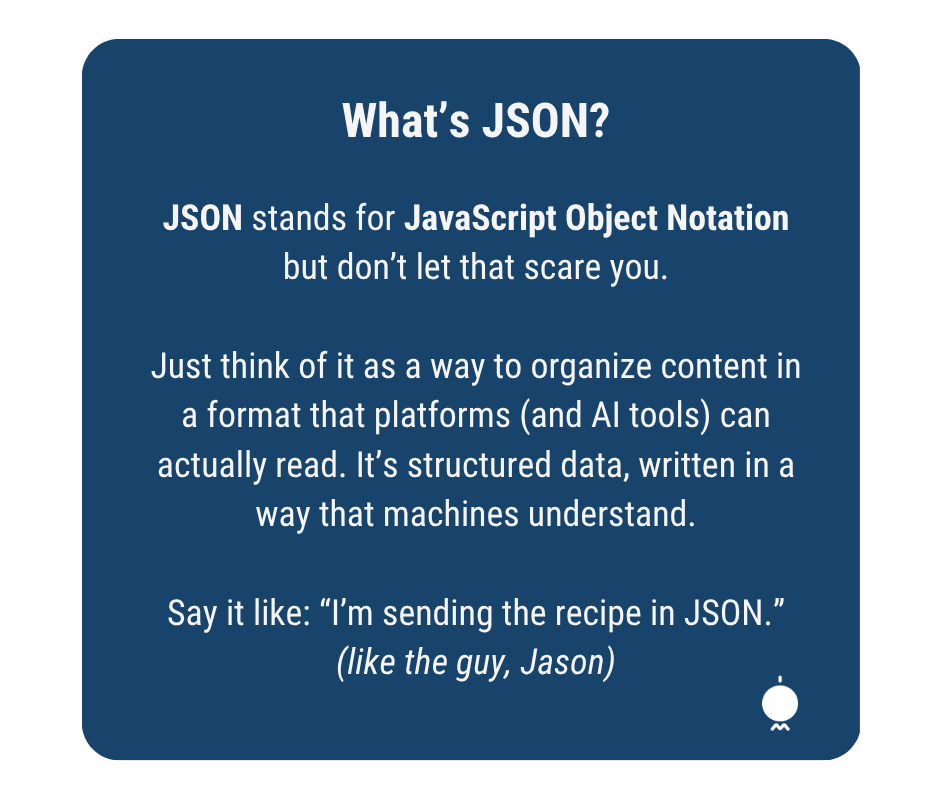
Structured content imports more easily, creates fewer formatting errors, supports personalization, improves discoverability, works better with APIs, and helps AI systems interpret recipes more accurately. Most importantly, it scales more effectively over time as content moves across multiple systems.
Want to learn more?Your recipe library may already be more valuable than you realize
Don’t assume you need advanced technical knowledge before working with food tech companies. Most do not. In reality, many experienced bloggers are already doing a large portion of the work.
If your content already includes recipe schema, alt text, cook times, recipe categories, searchable archives, standardized formatting, and structured plugins, you’re likely much more platform-ready than you think.
Stop pitching like “just” a blogger
One of the biggest mistakes creators make is underselling themselves. Platforms aren’t always evaluating creators based solely on audience size.
They’re often evaluating how organized, scalable, and operationally reliable your content is. Content quality still matters, of course, but platforms also care about workflow maturity, structure, consistency, and how easily your recipes can integrate into larger systems.
This changes how creators should position themselves.
Instead of saying:
“I have a food blog.”
Try:
“I’ve built a structured recipe archive optimized for discoverability and multi-platform use.”
That sounds different because it is very different.
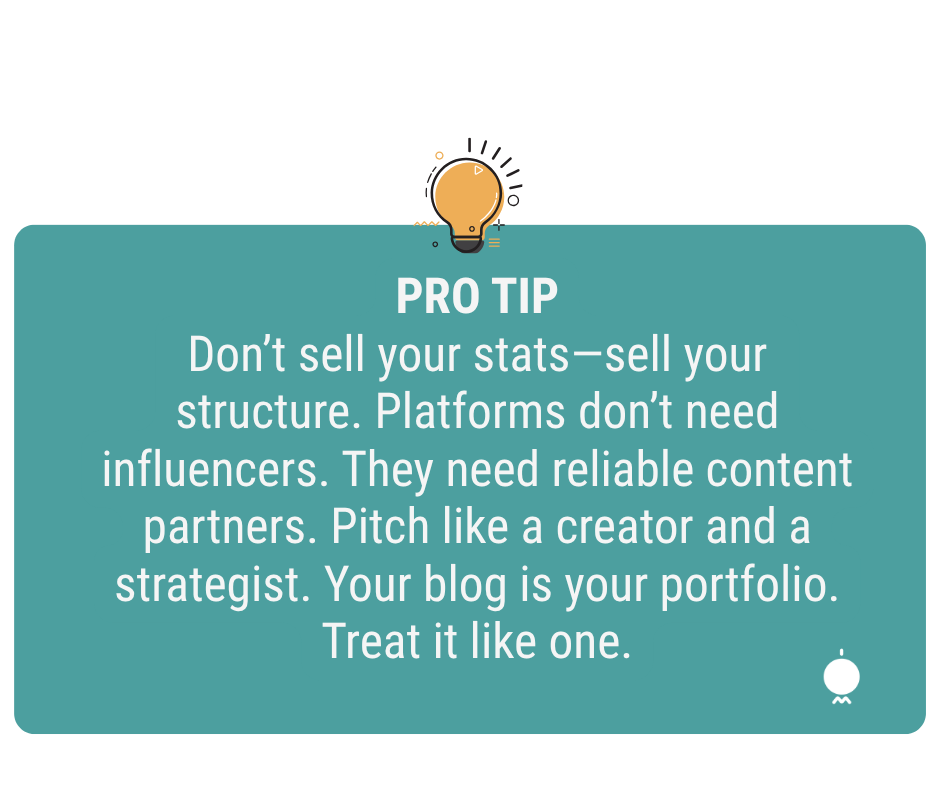
What platforms actually want to hear
The language creators use matters. Platforms respond strongly to operational clarity.
For example, saying “I have 500 categorized recipes ready for licensing” communicates something very different than simply saying “I have a food blog.” Explaining that your content already includes schema, metadata, or structured exports tells platforms your recipes are organized, scalable, and usable across systems.
Notice that none of these statements mean you have to become a software engineer. You’re just communicating that your content is organized, scalable, and usable.
How to prepare your content for partnership opportunities
You don’t need to rebuild your entire site overnight, but tightening your systems now can make future opportunities significantly easier.
Improve consistency
Make sure recipes consistently include prep time, cook time, yield, ingredients, alt text, tags, categories, and clean instructions. Consistency makes content easier for both humans and platforms to interpret, which becomes increasingly important as recipes travel across multiple systems.
Strengthen taxonomy
Platforms love content that is filterable and reusable.
Strong taxonomy systems also help platforms filter and reuse content more effectively. Whether recipes are organized by dietary preferences, cuisine type, cooking time, or skill level, clear categorization improves discoverability and platform usability.
Organize assets
That organization should extend beyond your blog itself. Image libraries, spreadsheets, recipe exports, metadata systems, and licensing documentation all become significantly easier to manage when opportunities arise unexpectedly.
Future-you will absolutely appreciate this.
Understand licensing basics
Not every partnership requires giving away ownership. Many creators license content while retaining rights. That distinction becomes increasingly important as AI and personalization tools continue growing.
Creators often miss monetization opportunities because they underestimate the long-term value of their content libraries.
Questions creators should ask before signing anything
Before agreeing to a partnership, creators should understand exactly how their content will be used. That includes whether the agreement is exclusive, whether recipes will support AI systems, whether attribution remains attached, whether content can be modified, how long the agreement lasts, and whether the recipes may appear across multiple products or experiences.
These are not difficult questions. They’re business questions. Creators should absolutely ask them.
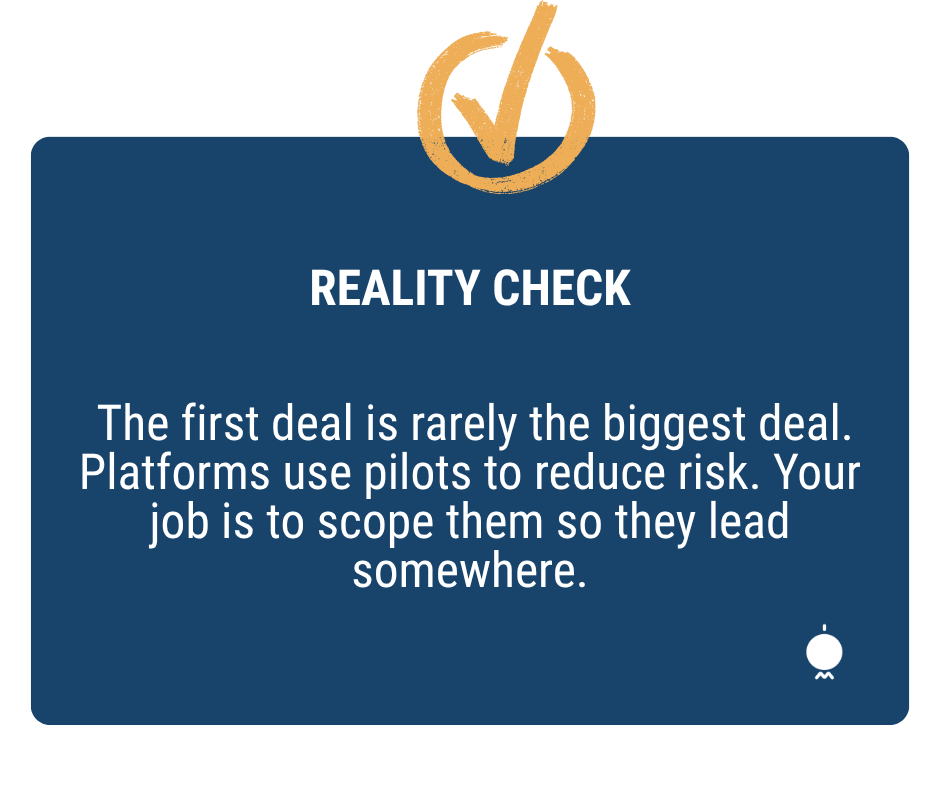
I cover many of these conversations in the Tech Partnerships Playbook for Creators, which was designed specifically to help food bloggers understand licensing, structured content, pricing, and partnership strategy.
Why this matters beyond revenue
Yes, tech partnerships can create new income streams. But this shift is also larger than monetization.
Many of the practices that make content easier for emerging technologies to use also improve how people discover and interact with recipes today in terms of usability and legacy search discoverability. But the bigger opportunity lies ahead.
Food creators are helping shape how recipes move beyond websites and into apps, grocery experiences, AI assistants, cooking platforms, smart kitchen devices, and technologies that are still emerging. Their content is becoming part of the systems that power modern food experiences.
Creators who understand how structured content works will be better positioned to participate in those ecosystems, influence how they evolve, and identify new opportunities as the next generation of food technology takes shape.
The future belongs to creators who build systems
If you’ve spent years building a recipe archive, you’ve already done the hard part.
You built expertise, systems, trust, searchable content, instructional workflows, reusable assets, and operational knowledge over years of publishing. Those aren’t just blogging skills anymore. They are valuable operational assets within the food technology space we are in today.
The opportunity now is learning how to position those assets beyond traditional publishing. The future of food content isn’t only about where recipes are published. It’s about where they can travel.
Creators who understand portability, structure, and systems thinking will be significantly better positioned for what comes next. Even if they still occasionally have 47 tabs open while renaming image files.
Thank you so much to Sandie for sharing her expertise with us! Did you learn something new when reading this post? Let us know in the comments!
This is so helpful, thank you! This has given me an idea for a collaboration I had been meaning to initiate:)
Hi Zeeshan! So glad you found it helpful 🙂