
Listen to this episode of The Food Blogger Pro Podcast using the player above or check it out on Apple Podcasts or Spotify.
This episode is sponsored by Yoast.
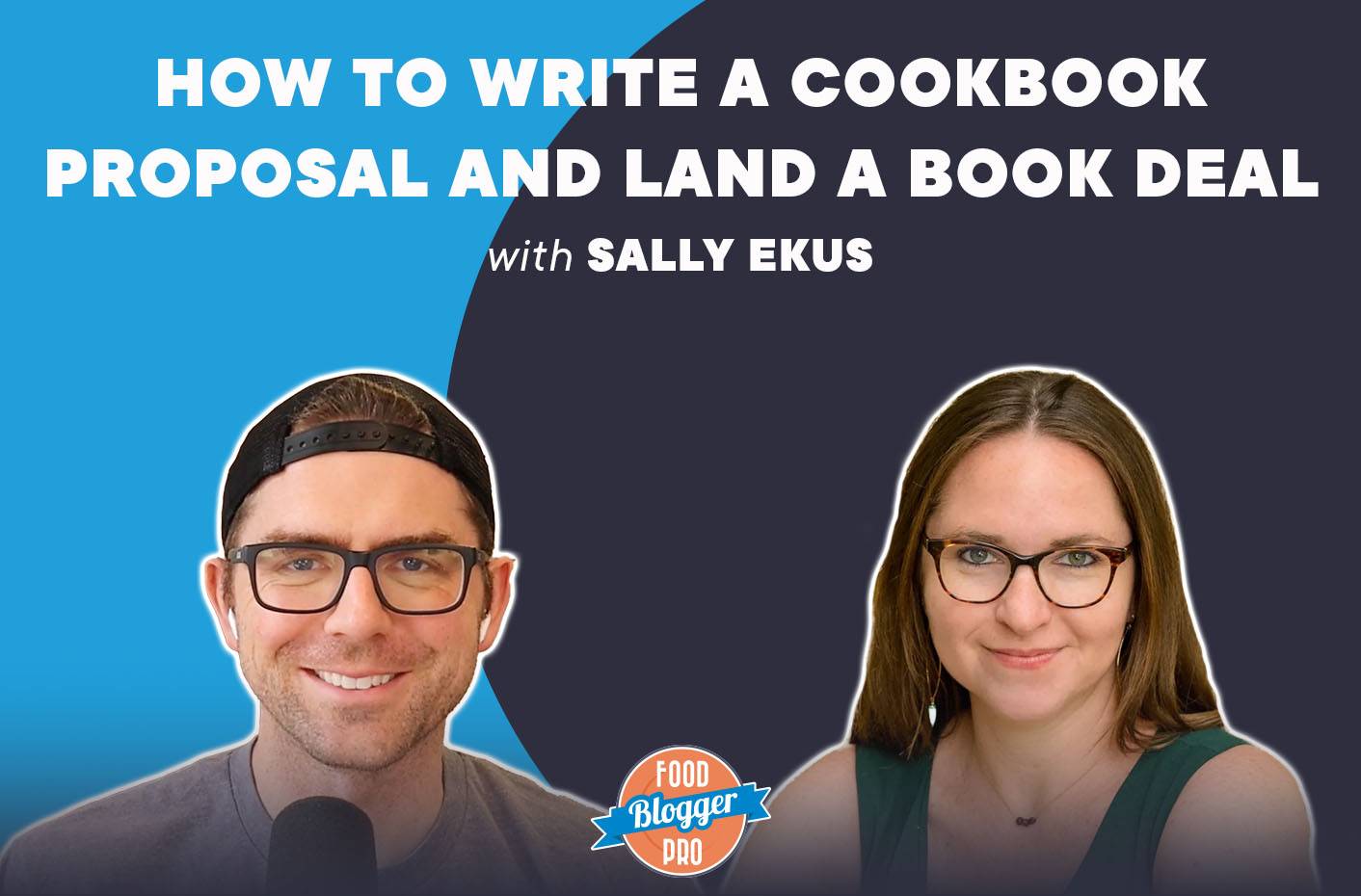
Welcome to episode 567 of The Food Blogger Pro Podcast! This week on the podcast, Bjork interviews Sally Ekus.
Last week on the podcast, Bjork chatted with Adam Gallagher. To go back and listen to that episode, click here.
How to Write a Cookbook Proposal and Land a Book Deal with Sally Ekus
Have you ever wondered what it actually takes to get a cookbook deal — and whether your platform is big enough to make it happen? Sally Ekus, a literary agent specializing in the cookbook space, is here to pull back the curtain on the entire process.
In this episode, Sally shares exactly what she looks for when evaluating potential cookbook authors, how to build a proposal that stands out, and what a realistic book deal might look like depending on the size of your audience. Whether you’re dreaming of a cookbook or just starting to explore the idea, this episode will give you a clear and honest roadmap for what the path forward actually looks like.
Three episode takeaways:
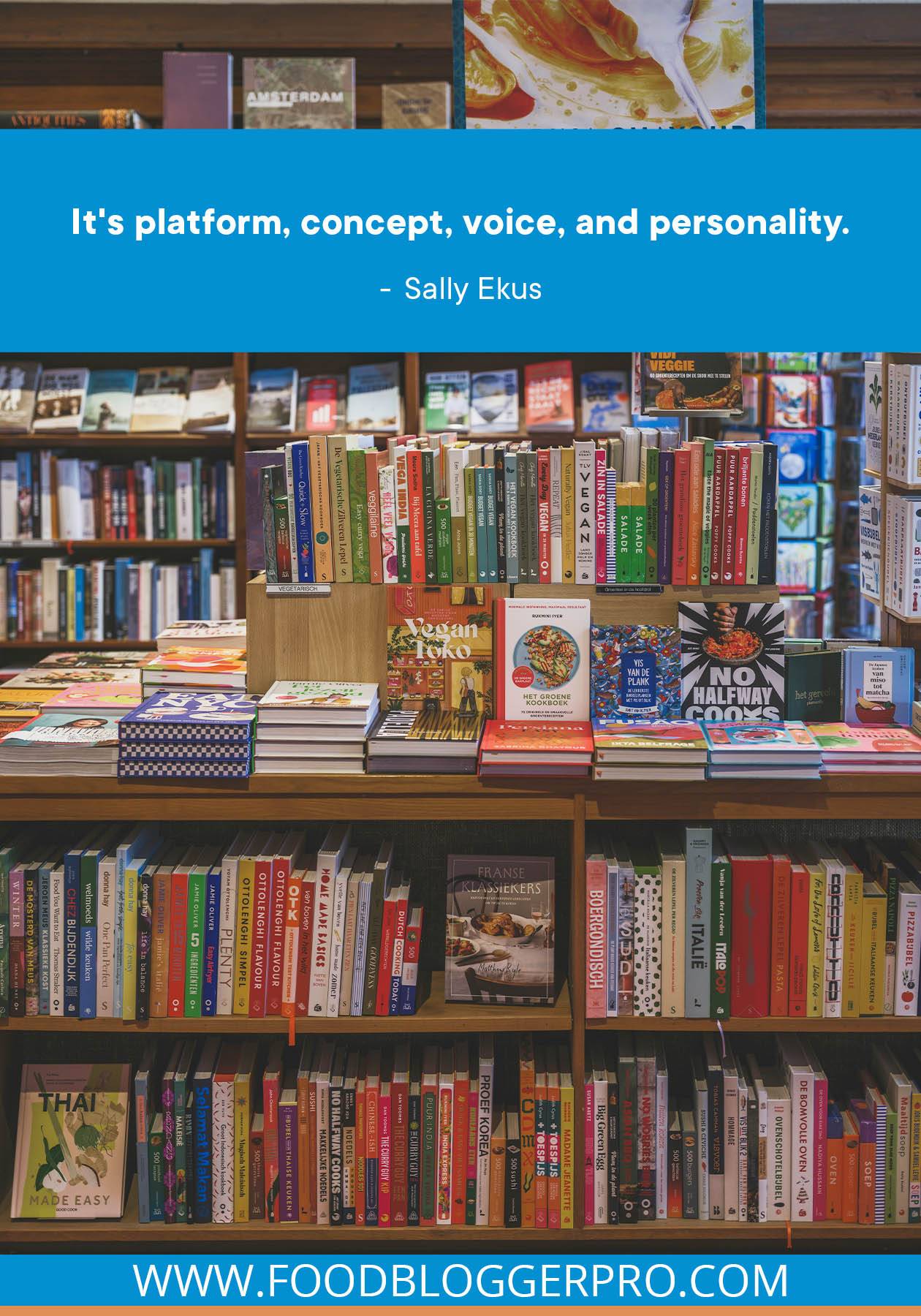
- What publishers are really looking for in a cookbook author — Sally breaks down the four pillars she evaluates in every potential author: platform, concept, voice, and personality. She explains why your social media following matters (and which platforms publishers care most about), why a consistent email newsletter can set you apart, and how to demonstrate that you can actually convert your audience into book buyers.
- How to write a compelling cookbook proposal — A great proposal goes far beyond a list of recipes. Sally walks through what to include, how to articulate your unique concept, and why aligning your book idea with the stories you already tell in your content is so important. She also shares how a standout proposal can help offset a smaller following — because showing how you reach your audience is just as important as how many people you reach.
- The financial reality of cookbook publishing — From the structure of a book advance to earning it out, royalties, and what a deal might realistically look like based on your platform size, Sally demystifies the money side of cookbook publishing. She also makes the case for why many creators write cookbooks even knowing most won’t earn beyond the advance — brand extension, legacy, and sharing a meaningful message are all powerful reasons to pursue it.
Resources:
- The Ekus Group
- Not So Secret Agent
- 391: Behind the Scenes of the Cookbook Publishing Process with Sally Ekus
- JVNLA
- Lat14
- Karyn Tomlinson
- Theo of Golden
- Pinch of Yum
- Follow Sally on Instagram
- Join the Food Blogger Pro Podcast Facebook Group
Thank you to our sponsors!
This episode is sponsored by Yoast.
Thanks to Yoast for sponsoring this episode!
If you’re a food blogger, you’ve probably spent years mastering traditional SEO — optimizing for Google, tracking rankings, and monitoring your traffic. But here’s the big question: how does your brand show up inside AI answers? Are you being cited in ChatGPT, Perplexity, or Gemini… or completely left out?
That’s where Yoast comes in. Included with Yoast SEO AI+, Yoast SEO Brand Insights scans how your brand appears across AI platforms like Perplexity, Gemini, and ChatGPT. You can:
- See when (and if) you’re mentioned in AI-generated answers
- Track sentiment around your brand
- Compare your visibility to competitors
It’s a whole new layer of search visibility — beyond traditional rankings. Use code foodblogger10% at checkout for 10% off Yoast SEO Premium, Yoast WooCommerce, and Yoast SEO AI+.
Interested in working with us too? Learn more about our sponsorship opportunities and how to get started here.
If you have any comments, questions, or suggestions for interviews, be sure to email them to [email protected].
Transcript (click to expand):
Disclaimer: this transcript was generated using AI.
Bjork Ostrom: If you’ve been listening to the podcast for a while, you know I’m always talking about how creators can better understand where traffic comes from and how people experience their brand. We’ve been talking about that a lot lately, brand. And the team at Yoast, which is the SEO plugin many of us, I would say most of us already use, actually just rolled out two updates that make those things so much easier. First, Yoast SEO Premium, so that’s one plugin, the Yoast SEO Premium plugin. It now brings SiteKit by Google Analytics right inside of Yoast. So for those who aren’t familiar, SiteKit is Google’s official WordPress plugin for analytics and Search Console. And this integration makes your data, this is a wonderful word, simple. There’s no extra logins and no bouncing between dashboards. It’s just clean, actionable numbers, easily accessible right within Yoast. So that’s the Yoast SEO Premium plugin, wonderful plugin.
It’s one that we use on all of our sites. But second, and also really important is this concept of brand and specifically brand as it relates to AI. So a new feature with the Yoast SEO AI Plus plugin, so this is a different plugin, is the Yoast AI Brand Insights. So this scans how your brand shows up in ChatGPT and Perplexity. You can see where you’re mentioned in AI generated answers. You can track sentiment and also compare your site’s visibility with other publishers to better understand how AI interprets your brand. Wonderful updates and wonderful features in a set of plugins that are really powerful and are needed for us as publishers to both understand our traffic and our analytics and our numbers, but also understand some of these brand considerations on how our site is showing up in AI. So you can upgrade or download and get 10% off using Food Blogger Pro 10%.
So that is one zero and the percent sign. And that’s to get 10% off of Yoast SEO Premium, WooCommerce SEO for any of the e-commerce folks out there, and Yoast SEO AI Plus plugins.
Emily Walker: Hey there, this is Emily from the Food Blogger Pro team, and you are listening to the Food Blogger Pro podcast. This week on the podcast, we are welcoming back Sally Ekis from the Echis Group and the Substack Not So Secret agent. Sally is a literary agent specializing in the cookbook space, and she’s here to pull back the curtain on the entire process. In this episode, Sally shares exactly what she looks for when evaluating potential cookbook authors, how to build a proposal that stands out from the crowd, and what a realistic book deal might look like depending on the size of your audience. Whether you’re dreaming of a cookbook or just starting to explore the idea, this episode will give you a clear and honest roadmap for what the path forward actually looks like. Sally really demystifies the money side of cookbook publishing and makes the case for why many creators write cookbooks, even knowing most won’t earn beyond their advance.
Emily Walker: Brand extension, legacy and sharing a meaningful message are all powerful reasons to pursue writing a cookbook. Sally is a wealth of information. We know you’ll get a ton out of this episode, even if you’re not planning to write a cookbook. And so I’m just going to let Bjork take it away.
Bjork Ostrom: Sally, welcome back to the podcast.
Sally Ekus: Thank you for having me. I’m so happy to be back.
Bjork Ostrom: We’re going to be talking about all things cookbooks. We’ve talked to you before, but for those who didn’t listen to that podcast where in pre-recording, you said, when was it that I was last on? I was like 2003. And you’re like, 2003? I don’t think that was quite … I was like 2023. I
Sally Ekus: Did grow
Bjork Ostrom: Up in the business
Sally Ekus: Though. So I have
Bjork Ostrom: Been doing
Sally Ekus: This for a while, but
Bjork Ostrom: Not
Sally Ekus: Formally
Bjork Ostrom: In 20- Not that long. Not too long. We haven’t been doing the podcast that long. Yeah. Maybe someday we’ll be interviewing people where it’s like we interviewed you 30 years ago. But a lot has changed in those three years since we last talked, both with the work that you’re doing, but also with the industry at large. We’re going to be talking about the industry generally, but catch us up on what’s changed within your world and also what you do and how you work with food creators.
Sally Ekus: Yeah. The three-year anniversary remark is pretty profound because this January started my third year, still doing the same work, but in a slightly different capacity agency-wise. So Lisa, the founder of the ECIS Group, my mom, retired three years ago. And so I have been doing the same exact work as a literary agent working in the cookbook space, but now the ECIS Group is sort of like a subsidiary of another agency called JVNLA, and they’re based out of New York. And I oversee all of our culinary titles and clients, and I get to work on other full color lifestyle work and some stuff in the prescriptive nonfiction space. And so my work as an agent has remained the same, but the evolution of our agency has really changed a lot in three years. And Lisa’s now doing the cookbook library retired thing, which is also quite
Bjork Ostrom: Delightful. What is the cookbook library retired thing? You built up your catalog. You’ve worked with these people, so you have these-
Sally Ekus: She actually holds the world record for the largest personal collection of cookbooks. Wow. And there’s over 7,000 of them. And now she hosts charity events and does community building in her library.
Bjork Ostrom: Is it like in her house? She has a library of cookbooks. It’s
Sally Ekus: A gorgeous library. Yeah. I’ll have to send you a picture of it. It’s really stunning.
Bjork Ostrom: That’s amazing. And so that’s what she’s doing. That’s what she’s doing. Being a
Sally Ekus: Grandma.
Bjork Ostrom: Yeah. Love it. You’re continuing to do similar work. Yes. Can you describe what an agent does for those who aren’t familiar?
Sally Ekus: Yeah, absolutely. So I work on behalf of authors representing their book proposals to primarily traditional book deals. So I’m out there. My clients are writers, authors, people who want to write cookbooks or people who are working on their second, third, fourth cookbook. And I’m helping them shape the idea, the book proposal, and then bringing it forward typically on a multiple submission, meaning we’re shopping it around to multiple publishers looking for the best possible publishing deal. And to me, in my philosophy, that’s equal parts financial. The author’s really excited to say yes to the monetary side of the deal, but also fit. This is a publisher and an editorial team that really understands the vision for the book and is really excited about bringing that concept forward on their list. And agents work on a commission. So it’s a commission-based relationship, 15% commission off of the advance and royalties should there be any for the life that the book is in print.
Bjork Ostrom: Yeah. So you play the role of, “Hey, I’m going to work with you creator.” Are creators usually coming to you or are you coming to creators or is it equal parts?
Sally Ekus: It’s really a mix. So we have general submission guidelines on our website, jvianla.com, where people can submit a full book proposal. And it really starts with a query. And I have guidelines on my newsletter, Not So Secret Agent, which is over on Substack where I give people proposal guidelines. Here’s everything that goes into this sales document, essentially. So people pitch me that way, but then I’m also doing scouting, seeing what speaks to me or current client introduces me to a friend who wants to write a book. And a lot of my new clients come through those kind of warm leads as well.
Bjork Ostrom: Sure. Give me an idea of as you are scouting, what are you looking for? So I think of agents in the world of sports, right? Yeah. Or there’s the stories of agents like Scooter Braun, like music agents who are finding the next Justin Bieber. They probably have a kind of criteria that you look for. Some of it is probably raw talent, but others like preexisting audience.What is it for you as you’re out there scouting? What are you looking for?
Sally Ekus: I, first and foremost, look for somebody that just sweeps me up, whether it’s in their content, their writing, their food, maybe I’m at a pop-up dinner. I try something that just bowls me over. But then I’m also looking for the other elements of readiness to be an author. And to me, that’s someone who’s built some sort of community, some sort of platform, which is a word that’s thrown around quite a bit in book publishing in particular. So you know who your audience is for the book and you know how to directly reach them. And oftentimes that’s through a newsletter, it’s through blog traffic, it’s through a pop-up series, classes, maybe a regular byline somewhere. So I’m looking for that whole portfolio. And then personally, I’m looking for the right fit. It’s a hopefully a long-term relationship built on a lot of trust and a lot of hard work.
Sally Ekus: And so I’m looking for somebody both that I can communicate really effectively will and vice versa. They feel really heard and that our working relationship is super effective. So it’s platform, concept, voice, and personality.
Bjork Ostrom: Yeah. Concept meaning the book concept itself. The ideal. Yeah. Yeah. And sometimes it’s- Is there an idea that resonates and
Sally Ekus: Interesting? Exactly. Yeah. I mean, I’ve seen people have pitched me amazing proposals with ideas that I just am not that into. And I know there are a bunch of other great cookbook agents out there. So I’m like, “This is great. It’s not for me. ” Because if you’re the thing that sort of falls to the bottom of my inbox, that’s not fair to anybody.
Bjork Ostrom: This is a long time ago, probably 10 years ago, but we had friends who were really interested in publishing a cookbook. They went to, I don’t know if it was an agent probably, and they’re like, “Hey, we’d love to do a cookbook.” And they’re like, “Hey, you just need to increase your following specifically on Facebook.” And it was like, so then they did a ton of education. How do I grow my Facebook following? They grew their Facebook following. That became the platform for them to then launch the QuickBook and went back.
Sally Ekus: Was that eight years ago?
Bjork Ostrom: Eight years ago? Yeah, maybe, maybe more. I feel like
Sally Ekus: Facebook was definitely a
Bjork Ostrom: Place
Sally Ekus: We were looking for a lot of numbers and engagement around that period of time.
Bjork Ostrom: Yeah. And I think people appreciate when there’s something concrete like that where you go to somebody and they’re like, “Hey, we love what you’re doing. We love the concept. This category is lacking. Here’s what you need to do to bridge that gap. You need to get from here, whatever, 50,000 to 500,000.”
Sally Ekus: Yes.
Bjork Ostrom: And it’s really nice as a creator to be like, “Okay, this is what I need to do because this is a platform that’s working.” Obviously that shifts, that changes.
Sally Ekus: Yes.
Bjork Ostrom: But in that season, that’s what it was. They went, they figured it out, they grew their account, they went back, signed a deal. What is that now? I was just going to say- And then you look at now today and say, “Okay, this is super helpful to have success with a cookbook.”
Sally Ekus: Yeah. Before I answer that question, I’ll just say that’s one of the things I love about probably your listenership over so many other podcasts and communities is that you have this community of people where they understand what it means to go learn about a platform and then show that growth and that rate of growth. So that is gold in a proposal, being able to say, “Here’s where I’ve put in effort and here’s how that effort paid off in this period of time is so valuable.” And you want to outline all of that in your proposal.
Bjork Ostrom: Is that because they couldn’t demonstrate that you’re good at marketing, which publishers
Sally Ekus: Are interested
Bjork Ostrom: In?
Sally Ekus: Yes. Yeah, because the success of your book is really riding on how much you’re investing the energy in it being successful. The publisher is certainly a vehicle for helping with that success, but if you’re relying on them to drive that entire train, you’re kind of just hanging out in the train lot. It’s better when you’re driving it.
Bjork Ostrom: And tell me if this is true. It feels like a traditional publisher is going to be good at a lot of the things that a traditional digital content creator isn’t good at.
Sally Ekus: Right.
Bjork Ostrom: Skillsets.
Sally Ekus: Yes.
Bjork Ostrom: Following, building an email list, churning out content week after week to keep an audience engaged, reaching people one-to-one. Whereas the publisher is like, “Hey, we can get your book in Barnes & Noble. We can give you the playbook to help pre-orders because that’s important.”
Sally Ekus: I will say that something that is different than three years ago is how much fluency in- house marketing people have now around specific levers they can pull for, in this case, cookbook campaigns. And I feel like that is an evolution and a very positive one in-
Bjork Ostrom: Higher literacy.
Sally Ekus: Yes, in today’s cookbook marketing because they’ve tinkered with things and now there’s data available to us and there’s tech tools that even three years ago weren’t there. And so they’re leveraging them and that’s great. To answer your question, where am I scouting or what is that sort of platform now? Newsletter platforms is a big area of focus. And specifically with culinary content, Instagram and TikTok are also still quite popular in terms of the platforms that people are looking at. But for me, I love scouting on newsletters and kind of complimenting that with what I see on social. And personally, I love looking on Instagram over TikTok. I look at a following and a content strategy on TikTok to see that it’s there. And if there’s really, really robust or huge numbers like millions, obviously that’s hard to ignore and certainly worth taking note of, but I just tend to work with clients that are a little bit more focused on the Instagram and newsletter side.
Bjork Ostrom: Sure. And when you say newsletter, that could mean Substack, but it also could mean Kit or MailChimp or-
Sally Ekus: Absolutely. I just
Bjork Ostrom: Think that- That you have emails. The
Sally Ekus: Conversation about that direct line of communication to your newsletter readers is the thing that publishers, agents are talking a lot about right now.
Bjork Ostrom: Yeah. And inevitable that if you have a bigger list with a certain percentage open,
Sally Ekus: That
Bjork Ostrom: You’re going to be able to sell more because people actually see it.
Sally Ekus: And also that number can be a little bit lower than it needs to be on social. So on social, the sort of demand for high platform is, let’s say we’re talking a hundred to 500,000 followers. If one to 3% of those people pre-order your book or they’re the people that are actually going to cover it to buy which you are selling, that number, the bigger it is, the bigger that one to three percentage is. But in a newsletter, you’re not beholden to some algorithm. And so you have this opportunity to have a direct line. And so that conversion in nonfiction and specifically with food is higher for people that might have 10,000 readers that are one to 3% of those people open, read, engage, comment, re-share, send to a friend on every single thing you do. You just have this really robust feedback loop of trust and engagement and reciprocity that right now feels still very refreshing from the social media algorithm.
Bjork Ostrom: Refreshing because it’s not algorithmic in the same way that TikTok maybe is the ultimate example would be where you have one post that gets four million views and the next one gets 15,000. And whereas email, generally speaking, if you have a list of 25,000 and the last email had a 50% open rate, it’ll probably be pretty similar. It might be within four or five percentage
Sally Ekus: Point of view. Give an average open rate. Yeah. But also you can see what performs well and what doesn’t because you have access to a dashboard of data, which you have on social platforms, but you just have a little bit more control over it. You have a lot more control over it. And that feels just, yeah, it’s like a breath of fresh air.
Bjork Ostrom: Yeah. For you as an agent, because it’s easier to then bring to somebody versus somebody who has two million TikTok followers, which is really impressive, a huge amount of
Sally Ekus: Effort
Bjork Ostrom: To get there, but it’s less predictable. Is that essentially what you’re getting to from a sales standpoint?
Sally Ekus: Yes. And also I would venture and my content creator clients reflect this, that the feeling of reciprocity or that hustle of knowing like, okay, well, I have ownership over this content that I’m putting out to my newsletter readers, I know I’m reaching them and they’re replying and there’s this feedback loop. And on social, you can get hired to do a campaign and you can pull all the levers you’ve pulled in the past that have performed well, but if something’s not working or clicking that day, it may just not perform at the way you’ve on average performed in the past and that’s not to fault anyone. And so it just feels like a different strategy.
Bjork Ostrom: Yeah. One of the things that we talk about on the podcast a decent amount is this idea that there’s different ways that we are creating content. And oftentimes for food creators, we are marketing the content that we are creating,
Bjork Ostrom: And we are really good at creating a recipe, creating a video for that, and then saying like, “Hey, this recipe is awesome.” That gets a lot of views. That shifts if suddenly you have a cookbook and you’re needing to create a piece of content around why you should buy this cookbook and suddenly you get a video that’s a recipe reel that has a million views and you’re like, “Hey, on average, I get 500,000 to a million views on my content.” And then you publish your big book launch and it gets 25,000 views. And it’s like, “Oh, that’s a very different piece of content that performs differently. It has a different hook.” And that isn’t as true in email. Does that feel true?
Sally Ekus: Yes. And I also think that the more you can create the story that feels attuned to how you create stories about all of your other pieces of content and fit a book into that rather than break the mold because now you have this book, this product you’re trying to sell, the more successful I see those storylines and natural integration pan out for people.
Bjork Ostrom: Yeah. Yeah. So we live in Minnesota. One of the best things that you can get in Minnesota, in my opinion, if you’re not vegan or vegetarian. Are you vegan or vegetarian? I’m not.
Sally Ekus: I work with a lot
Bjork Ostrom: Of vegans,
Sally Ekus: But no.
Bjork Ostrom: Yeah. All right. I got a lot of
Sally Ekus: Minnesota clients right now too, actually.
Bjork Ostrom: Do you?
Sally Ekus: Yeah.
Bjork Ostrom: Were there any that you could name?
Sally Ekus: Anna Med who owns four restaurants in- Oh, sure. She has Lao restaurants in Minnesota. Yeah. Cool.
Bjork Ostrom: She’s
Sally Ekus: Beard nominated. Yeah. Yeah. We just started working
Bjork Ostrom: Together. That is amazing. Yeah.
Sally Ekus: I’m
Bjork Ostrom: Just looking it up now on Lat 14, which is one of our favorites. Yeah. Oh,
Sally Ekus: Cool.
Bjork Ostrom: We were just there- So you’ve eaten her food
Sally Ekus: Before I’ve eaten her food.
Bjork Ostrom: Yeah. We were there a month ago with some friends and it’s just the best. So this is kind of on the opposite end of Anne’s restaurants. Oh wait,
Sally Ekus: The other one is Karen Tomlinson from Mariel. Do you ever-
Bjork Ostrom: Oh, sure. Yeah. Yeah. Yeah. Also incredible. Yes. Cool. Also on the opposite end of that. Juicy Lucy. You know Juicy Lucy? No. Okay. So it’s a famous Minnesota cheeseburger, but it’s like the cheese is on the inside of the burger is the whole premise. Love it. So it’s one of my favorite burgers. And specifically there’s this restaurant called Matt’s Bar. Years ago when Obama came through, he stopped at Matt’s Bar. And so it’s kind of this quintessential Minnesota restaurant because of the Juicy Lucy. It’s kind of a battle who had the first Juicy Lucy. Yeah. Love a Juicy Lucy
Sally Ekus: Battle.
Bjork Ostrom: Yeah. Yeah. Classic kind of cheap fries that are just so good.
Sally Ekus: Making me
Bjork Ostrom: So hungry. So for me, that would be a meal. If you bring that out, you put it in front of me, that’s ultimate. I’m licking my lips. This is exactly what I want. I’m coming back around to this to be a question. For you, let’s say that’s a creator and it’s looking at their entire portfolio of platforms, their blog. Who’s the juicy
Sally Ekus: Loosey?
Bjork Ostrom: Who’s the juicy loosey? What does a juicy loosey look like for you when you come across it from a creator standpoint as it relates to book deals?
Sally Ekus: Okay. Love this. I’m going to try to follow the analogy into my answer. Great. I’m here for it. Which is when I have sauce on my face and my napkins are just dirty and I got the meat sweats and I’m like, “What just happened?” It means that all of my distractions have faded away. I haven’t looked at my inbox. I haven’t looked at my phone. I have been immersed in somebody’s content for an hour, maybe a little less, maybe more. Usually it involves very bold flavor combinations. Personally, that’s just something that I’m really taken by often. If somebody’s teaching me a technique, I’m ordering another Juicy Lucy. I’m like, “Oh, okay. I’m coming back here because I’ve learned something and it’s changed me. It’s changed me and I’m going home and I’m dreaming about the Juicy Lucy and I’m in my kitchen and applying that technique that I read about somewhere.” Because I can read something and then riff and apply it to my own life pretty seamlessly because of my culinary competency.
Sally Ekus: And so that kind of sucks me in. And then the whole picture is there. I’m at the restaurant and I’m taking a selfie in the bathroom where I ate the Juicy Loosey. I’m hugging the chef because I can’t contain myself. That looks like their social media following is really large, like 500,000 and up if I’m just throwing out big numbers. Yep. Which is helpful. A 20 to 50,000 subscriber on their newsletter and some sort of consistent, and I don’t even care what the cadence is. It could be once a month, it could be once a week. It could be not once a year, but there is a cadence
Sally Ekus: And a very clear thoughtfulness and intention to how they communicate to that audience and they know how to convert what they’re selling. And they don’t have to be selling something specific. It’s cool if they have. Maybe they sold sliders with the Juicy Lucy at a popup and they sold out in negative five minutes. That would be really cool. And that might look like a self-published ebook that sold 5,000 copies in its first year, or they just know exactly who their audience is and how to reach them. These are the other accounts those people follow and I’m friends with those accounts. It’s not like, “Oh, one day I will connect with that person.” It’s I’m already connected with them. We spoke at a panel at a conference or I just was on set doing the food styling for their book, whatever. You were immersed in that world.
Sally Ekus: That is across the board chin dripping sauce of the
Bjork Ostrom: Juicy Lucy. Yeah, Juicy Lucy. It’s fitting because one of the things they’ll always say at Matt’s Bar when they bring it out is they’re like, “Have you had a Juicy Lucy before?” And if you say no, they’re like, “Just so you know, the cheese is really hot.” Yeah, I need a warning. Explode out the side hot. Yeah. Nice. So let’s say there is that combination. I think people will get that. It’s helpful to hear numbers, but also that idea of somebody who has competence. It’s not just somebody who’s really good at social media hacks to grow an account. It’s also extreme competence in the thing that they’re talking about. And I hear you alluding to that a little bit as well. Then what do you do? Let’s say there’s a lot that goes on in between it, but let’s say that you reach out to them or this person reaches out to you and by chance they have all of these things, you start the process of having the conversation of how you will represent them, and then you go out and you start shopping their book concept to publishers.
Sally Ekus: So depending on if they have a book proposal or not, determines how I hit the pavement on their behalf and what the pace of that is. And every client and every book project has its own path and trajectory. But we start with a book proposal and that is generated by my clients or the person I’m scouting with a heavy hand on track changes or comments here and there to help get that document to answer all possible questions that could come up from the team that’s going to be reviewing it on the publishing side of things.
Bjork Ostrom: Can you talk about what a track change is and then a putback is?
Sally Ekus: Oh, track changes just in a document where
Bjork Ostrom: I’m- I see.
Sally Ekus: You tracking things. Making comments. Yeah. I’m going in there. They’re generating- Tracking changes that
Bjork Ostrom: You’re making to the-
Sally Ekus: Yeah. They’re making the material. I’m not an agent that writes proposals, but I’m an agent that has a heavy hand in guiding what you should have in there specifically. Just this morning, I was making some comments on a proposal where I know my clients really well and the general marketing ideas were like ideas. And I’m like, well, what about all these very specific things you’ve done that show exactly how you have the ability to reach this audience? So I’m flagging all of those places for people to be more specific.
Bjork Ostrom: And this is essentially for somebody who’s going through the processes, essentially they’re like … I had a friend who’s recently going to see him this afternoon. He’s at Target, had a big round of layoffs. He’s like, “Oh, I got to go update my resume.” It’s a little bit of your book’s resume
Sally Ekus: That is- It’s the business plan for your book. So it’s your overview, it’s a table of contents, it’s the marketing section, your audience, how you’re going to reach them, your platform, your bio, sample material, of course, all of those things. And I have proposal guidelines that are pinned on my not so secret agent post and they’re designed to be a resource to anyone working in nonfiction, not people who just want to pitch me. So it is really a public free resource for you to read through and it’s like the why behind what goes into each section. So you understand- Not so
Bjork Ostrom: Secret agent is your Substack
Sally Ekus: Letter. We’ll link
Bjork Ostrom: To that
Sally Ekus: So
Bjork Ostrom: People are aware of it.
Sally Ekus: So we’re working on a book proposal and I usually have a gut check of how long it’s going to take for this to come together before I’m formally pitching it to publishers. And so based on that gut check, I will start to plant the seed in conversations I’m having with editors well before we ever formally pitch it to get people excited to get that enthusiasm up. And sometimes proposals take longer than others. I’ve had clients work on proposals in a matter of six to eight weeks. It’s usually more like six to eight months. Sometimes it’s over a year and it really depends. And again, agents work on a commission. So I’m out there scouting people that I know will write books that I think will write wonderful books that have the means to promote and market and sell and support that book. And I’m at the very jump saying like, “Hey, let me help you do this.
Sally Ekus: ” And so then when the proposal is ready, we pitch it to publishers. I work 99% in traditional publishing, so I’m looking for a traditional publishing deal for them. And the proposal is the document that the editor’s looking at, of course, but then if they’re interested, they’re sending it around to somebody in sales and marketing and publicity, and they’re getting a read from all of these different angles. And so that’s why the proposal needs to be so comprehensive and answer not just what this book is about and here’s some amazing recipes and writing, but also how are you seeing this book as an extension of your brand and your content and your message?
Bjork Ostrom: Yeah. And as that’s happening, you’re starting to shape it. Eventually, hopefully publishers become interested and they say, “Hey, we would love to place a bet on this creator.” If you’re the juicy
Sally Ekus: Lucy, we’re going to auction.
Bjork Ostrom: Yeah. And then that means there’s multiple people, multiple publishers who say, if you’re selling a house, it’s the same thing. You want multiple people who are interested in it because they know there’s competition, they’re maybe willing to offer more versus if you go back to somebody and beg them, “Hey, please, would you please sign me? ” You know that you’re not in as good of a position.
Sally Ekus: And I do want to be clear, there’s a middle ground between a huge auction and I’m taking the only thing available to me. I think a lot of people do fall in that middle ground because the people that have 500 to a thousand or over millions of people following them or their newsletter, those are the outliers. Most people are working towards those numbers, but that’s not the majority of everyone in my
Bjork Ostrom: Experience. Yeah, 500,000 plus is not the majority of creators. Majority of creators are going to have 10,000- 10 to 500,000. Exactly. 10
Sally Ekus: To
Bjork Ostrom: Two,
Sally Ekus: Probably.
Bjork Ostrom: 10 to 200. And that doesn’t mean that you can’t have success with the book. It might mean that you won’t have the same initial reach, but you can also have, I think of Theo Golden, I just saw an interview with that author. It’s like he didn’t, it’s not like, to my knowledge, had this huge following that he launched his book on. It was just a really compelling book that he wrote that caught on and people … Yeah.
Sally Ekus: Yeah. And we have clients that you start with one publisher and you get great traction, you build a good relationship and you’re very happy there. And then you do the next book under improved terms, but not wildly unrealistic ones. Or maybe you slowly build and evolve from a medium-sized publisher to that next level, depending on the success of your first book. And that’s part of the strategy to think through. And also working with an agent that understands what the expectation is for your book when you take it out, your
Bjork Ostrom: Proposal,
Sally Ekus: I should say. Yeah.
Bjork Ostrom: Can you help? This is probably the hardest question that you get because the answer is almost always it depends, but to the degree that you can, can you help maybe put into buckets for those different levels of your career, of your following, what would a deal potentially look like knowing that it’s a very wide range?
Sally Ekus: So my answer to everything in publishing is it depends. And there are ways to offset or compliment a low follower count that is not equal to big platform or small platform. So there are plenty of … Your listeners are definitely like, “Well, I saw so- and-so and they only have 5,500 followers and they got a six-figure deal from one of the big five. How did they do that? ” They had a great fricking proposal and also A bigger strategy. It is absolutely possible to have a low follower account. So there really is no, this follower account equals this size deal kind of equation I can give you. What I can say is that the better the proposal, the better the deal. And all of the proposals that for me have sold well into the six figures have like this, and I’m obsessed with the word ecosystem right now, this ecosystem of explanation around what somebody’s audience is and how they reach it, not just what, but how.
Sally Ekus: And then you show it. And so that is really where you can land those big deals. I would say generally speaking, smaller platform people or creators are looking at the 20 to 65, $75,000 range. And higher platform people are looking at 100 to 450,000- ish. If we’re in the millions, you might go in that 500 to million range. And low platform is like
Sally Ekus: Under a hundred … Well, no, that’s not realistic actually. Low platform’s like five to 60,000 or something, maybe even like 30,000 followers-ish. But medium is 50 to 200,000. And
Bjork Ostrom: All of that’s … Oh yeah, go ahead. Finish your thought. And I was just
Sally Ekus: Going to say anything over 500,000 in some sort of metric on social, we’re flashy here. We’ve got numbers we can work with and data we can really show.
Bjork Ostrom: Yep. Super helpful. Thanks for sharing that. And I know- Everyone’s going to hold me to this
Sally Ekus: Stuff.
Bjork Ostrom: I was just going to do a disclaimer for you on that.
Sally Ekus: Huge disclaimer, please.
Bjork Ostrom: Yeah. But I think it helps to know, hey, generally speaking, and the same is true even with a blog that has traffic and it’s like, okay, how much can you make from a site that has a million page views a month? Well, you could earn 600,000 a year. You also could earn six million a year if you are super strategic in your brand partnerships and marketing. And all of that same concept applies in this world where it’s like, man, if everything is off the charts amazing, you’re going to get a better book deal than you would.
Sally Ekus: And it’s usually a better book deal because you know how to make everything off the charts amazing. There’s, again, just this fluency and competency to what you’re doing with each channel.
Sally Ekus: That’s why you land a big book deal. You can have a tiny social following, but land a huge book deal because you’ve shown your competency across the board in the proposal and in the explanation of it in the proposal. And there’s always the outliers of someone just gets scooped up and scouted because it’s the media moment for them. They’re getting tons of press and attention, so they land a big deal. That certainly happens. And then there’s small deal. I sell books at all levels. I work with small independent publishers and I work with the big five and everyone in between. So I have clients that are an expert on a very niche topic. They’re maybe going to publish with a university press. That’s a very different model than a six or seven figure deal with a big five that has a wildly successful YouTube channel or something.
Sally Ekus: I didn’t mention YouTube.That’s also a place that matters.
Bjork Ostrom: I’ll just throw
Sally Ekus: Out very important platform
Bjork Ostrom: In
Sally Ekus: This part.
Bjork Ostrom: But the point being, where are you getting attention? How are you getting attention? And your ability to convert that attention into some action. And for a lot of creators, the action has historically been, go to my content and consume it on the site or sign up for my email list or buy from this brand. In this case, the big shift that’s happening is, “Hey, go and actually buy this thing that I’ve created.” And especially for people who haven’t done that before, it might feel a little bit weird, but also I feel like there’s a huge opportunity for people who have been creating years and years and years to finally give their audience a chance to support them in a new way, which I don’t think people realize the value of that.
Sally Ekus: Absolutely. So I feel like, again, particularly for your listeners, there’s something to be said for having been a food blogger for a long time. You have weathered a lot of different storms. You’ve maintained some level of traffic. It’s probably gone down dramatically lately because of AI and discoverability. But you have this community that you have been populating content for for a very long time. I do feel this pendulum swinging back. Or for me, if somebody is coming to me as a brand new creator, that’s one archetype of a client. But then I have other people, they’ve been pounding the digital pavement for 10, 15 years. That’s gold. I love that. You have this incredible collection. You’ve never done a book before and now you’re finally ready 15 years later. Your readers are going to be so excited about that.
Bjork Ostrom: Yeah.
Sally Ekus: That’s awesome.
Bjork Ostrom: That’s Pinter BM. We’re at the point where we’ve never done a … It’s really Lindsay have never done a cookbook. I mean, I know an
Sally Ekus: Agent you could call.
Bjork Ostrom: Yeah, for sure. When and if she does decide to do that, I think it’ll be fun to see because I think there’s been people who have been following her for 15 years and I think will be excited to finally. And people ask all the time- Of course. “When are you going to do a cookbook?”
Sally Ekus: Well, and people will always ask. And so when people pitch me and they’re like, “Well, everyone’s asking for a book.” And I’m like, “Okay, well, who’s everyone? How long have you been doing this? What does this mean?” I love actually when people are like, “I don’t want to do a book,” because if and when they decide to do it, they will do it so intentionally, so thoughtfully they understand the work involved and they’ll knock it out of the park.
Bjork Ostrom: Yeah, that’s great. So you were talking about these different levels that you could sign a deal at. That would be considered the advance. And then there’s the whole process of earning out the advance. Can you talk about how that works? Is there a rough percentage of like, hey, 10% of the time people earn out their advance and then earn royalties? What does that look like?
Sally Ekus: Earning out your advance. The advance is guaranteed money from the publisher paid out over a period of time, usually in parts, three or four parts, and that’s usually over the course of three or four years. It’s tied to your delivery schedule and the production schedule of the book. And the advance is guaranteed money that you get to keep no matter what. You never have to pay it back, assuming you fulfill your obligations contractually and send it in your manuscript, all that stuff.
Sally Ekus: The advance has to be earned back before you earn additional revenue on the book. And there’s a royalty structure for every contract that outlines what that schedule looks like. Most cookbooks do not earn back their advances, and that stat is including the tiny deals, which probably do earn out their advances to the big deals, which almost never do. And it’s really hard to earn out your advance no matter what level it’s at. I have clients that … Our agency has been in the cookbook space as an agent for over three decades now. The agency itself is over four decades old, but we started agenting into that progression and they’re books that 10 years later they eventually earn out. And so I’ll send that note to the client, “Congratulations, you finally leave out. ” Or I’m looking at a real- Here’s your
Bjork Ostrom: Royalty check.
Sally Ekus: Right. Here’s $17 that you’ve earned after 10 years of waiting. So I like to say never bank on earning additional money, but it does happen. And those are oftentimes books that sell between 20,000 copies in the first year, which would be a ton of copies to sell in a first year. And these are like, I’m giving actual numbers here as benchmarks because I know that’s helpful for people to hear. Do not hold me to this anyone. And also it is so case by case specific and I never answer these questions on a client call, though everyone always asks me, what can I expect and what do I need to do? I never answer it, though I know where the deal will land, but I’m happy to answer them generally in this conversation because it’s not like, what can this profile expect? It’s here’s the range.
Sally Ekus: It is truly- Industry.
Bjork Ostrom: Here’s
Sally Ekus: Some
Bjork Ostrom: Industry observations that you can bring to the table. Exactly. Based on historical-
Sally Ekus: And so for your royalty structure, it is either based off of list price of your book or net, what the publisher is netting, and it’s a percentage and there’s industry standards and things that your agent will negotiate. But generally speaking, people are often shocked to learn that an author is making … If they’re making a dollar or $1.25 per book sold, that would be a lot based on the royalty structure. So if your advance is $100,000 and you’re earning a dollar per book sold, it’s going to take you a while to earn that advance back. And that’s-
Bjork Ostrom: Eventually it’s like if you’re using $1, you have to sell 100,000 books to get to the point where then you are earning $1 per book sold after that. Correct.
Sally Ekus: Right. Which you would get a accounting of every six months. But that’s also a … If every copy sold was under that specific royalty structure, but some copies of your book might be sold at a deep, deep discount to a large online retailer that rhymes with Shmamazon. So you’re not earning $1 per book. You’re earning 12 cents. 50 cents. 25 cents. Yeah, sure. Your agent is earning 15% of that 12 cents, crazy stuff. So we don’t do this for the money. We do this for other reasons, brand extension, sharing message, legacy of your content in a commercial and publicly viable way. There’s a lot of different motivations for writing a cookbook. And people who pitched me like, “I want to write a book. I’ve always wanted to write a book. I hear that all the time.” That’s great. Why do you want to write a book?
Sally Ekus: There’s a couple different points of entry to this process. And most of the time I find that somebody is sort of on that path to readiness when they go from that internal drive passion I’ve always wanted to an external facing complimentary
Bjork Ostrom: Reason
Sally Ekus: For why that why needs to be there.
Bjork Ostrom: It’s from my brand. I want to have the legacy component of creating a physical version of a digital thing that I’ve created. Exactly. Yeah, that makes sense. And also it’s like there definitely is a monetary consideration. Absolutely. Absolutely. $50,000, $100,000 is a substantial
Sally Ekus: Amount of money. Yeah. I’m ready to diversify my income stream and add a book project to that. And that creates a little bit more predictability over the next four years. If you know you have a portion of your advance coming when you sign the contract, a portion when your edits are done, a portion when the book is published, and a year after the book is published, you get that final advance payment.
Bjork Ostrom: Yeah, for sure. So things have shifted. You alluded to this a little bit, the world of AI. Everybody’s thinking about AI, thinking about search and the change around search. Yes.
Bjork Ostrom: As you look at the state of things right now, and then also project out a little bit, do you have any predictions from an agent perspective as to the platforms that will be most important? Or you alluded to it a little bit with Instagram, TikTok, newsletters. Do you see that being true going forward as well? And can you also talk a little bit as to how you view search traffic? Because I think some people might look at it and say like, “Hey, I have a ton of traffic to my site.” To what degree is that valuable from the view of an agent or a publisher?
Sally Ekus: Traffic to your site is really valuable. I think that’s super important. And for a lot of my clients, that has gone down because of impact or AI impact and SEO discoverability, that is constantly evolving. And so now the conversation is if AI is pulling in theory and hopefully in practice, if it’s using that to drive the discoverability, then continue to be that expert. And that’s why I actually think something that feels tangible maybe is like, what does your local media look like? I mean, local media is few and far between, but what is in your community that you can do that creates a traceable, trackable link of credibility where you and your name are linked to this technique, this skillset, this expertise, so that if we’re in a world of discoverability that’s being driven by AI, it’s pulling these credible experts, start in your community.
Sally Ekus: Yeah, that’s correct. We’ve gotten really sort of scattershot and big what was happening online, but now my sort of Pollyanna naive positive spin on all of this is like, well, go back to your roots, go back to your community, what can you do locally that can help build that credibility and start that ripple effect of where discoverability is right now or where we’re headed?
Bjork Ostrom: Yeah. An example of this that I think you’re talking about is I just did a quick prompt in ChatGPT around, it was kind of a sloppy question because I was doing it real time here who are leading experts on cookbook agencies publishing, but Ekis Group, it lists Lisa Eckes, your mom here. There you go. And this is arguably the most influential people in cookbook publishing. But point being, if you have this concept, if you have this idea, if you have this kind of genre that you are interested in owning, whether it be eating whole foods or a certain diet or how to feed your picky kids, if you can become the expert of that and as people are in the world that you are in trying to figure out how do I solve for this, then you will pop up. One of the reasons- You be the source so that when in the
Sally Ekus: Source, yeah, exactly. Yes. If you are the source, then when AI sources from sources, you will be mentioned hopefully.
Bjork Ostrom: And your point is an easy entry point into that isn’t trying to get featured in the New York Times, it’s trying to get featured in … We did this really early on, Lindsay and I are from a small town in Northern Minnesota. I reached out to the local newspaper and they sent an intern to interview us. That’s awesome. But it was kind of like front page, small town. Totally. But then that goes online and that-
Sally Ekus: Absolutely. …
Bjork Ostrom: Includes links and-
Sally Ekus: And then
Bjork Ostrom: You’ll
Sally Ekus: Get a graphic and you can post it on social and then you can put an update in your newsletter. It’s all just part of your ecosystem.
Bjork Ostrom: And you’re building your authority and then maybe you can take that and then you can go to the next tier paper and say, “Hey, we’re featured here. Would you be interested in doing a writeup on us? Here’s what we’re doing.” Exactly. All of that doesn’t necessarily … It’s not like we got a bunch of clicks that came from that article, but it does position you as an authority because you’re being featured in an article from a credible source of news and that then allows you to be discovered in different ways.
Sally Ekus: One of the things that I think will carry over into how this is affecting cookbooks and book publishing in particular that’s starting to happen is if you go to a large online retailer and you’re looking for a book and you’re typing in certain keywords, the demand to have those keywords in your subtitle was really high because publishers was like, “All right, well, you can have sort of a evocative lead title, but the subtitle has to be boring and full of keywords so we can be discoverable.” And I would venture to guess that that is going to shift in the next year to three years. And I don’t know what the shift is going to look like, but maybe the demand for keywords in their current iteration will evolve in a way that I would like to think is going to open up for more creativity, but realistically, it’s probably going to mean some more new confines or boundaries for discoverability that books fall into from a titling and
Bjork Ostrom: Metadata
Sally Ekus: Standpoint.
Bjork Ostrom: Yeah. It’s almost like keywords are starting to lose their importance because these- We’ve
Sally Ekus: Lost our keys, you guys.
Bjork Ostrom: Yeah, because these marketing … Well, these platforms are getting so much better at understanding context, understanding if you search for somebody who has a … If you’re searching for whole food content, it’s a cookbook, they’re going to know contextually this author is really good at whole food related content, even if it doesn’t say whole foods in the subtitle.
Sally Ekus: The flip side of this is that the restrictions and the legalities around feeding this content in an ethical and copyright sound way is also being dialed up in a major way right now. And so with that, I would also love to predict a scenario where we’re living in a world where in order for that metadata or the summaries of books and the content that people are publishing has to be paid for and cleared in a way in order for that to be discovered. So alternatively, maybe the pendulum will swing towards keywords being heightened or magnified in a way in the face of AI and copyright batteries, training. Training and training on data lists. TBD. Something’s happening with SEO, obviously. There’s a lot. There’s not a huge prediction, but definitely infiltrating all genres and book publishing is not immune.
Bjork Ostrom: Yeah. We could talk for another hour here. I know you have another call that you have to jump to. Really appreciate your insights here. It’s one of the things that I’m curious about but have no experience about. And so anytime that we can have a conversation around this type of stuff, it’s super helpful for me and helps to fill the picture in. If anybody wants to reach out, if they’re like, “Hey, maybe they are the Juicy Lucy or they’re on their way to the Juicy Lucy, or maybe there’s something in between.” If
Sally Ekus: There’s something cheese
Bjork Ostrom: And a burger, definitely
Sally Ekus: Call me.
Bjork Ostrom: Yeah. What’s the best way to reach out to you and to at least have a conversation or to get in your inbox?
Sally Ekus: Yeah. I’m a highly accessible agent because I do share so much information online. So my email is readily available on icusgroup.com or jvianala.com that the query inbox goes directly to me, but then my newsletter community, the not so secret agent community over on Substack is a place that I host virtual Zoom gatherings and community building and chats. And there’s just a lovely feedback loop between my readers. And so I really encourage people to join that community as well. And yeah, I mean, I love sharing information about publishing, so it’s been such a delight to chat with you and just to reflect on how much has changed in three years and then think about the pace in which things will continue to evolve over the next few years is really exciting. So thank
Bjork Ostrom: You. Yeah, inevitably. Thanks, Sally, for coming on. Really appreciate it.
Sally Ekus: Thank you.
Emily Walker: Hey there. This is Emily. Thanks so much for listening to that episode of the Food Blogger Pro podcast. If you enjoyed the episode, please leave a rating or review or share it with your community. It helps so much for us to get the word out about our podcast. Next week on the podcast, Bjork and I will be doing another Food Blog News roundtable. We look forward to seeing you then, and in the meantime, hope you have a wonderful week.