
Listen to this episode of The Food Blogger Pro Podcast using the player above or check it out on Apple Podcasts or Spotify.

This episode is sponsored by Yoast.
Welcome to episode 565 of The Food Blogger Pro Podcast! This week on the podcast, Bjork interviews Ashlea Carver from All the Healthy Things.
Last week on the podcast, Bjork chatted with Carrie Forrest. To go back and listen to that episode, click here.
How to Keep Creating Without Burning Out
Ashlea Carver has been creating food content for ten years, and in that time she’s built a well-rounded and financially diversified businesses. But longevity in this industry isn’t just about strategy — it’s about learning how to navigate the harder parts of being a creator online.
In this episode, Ashlea and Bjork dig into the mindset shifts that have kept her going — how she handles comparison and how she’s made a deliberate choice to lead with joy in her business decisions to avoid burnout.
They also get into the practical side of her business — why her blog is still her most valuable platform and biggest revenue driver, why she’s prioritizing email, and how she thinks about Instagram in an era where personality-forward content is so important. It’s an honest conversation about building a business that lasts — one that doesn’t burn you out, doesn’t make you dependent on any single platform, and actually feels good to run.
Three episode takeaways:
- Why slowing down is one of the most important things you can do for your business — Ashlea shares why she carves out intentional time a few times a year for an “owner’s retreat” — an opportunity to step back, assess what’s working and what isn’t, and make decisions from a place of clarity rather than reaction. She and Bjork talk about the difference between being driven by purpose versus being driven by numbers, and the power of leaning into joy.
- Why your blog and email list are still your most valuable assets — Ashlea shares why her blog remains her biggest revenue driver and why owning your platform matters now more than ever. She also explains how she’s built an email strategy around three weekly broadcasts, what she’s experimenting with on the paid subscriber side, and why email is the best buffer she has against algorithm changes.
- How Ashlea is thinking about AI, Instagram, and the future of her brand — From her decision to bring more personality into her content as a direct response to the rise of AI, to her thoughtful reluctance to lean too heavily into AI tools in her own workflow, Ashlea shares a refreshing approach to showing up online. She also breaks down what her monetization mix actually looks like — ad revenue, sponsored content, affiliate — and why she hired an agency to help manage brand partnerships.
Resources:
- All the Healthy Things
- Fit Foodie Finds
- Grow Your Email List and Connect with Your Audience with Allea Grummert
- Duett
- 398: The Importance of Surveying Your Audience with Email with Allea Grummert
- 288: Email for Bloggers – Maximizing the Value of Your Email List with Allea Grummert
- 229: Email Marketing – Strategies for Bloggers with Allea Grummert
- Kit
- Grocers List
- Mediavine
- Raptive
- Turning Followers into Revenue with Ben Jabbawy from Grocers List
- How Molly Thompson Grew Her Email List from 15K to 100K
- Using AI to Eliminate Busywork and Unlock Creative Time with Jason Glaspey
- CookIt Media
- Sally McKenney from Sally’s Baking Addiction on Creating Success
- Follow Ashlea on Instagram.
- Join the Food Blogger Pro Podcast Facebook Group
Thank you to our sponsors!
This episode is sponsored by Yoast.
Thanks to Yoast for sponsoring this episode!
If you’re a food blogger, you’ve probably spent years mastering traditional SEO — optimizing for Google, tracking rankings, and monitoring your traffic. But here’s the big question: how does your brand show up inside AI answers? Are you being cited in ChatGPT, Perplexity, or Gemini… or completely left out?
That’s where Yoast comes in. Included with Yoast SEO AI+, Yoast SEO Brand Insights scans how your brand appears across AI platforms like Perplexity, Gemini, and ChatGPT. You can:
- See when (and if) you’re mentioned in AI-generated answers
- Track sentiment around your brand
- Compare your visibility to competitors
It’s a whole new layer of search visibility — beyond traditional rankings. Use code foodblogger10% at checkout for 10% off Yoast SEO Premium, Yoast WooCommerce, and Yoast SEO AI+.
Interested in working with us too? Learn more about our sponsorship opportunities and how to get started here.
If you have any comments, questions, or suggestions for interviews, be sure to email them to [email protected].
Transcript (click to expand):
Disclaimer: this transcript was generated using AI.
Bjork Ostrom: If you’ve been listening to the podcast for a while, you know I’m always talking about how creators can better understand where traffic comes from and how people experience their brand. We’ve been talking about that a lot lately, brand. And the team at Yoast, which is the SEO plugin many of us, I would say most of us already use, actually just rolled out two updates that make those things so much easier. First, Yoast SEO Premium, so that’s one plugin, the Yoast SEO Premium plugin. It now brings SiteKit by Google Analytics right inside of Yoast. So for those who aren’t familiar, SiteKit is Google’s official WordPress plugin for analytics and SearchConsole. And this integration makes your data, this is a wonderful word, simple. There’s no extra logins and no bouncing between dashboards. It’s just clean, actionable numbers, easily accessible right within Yoast. So that’s the Yoast SEO Premium plugin, wonderful plugin.
It’s one that we use on all of our sites. But second, and also really important is this concept of brand and specifically brand as it relates to AI. So a new feature with the Yoast SEO AI Plus plugin, so this is a different plugin, is the Yoast AI Brand Insights. So this scans how your brand shows up in ChatGPT and Perplexity. You can see where you’re mentioned in AI generated answers. You can track sentiment and also compare your site’s visibility with other publishers to better understand how AI interprets your brand. Wonderful updates and wonderful features in a set of plugins that are really powerful and are needed for us as publishers to both understand our traffic and our analytics and our numbers, but also understand some of these brand considerations on how our site is showing up in AI. So you can upgrade or download and get 10% off using Food Blogger Pro 10%.
So that is one zero and the percent sign. And that’s to get 10% off of Yoast SEO Premium, WooCommerce SEO for any of the e-commerce folks out there, and Yoast SEO AI Plus plugins.
Emily Walker: Hey there, this is Emily from the Food Blogger Pro team, and you are listening to the Food Blogger Pro podcast. This week on the podcast, we are thrilled to welcome Ashlea Carver from all the Healthy Things. Ashlea has been creating food content online for 10 years, but longevity in this industry isn’t just about strategy, it’s about learning how to navigate the harder parts of being a creator online. In this episode, Ashlea and Bjork dig into the mindset shifts that have kept her going, how she handles comparison, and how she’s made a deliberate choice to lead with joy in her business decisions to avoid burnout. They also get into the practical side of her business, why her blog is still her most valuable platform, why she’s prioritizing email, and how she thinks about Instagram in an era where personality forward content is so important. It’s a really honest conversation about building a business that lasts, one that doesn’t burn you out, doesn’t make you dependent on any single platform, and actually feels good to run.
Thanks again to Ashlea for joining us for this episode, and without further ado, I’ll just let Bjork take it away.
Bjork Ostrom: Ashlea, welcome to the podcast.
Ashlea Carver: Thanks, Bjork. It’s so good to be here. Thanks for having me.
Bjork Ostrom: We’re going to be talking about your blogging journey before we press record. I was like, “Hey, it’s like 10 years.” And you paused and you were like, “Whoa, 10 years. It is 10 years.” So you’ve been doing this for a decade. That’s a long time to be showing up and creating. What do you feel like has been the thing that has allowed you to continue to show up year after year for 10 years as a creator?
Ashlea Carver: I really love doing this. I think that at the heart of it, I really enjoy creating recipes, sharing them with other people. And I really enjoy running my own business. I think that it’s incredibly unique. The process of starting something from scratch, building it, seeing it take off, being in charge of making the decisions and the strategy. There’s a lot to it, but I genuinely love it. And even on my hardest days when I’m like, “Gosh, this is so hard.” I never think I’d rather go back and work for someone. I always think, I just wish this wasn’t that hard in this moment. And so for me, I think there’s a genuine love and just desire to be an entrepreneur. And then the fact that I can couch being an entrepreneur with also creating recipes and cooking and spending time in the kitchen and being creative in that way, it’s just the best blend of two of my favorite things.
Ashlea Carver: And so I think I just really love it and I just don’t want to stop doing it. Yeah.
Bjork Ostrom: It’s such a huge part of it. I remember super early on, we had a close friend of ours who had a site that he was working on and he stopped working on it. And he was like, “I realized that I just really didn’t like all that went into creating a piece of content.” I was like, oh, probably a good idea for him to not do it because that’s essentially the job description. And I think sometimes what we can do is we can think, I love the idea of being an entrepreneur. I love the idea of working for myself. And this is the thing that’s in front of me, so that’s what I’m going to pursue, this thing being I’m going to create a content business. But if you don’t actually love the work, that’s going to make for some pretty long days, weeks, months. But I do want to hear about those hard days.
Bjork Ostrom: So you talked about the hardest days. Even on the hardest days, you don’t think I want to go back and work for somebody else. What you do think is, I just wish it wasn’t as hard. What do those hard days look like? What is a hard day made up of when you are a full-time content creator?
Ashlea Carver: Oh gosh, there’s so many ways this could go. I think that the blessing of being an entrepreneur is being able to make all these decisions.You get to choose. You get to decide the direction of your business. You get to decide what you want to work on each day and week and what projects you want to take on. And that is the coolest thing. And also it is the hardest thing because you are the sole person that’s responsible for making those choices. And so I think for me, on the hardest days, it’s when I’m doubting the choices that I’ve made. And when I’m kind of sitting in like, oh, should I do that or should I do this? Everyone else is doing this. Should I do that? What happens if I make the wrong decision in this area? How does that impact the business? Well, I look back in two years and wish I had done that.
Ashlea Carver: And all of those questions, the decision fatigue of it all can kind of become very overwhelming and couple that with something not going right in your business one day,
Bjork Ostrom: Like
Ashlea Carver: Maybe a tech thing happened or you got an email that didn’t really sit well, though the pairing of the normal everyday things that can just come up in life plus having to make all of those decisions can make for a really tough day. So yeah, I feel like that’s when I’m just sitting in front of my computer like, “What the heck am I doing?”
Bjork Ostrom: Those
Ashlea Carver: Are the days where I’m like, “Why am I doing this? ” But the next day I’m like, “Okay, we can regroup. It’s okay. I can handle this.
Bjork Ostrom: “
Ashlea Carver: So I find a way to come back to it, but for me, I think those are the days that are the hardest.
Bjork Ostrom: Yeah, it’s so relatable. I think that one of the hard things about being in this business is that it’s relatively siloed. The work that you’re doing is relatively siloed. Let’s say that you’re at a big company. I know I have a friend who worked at Target Corporate. They did a huge round of layoffs. He got laid off. One of the things that he was able to do after that was meet with all of his colleagues who also went through that round of layoffs, able to process, able to talk through it. Even if you are within the company and there’s stuff going on, there’s maybe people that you can talk to. But if you’re a creator, there’s a good chance that you’re working from home. You maybe have some connections, but they might be digital and you’re spending a lot of time on your own, maybe with a small team or a partner who’s maybe helping shoot recipes or something like that, but it can be a relatively siloed work.
Bjork Ostrom: And I think the mental health considerations with that are an important consideration. And I think we are our best as creators when our headspace is our best, but we are also doing work that has the propensity to put us in a headspace that isn’t good. We’re using social media a lot. And so the impact of social media can be so detrimental from a fear perspective, from a comparison perspective. I know that’s something that you’ve said that you’ve been thinking a lot about lately is this idea of comparison and how to process all of the comparison, the potential for comparison that exists in this world. Talk a little bit about that and some of the things that you’ve learned.
Ashlea Carver: Yeah. I mean, being online all the time, because it’s part of your job, you can’t escape it is really challenging. And I’ve tried over the years a lot of different mechanisms to figure out how to handle that from spending less time online to muting accounts that I even love just so I can go online and not see things or people break their phone or put it away in a different room. There’s so many different methods to kind of monitoring your social media usage. But for me, I was finding no matter what I did, whenever I got on social media, I was feeling those big feelings of comparison and I was wasting a lot of time trying to navigate those feelings. And I was like, I have got to figure something out because this is the work that I do. I’m going to see other people’s work, going to see what other people are doing.
Ashlea Carver: I cannot escape that. And I don’t really want to escape it. I want to be able to see what another creator that I love is doing and be able to celebrate her and be excited for her genuinely. I don’t want to feel like I can’t celebrate my peers or see something that’s happening in the industry and be excited about it, but I also am feeling these feelings of comparison or jealousy and all that. And so lately what I realized is that those feelings really come up the most when I’m not excited about my own work. When I feel like I’m just kind of on a hamster wheel of producing a recipe and posting it or getting a blog post out or the mundane admin tasks or just kind of doing the same old, same old, I really tend to fall into those feelings of comparison or jealousy and all of that.
Ashlea Carver: And so I realized I had to bring some more life and joy and excitement into my work and figure out what lights me up, like why I love doing this as a whole, but what specifically about it
Ashlea Carver: Makes me excited to wake up and do this every morning. And once I kind of tapped into being excited about the content I was creating, the direction of my business, the projects that I’m working on, all of that, I was less likely to fall into those comparison traps. I’m so focused and so excited and so thrilled about what I’m creating and the work that I’m doing, and I can’t wait to share it with my audience that I’m not really concerned about what other people are doing. And if I see what they’re doing, I’m just excited for them too, because I’m hoping that they’re just as excited about what they’re doing as I’m doing. So I really feel like I had to fall back in love with some of the processes and the things that I do with my job and get excited about it again.
Ashlea Carver: And whenever I’m feeling that comparison, like, okay, what’s happening in your business that you’re no longer excited because something is taking away that joy. What is it? Do we need to take it off your plate? Do we need to outsource? What is it? But we’ve got to maintain the joy, the excitement,
Ashlea Carver: The thrill of it all. Yeah.
Bjork Ostrom: That’s great. So often I’m trying to remind myself that it comes back to me defining what it is that I’m trying to do in the work that I’m doing and then playing that game. And if it’s … An example might be like, “Hey, I’m in a season where I want to be fully present with our girls in the morning when they’re there and then they go to preschool and first grade and then also at the end of the day, let’s say that’s the game that I’m defining as what I want to play, that’s my priority. Everything that I’m doing, I build around that and it insulates at its best, it insulates from all the other world of people who are creating content and building businesses and doing a podcast, whatever it might be, because it allows me to say very clearly, why am I doing this?
Bjork Ostrom: What is the goal? What is the purpose? Or how do I find joy in the work that I do? “ And to some degree then that allows you to put blinders on and just say like, ”Okay, other people are doing other stuff. They have other goals. They have other success metrics that they’re following, but what is it for me? ” And I think as much as you can come back to that and make it less about how many views are you getting on a thing, how many followers, but more of what’s the game that you’re playing. Do you have an example of when you went through that process? Maybe one specifically, what did that look like? You even talked about delegating or not doing a thing in service of doing other things that do bring you more, Joy.
Ashlea Carver: Yeah. I actually just had what I do a couple of times a year is have a small owner’s retreat where I just spend some time with myself and kind of review what’s going on in the business, like what’s working, what’s not working, and just kind of sit with what is happening because I don’t think I get a chance to do that enough. So I take that time. And this last one I did, I realized that I wasn’t really doing anything that lit me up besides creating the recipes, which always brings me joy. But as far as the other aspects of my business, I felt like everything felt a little flat and particularly social media. I just felt kind of defeated in that area. I didn’t feel like I was having fun. I didn’t feel like I was connecting with my audience and I felt like I couldn’t grow.
Ashlea Carver: And just all of those, the concern about views and all of the metrics, they had kind of overwhelmed my original intent, which was to share recipes that I love with people and connect over food. So I took some time during that retreat to kind of come up with a game plan for my social accounts and how do I want to show up here? What does it look like for me to show up as a full person in these spaces? What do I need to push off my plate? What have I done too much of and neglected in this area? Kind of do some balance checking of how things are going. And I realized that I love actually being in front of the camera and love filming content and love kind of being in my content in a way that I hadn’t been. So I tried to lean into that and I’ve just been kind of filming stuff, just having more fun in the kitchen, putting my camera up, being like, “Hey, we’re just going to turn it on and we’re going to just try this project or try this recipe or whatever it is.
Ashlea Carver: ” And just sharing that. Even doing some behind the scenes, like day in the life content and all of that, it’s been a creative thing for me where I’m excited to flex my creative muscles in a different way because I haven’t done any of that type of content really before. And that has brought me a lot of joy. And then what I realized is that I almost was producing too much blog content. I was spending a lot of time cranking out recipe after recipe after recipe, which wasn’t really lighting me up anymore in the same way. I love spending time in the kitchen, but I don’t love sitting behind a computer and constantly looking at it, trying to get a blog post up. So I was like, what if we tamp that down a little bit and free up some space for me to be in the kitchen and film and just kind of have more fun and post some more fun content on social and how would that feel?
Ashlea Carver: And so far I feel great. It’s so much more fun for me. And I’m really enjoying connecting with my audience in that way. But yeah, I did take a little bit of sacrificing in one area. And when I really thought about it, I think I was using posting on the blog as a crutch a little bit of like, you always have to get out of blog posts every week, this amount of blog posts. And you kind of have to on that hamster wheel again of just doing the same thing over and over again. But I think I was avoiding getting in front of the camera and actually tapping into showing up on social with my face and my personality. And I was a little afraid to do that of how it would be perceived. But once I actually did it, I was like, “Oh, this is great.
Ashlea Carver: I love this and I don’t really care how I’m perceived. I’m having a great time, so I’m going to keep doing it.
Bjork Ostrom: ” Yeah, Lindsay went through this. She did kind of this side show with a friend and it’s like it didn’t make the most sense from a productivity standpoint, didn’t make the most sense from a growth standpoint, but it did bring a ton of joy. And there’s a balance that we have to strike because you also have to make sure that the time that you’re spending allows you to continue to do the work that you’re doing. So how did you find that balance to know that, hey, not only is this something that’s bringing me joy, but it’s also something that I know will allow to keep the business going because that is always a consideration as well.
Ashlea Carver: Yeah. So for me, I looked at the numbers. I was really clear at looking at how much content that I was producing and if that was making a direct impact on revenue. And I think when I looked at my numbers, it had gotten to a point where I don’t need to produce at this rate anymore. I’ve done this. I’ve built a solid foundation, have over 800 recipes on my site. I can pair back a little bit even if it’s for a season and things will not fall apart. And the other thing was I tied on showing up on social directly to brand growth. So for me, not only is it fun, but I’m hopeful that I’m showing my personality, I’m showing up in my content and just engaging with my audience, and that has an impact on the way people perceive your brand. So yes, it’s fun for me and I’m getting joy from it, but I also think there’s a direct correlation with brand growth and brand identity.
Ashlea Carver: And we all know in this age of AI, we’ve heard time and time again how important it is to show your face and to be the face of your brand and to kind of bring more personality into things. And so I was like, if that’s important, then me showing up in my content, there’s a direct correlation there. And so I think I can justify giving this a shot so that it’s not just only bringing me joy, but hopefully helping the overall ecosystem of all the healthy things as a whole.
Bjork Ostrom: Yeah. It was that overlap between, hey, this is valuable, this is impactful, and it’s something that I enjoy doing. And I think the other piece that’s interesting to look at that with what you were just talking about is this idea that you had built something in your blog, which had 800 recipes, that it’s evergreen content from what it sounds like there’s some traction there, whether people were coming to the site direct through other links that they found through SEO, and so you had the ability to continue to let that ride, but then the work that you were doing supported that in that you were probably talking about some of those recipes, you were building your brand in other places, and that was helpful in general anyways. And so I think that there is some level of pressure that we place on ourselves as creators to continually grind on the things that we’ve been grinding on, even past the point where they don’t bring us joy anymore, or we’re just kind of burnt out on them, but we feel like we have to continue to do it.
Bjork Ostrom: But it’s a good reminder for people to, number one, what you did was take a step back, breathe, take a look at it from a distance and say, “Okay, what are the things that I can shift or adjust?” Even if it’s just a nudge, right? It doesn’t have to be a massive overhaul. It can be a nudge in a certain direction to get you to a place that’s going to feel a little bit better. So can you talk just quickly about the before and after, what did that look like before? And then what did that look like after you went on this getaway, this retreat to look at things and change things up?
Ashlea Carver: Well, from a mental and emotional standpoint, I didn’t realize this, but I was burnt out. I was just burnt out. I just didn’t have the drive and the motivation and the energy. I think life happens while you’re also running a business. And so it’s easy to try to compartmentalize the two, but they affect each other. And so you’ve got this whole personal life that you’re trying to run, and then you’re also running a business. And so at some point, your capacity is just, you don’t have the capacity to do everything at 100%. So I think that what was happening was that my business was taking the brunt of the, no, there’s not 100% here. And so I was at capacity and I was burnt out and I just didn’t feel like I was doing anything well. That was the worst part. I was just feeling like nothing is going well.
Ashlea Carver: I’m not doing anything well. I’m not growing in this area or this area. I’m not advancing and working on a project. Nothing was going well. And so taking that time away, one, after looking at the data and actually stepping back, I realized my business is doing really well. If you would’ve asked me a couple months ago if before I did this retreat, if things went well in 2025, I would’ve told you, honestly, Beark, I don’t think so. It was a really rough year. A lot of changes happened. I felt like I just couldn’t keep up. And then I looked at the actual data, the revenue, the-
Bjork Ostrom: Yeah, the revenue numbers. Yeah.
Ashlea Carver: Yeah, the actual numbers. And it’s like, “Oh, this was your best year yet.” And so that was a
Bjork Ostrom: Very
Ashlea Carver: Interesting reminder. And then also just from the mental and emotional standpoint, I realized I need to work in more breaks. And so part of not grinding in that same way over and over again and taking some time for building in another area was to build in some natural breaks and rhythm because I was no longer having to focus on just doing this one thing solely. I’m now building in, in the course of my weeks, some time to decompress, some time to film, and then some time to edit what I film and just more natural rhythm that felt good. So yeah, I think before, mentally, emotionally, I felt burnt out. And I also would’ve thought that my business was going down quickly and nothing was working. And now I’m like, oh, things are doing well. I’m hopeful for the future, which I think
Bjork Ostrom: That
Ashlea Carver: Mental mindset is more important than anything.
Bjork Ostrom: It’s amazing how we can continually have this reset on what our expectations are. They talk about this idea of the hedonic treadmill and both negative and positive, that you can have really positive things that happen in your life, you win the lottery and get a million dollars. Okay. You get that and then your baseline kind of resets. Or they talk about it similarly with people who have difficult accidents. Maybe they lose their ability to walk, they’re paralyzed from a car accident. And they talk about the hedonic treadmill in the sense of you go through this phase, obviously it’s different for everybody. You go through a phase where it’s really difficult, but eventually there’s a baseline that resets. And I think that happens within business and it especially happens when we have such clear numbers that we’re tracking where we’re like, “Gosh, it’ll feel really good to get to a hundred thousand followers or it’ll feel really great in my business to make $100,000.” But what it does is it just kind of resets then where your baseline is and your happiness can potentially still be the same.
Bjork Ostrom: Or let’s say it resets and it’s higher and then it dips down below that, then potentially you could feel worse about something where five years ago you would’ve felt great if you were at that point. And so there’s this struggle that we have as creators. And I think a big part of it is stepping outside of the numbers and saying like, “Okay, what am I actually after? What is my purpose? What is my goal in doing this work?” So super important stuff to think about. And especially when the value that we are creating comes from our mind, it comes from our brains. Obviously it’s the work that we’re doing, but really it’s the things that we’re creating. We are creators that we do whatever we can to be in a really good place with the work that we’re creating. So appreciate you sharing that. I want to hear a little bit about your business.
Bjork Ostrom: So it’s 2026, you’ve been doing this for a decade. How do you view your business when people ask you what you do, how do you describe it? Is it blog forward? Is it social forward? Tell me a little bit about the landscape of your business.
Ashlea Carver: Yeah. So I remember years ago, Lee from Fitfitty Finds, she mentioned that she considered herself a small business owner of a small media company of a food media company. And that really stuck with me because before I was always describing myself as a blogger and that no one ever really understood what I was talking about. They’re always like, “So you go around and you try food at restaurants, kind of like a food critic.” And it’s like, “No.” And then having to explain it. And so that really stuck with me. So what I always say is that I am a owner of a small food media company, and that is how I describe it because I feel like that encompasses more of what I do on a day-to-day basis. There’s so many moving parts to this business, as you know. There’s the blog and the website and social and then marketing what you’re putting out on a different platform, just so many different things, creating the actual content and also managing contractors or employees, whatever it may be.
Ashlea Carver: So that’s how I consider things. I think of all thehealthythings.com is the hub that is the headquarters of my business. That’s where everything lives. And I’m constantly trying to make sure that I have as much content up there as possible that people can always go back to. So if you can find it on social, then hopefully you can find a way to get to it from social or from the blog to social as well. So that’s the hub. But as things change, I’m also expanding and thinking about how social plays into that and maybe thinking about how a certain platform is a hub in and of itself and what that looks like. So for me, it’s a food media company and there’s lots of moving parts, but at the heart of what I do is create really delicious recipes that are perfect for the whole family, that could focus on nourishing ingredients and all of that too.
Ashlea Carver: So it’s a long-winded answer, I feel like, to describe what I do, but whenever anyone asks, it’s always long-winded. There’s never a simple answer. Yeah.
Bjork Ostrom: Yeah. Yeah, for sure. I remember we moved into a new neighborhood. This was the one before where we live right now and people ask what we do and we’re like, “Oh, we have a blog that we run.” And I think part of it is people don’t really know how to respond to it and they also don’t know if you’re actually in between jobs and that’s what you’re doing. So within that media company, there are going to be priorities, there are going to be most valuable assets within that media company. What is that for you? If you were to rank order the things that are most important and you can do it on a platform basis, so social, the blog, email, what are the things that are most valuable for you?
Ashlea Carver: Hands down, it’s the blog. It’s allthealthythings.com. It’s what I own. It’s where all of my recipes live. And it also is a thing that brings in the most revenue for me right now. So it’s my baby is like you’ll hear most bloggers say that is the thing that I built. And so that is the most important. The second most important I would actually say is email. And I wouldn’t have said that a little while ago, but I think with the nature of algorithms and just changes that having an email list that I own and I can directly connect to people and my readers and send them recipes, that’s incredibly valuable. And I’ve enjoyed expanding that more over the last year or so of what I offer there. So that
Bjork Ostrom: Would- What does that look like? When you say expanded it, what does that look like? How often you’re emailing?
Ashlea Carver: Yeah. So I actually listened to the episode with Allie from Duet a little while ago and I started working with her maybe, was it 2024, I think, to kind of revamp how I was doing my email. At the beginning I was doing MailChimp and a platform wasn’t really giving me the features that I wanted. And so we switched to Kit, ConvertKit to Kit. And now I’m emailing around three times a week. I send a weekly email with just a meal plan that’s very simple for my audience, as well as new recipes that are on the site, maybe links to purchases I’ve made, affiliate links, things like that that I love, just kind of a general catch-up email of what’s going on. And then I also send more specific emails during the week of maybe a specific recipe or a Roundup. And I’m also have been playing with a pay A subscriber option for the last couple of maybe months now of sending recipes, a weekly recipe for paid subscribers that is not on the website and it’s only in email format and they get a printable PDF of a recipe to print out.
Ashlea Carver: So that’s been interesting to play with and I kind of see what people like or if they’re interested in there. But yeah, I worked with Allie really to get a solid email cadence going because I didn’t have one and I really wasn’t utilizing or growing my list in that way. And so working with her and then also tying in, I work with Grocers List, that app to be able to collect emails via social and that’s helped with growth significantly. So yeah, it’s been good to see that expand over the last maybe two years now.
Bjork Ostrom: Yeah. Email, I think long neglected in our world, often talked about broadly in the world of digital marketing as a really important platform, but we’re starting to see more and more that be a priority. A lot of people who have been creating for a long time, publishing content for a long time know that over the last year or two, email has also become important because it allows you to have first party data. So people click on a link, they go to your website, there’s first party data if you’re using Mediavine or Raptive that allows you to potentially earn more from that visit because they can identify that visitor. So another reason why it’s so important to have email. What have you found in terms of a list growth from a list growth perspective that has been most helpful for you as you’ve been looking to grow your list?
Bjork Ostrom: You mentioned grocers list, great tool that we’re advisor, investor in, and Ben’s been on the podcast before. He’s great. Effective tool for growing your email list. Has that been a part of it? If so, specifically how and any other ways that you’ve grown your email list that have been helpful?
Ashlea Carver: Yeah, so grocery list has been huge. I really felt like they bridged the gap between making sure I’m sharing content and that content is being able to have a longer shelf life, I guess I would say. So being able to actually deliver a recipe to someone directly via DM is great. But then I get a lot of signups from people that want to make sure that they don’t lose that recipe and that it goes to their email inbox. And so that has been a big growth tool. I also listened to the episode on A Food Walker Pro with Molly from what Molly made and her whole strategy with roundups and eBooks, it was so fascinating to me. And I’ve been able to play some of those practices of creating roundups and using Grocer’s list to get multiple recipes to folks in a very easy way.
Ashlea Carver: And that has been great. I had a recipe roundup for my viral bowl recipes kind of go viral and that was really helpful in growing that. But I think even just daily posting to social or just prioritizing, making sure I’m having something to offer people there has helped the
Bjork Ostrom: List
Ashlea Carver: Grow. So yeah.
Bjork Ostrom: Yeah, that’s great. Was it hard to do the transition from MailChimp to Kit? What was that like?
Ashlea Carver: It was really easy. And Allie made it so easy for me. I highly recommend working with her. I felt like I didn’t really have to do much, but hit some approvals from her. But I thought I was really nervous because that’s why I hadn’t switched yet. It was like, I feel like this is going to be terrible. And hiring someone who knew what they were doing to do it for me saved me, I think a lot of time and headache. And at the end of the day, I was like, wow, I should have done this sooner. So it was pretty easy.
Bjork Ostrom: Yeah. There’s this idea we talk about often who, not how. And I think about that all the time with what we’re doing. It’s like we could have a job description that’s actually 10 different jobs, but if we can think of who’s going to do this, not how are we going to do this. Email being a great example. Okay, I know I want to make the switch to Kit. You don’t have to think who. You don’t have to think how, because there’s a lot that goes into it. You have to think who? Who’s going to be the person I’m going to go to? And you can apply that to any of the 300 different things that we need to do on any given day or week. How do the social platforms fit in for you? Instagram, I would guess would be probably a platform that’s pretty important.
Bjork Ostrom: Any other social platforms that you’d mention?
Ashlea Carver: Instagram is the main one for me. And I think I’ve kind of neglected TikTok and YouTube. I’m still on the fence about how I feel about TikTok. I syndicate posts over there and kind of just share what I’ve shown it on Instagram to TikTok. And that’s kind of the extent of my strategy. But YouTube, I’ve really given a lot of thought about how I want to show up over there. And so I also post the content I post on Instagram to YouTube, but I’ve been watching and pay attention to other creators who started off as YouTube creators and they do long form content and they also do shorts. And it’s just how they show up on YouTube is that’s their main platform. And it’s really interesting to me. So I think this year I want to play around with maybe creating some dedicated content just for YouTube and seeing how that goes.
Ashlea Carver: But I think Instagram is my main platform as of right now. It’s where I have the largest following. I feel like it’s where I have the most engaged audience and it’s where I’ve probably prioritized showing up the most. For me, I have struggled with Instagram about what the purpose of it is. I think that whole comparison chat we had earlier, part of that is just not really knowing what the point of this platform is. Is it to be personal and to let people see the personal side of you in the behind the scenes? Is it to pub your recipes and kind of get people back to your site? Is it both? Should you be creating something new there? What is the point? And so I think this year I’ve really kind of settled into understanding what Instagram means for me personally and as a brand.
Ashlea Carver: And for me, that looks like being able to show the owner, the CEO of the business, and also talk about the business itself, but also bring in some of my own personal life and showcase that they’re with healthy boundaries, of course. But I don’t want to be a faceless brand. I don’t want to be a brand that’s only known for the recipes. I want to be a brand that’s known for the person that’s creating them as well. And so deciding on that has made figuring out how to show up on Instagram a lot easier for me.
Bjork Ostrom: That’s great. One of the things that I hear a lot is this idea of, and we talk about a lot as well, is this idea of brand and being personality forward in a world where there is AI. As it’s getting easier for people to create content, what is the defense against that? And it’s like, oh, it’s connection, it’s trust, it’s personality, it’s brand. What has that been like for you as a creator over the last 10 years to navigate the world of AI? Where do you sit with that right now? What are your thoughts on it? Are there ways that you’re using it that’s been helpful with your business? I think there’s a ton of different tools. We did an interview with my good friend, Jason, who talked about using AI, using OpenClaw. I’ve been using it all the time, not so much for in the world of content, but more so for just businesses and systems.
Bjork Ostrom: Anything that you’ve found to be especially helpful from a tool perspective, whether it be AI specific or others?
Ashlea Carver: Yeah, I think for me, I’ve been a little reluctant to use AI, to be honest. I think I’m really concerned about the long-term ramifications of it. So
Ashlea Carver: I’ve tried to develop a value system around how I want to use it and how I want to be used in my business. I definitely think that using it for things that are more admin heavy or menial tasks that I don’t want to do, that’s the direction that I’m going and really allowing it to free up brain space to do what I think is the harmful part of AI, which is to kind of think for you and you can use your brain creatively, right? You want to do that. And I don’t want AI to take that aspect away. I want to free up doing the tasks that I don’t want to do. I saw this tweet, it’s like, “We want AI to do the dishes and fold the laundry and vacuum the floors.
Ashlea Carver: We don’t want it to create the next novel.” And that’s kind of the way I’m approaching it. So yeah, for me, I’ve been exploring some of the AI tools that Raptive has available, like some of their newer ones that they are rolling out and kind of seeing what can I use in that way that will make my life easier. It will make the task that I assign to contractors or to … I have a part-time employee that works with me easier for her so that she can feel more confident in doing this particular task and not feeling like she has to waste time or energy because the little menial parts of it can get out of there and she can really focus on the meat of an object. But yeah, I think that overall I’ve been a little reluctant to be quite honest. And so I’m still trying to figure out how I want that to show up in my business.
Bjork Ostrom: I think that I love that analogy of sweep the floor and do the dishes. Today, can’t be literally, someday it might be. You probably don’t want to give it a one prompt command to do a blog post and create a recipe. Okay, that should be reserved for … Maybe review it, you get it done and feed it in and say like, “Hey, can you take a look at this and let me know if there’s grammatical errors or if any of the ingredients are missing in the instructions and things like that. ” But I love the precise use of it, especially as a creator because we all have a lot to lose if people are like, “Wait a minute, is this you doing this or is this something else?” Suddenly you’re using a lot of M dashes and you didn’t before. That trust variable I think really plays into things.
Bjork Ostrom: So I love that as kind of a intentional way to think about how to use AI in your business. How about in terms of the business itself? So what are the ways that are most important for you from a monetary perspective? Ads, my guess is, are you doing brand partnerships? Are you selling product? What have you learned over the last decade as it relates to monetization for a content creator and how do you focus your efforts to make sure the business continues to do well?
Ashlea Carver: Yeah, so ads are our top revenue source right now. I work with Raptive and so they’re great and I’ve enjoyed working with them for the majority of the time I’ve been a blogger and that is our top revenue source. And then second would actually be brand deals. I do a lot of brand sponsored work on social, and that’s something that I’m actively trying to grow. I think the potential there is very big and it’s something that I want to tap even more into this year is a way to diversify income. I’m always struck by creators who that is what they do. That is all they do have websites. They don’t monetize it in any other way. They’re solely working in brands. And for a while I was like, “Oh, I’m glad I don’t have to do that. ” But I think over the past few years, I’ve realized that I, one, enjoy doing that, and I think it’s a really great way to diversify income streams.
Ashlea Carver: And then I do do a little bit of affiliate marketing as well. I don’t have any physical products that I’m selling and that hasn’t been something that has been of a huge interest to me, but I explore it, of course, if I thought it popped up, but it just hasn’t been anything that I’ve really dived into. So I’d say it’s ads, brand partnerships, and then affiliate.
Bjork Ostrom: Sure. Talk a little bit of the brand partnerships. Are you doing outreach, brands coming to you? What have you learned in that process that would be helpful for other creators who are interested in doing that?
Ashlea Carver: Sure. Yeah. In the beginning, it was all me. So I went to law school. That’s my job by trade, I guess, is that I spent three years getting a law degree and then I decided I’m going to do that anymore. So I
Bjork Ostrom: Have a
Ashlea Carver: Background in reviewing contracts. I understand the law and I know how to read a contract. So in the beginning, I did that. And then my husband is also an attorney too. So I would give the contracts when I would work with a brand, the first read through, then I would give them to him and he would mark them up even more. And so that was kind of the process of me pitching to brands or being kind of pitched to by brands or seeing myself on social and then reaching out to me. And then we would review those contracts in- house and create the deal, work on things from there. And then over the last couple of years, it just became a hassle because what was happening was I was super busy creating content and running all the other aspects of my business. And then my husband was also, really, he has a demanding job.
Ashlea Carver: And so his actual time to review contracts and do all of that work had diminished a lot too. And then I realized I wasn’t really pitching to brands anymore. And I was kind of missing, I missed a couple of big emails that could have been very lucrative for brand deals. And I was like, okay, we have to figure this out. And so I actually reached out to Cook It, which is a media agency and had a conversation with them, really liked the conversation I had with them and decided to give it a try at actually having some management from an agency. And I was really skeptical at first because again, I can read a contract. I can do all that myself. So I was like, is this really going to be worth it? But it has been worth it to have that outsourced completely so that they are pitching and I’m bringing them information about brands that I want to work with and kind of keeping them on the loop when brands reach out to me.
Ashlea Carver: And we have this whole process set up and then they’re handling contract review and negotiations and I don’t have to do that and I’m not missing emails and I’m not missing communications and they’re making sure things are handled. So that has been invaluable for me. In the beginning, I kind of wish I had started it earlier, to be honest. I was getting brands reaching out to me on a regular basis. And I think that I wish I had let go of the reins a bit in that area because I think it could have been really beneficial to have them and then to keep maintaining those partnerships because that’s not something that I was doing a great job of. But you live and you learn, and so I’m glad that I have them on my team now. But yeah, it’s been great so far. So yeah.
Bjork Ostrom: That’s such an important piece, the idea of you could do it, but number one, do you want to be doing it? And then number two, do you have the capacity to do it? And so if there’s something that you want to accomplish to do within your business, but it’s like, man, you don’t have the capacity even if you could do it. There’s these quadrants, I forget what this is from, but the basic idea is there’s four quadrants and the top quadrant that we want to be doing, spending as much time in is we’re extremely capable at it and we really love it. And then adjacent to that is like, we’re extremely capable and we don’t like it. And then there’s the, we’re really bad at it and we don’t want to do it. And then there’s the, what would the last one be? It would be, we don’t want to do it, but we’re really good at it.
Bjork Ostrom: Is that right? Yeah. But the basic idea is, I don’t know, maybe I repeated one of them, people will get the idea,
Bjork Ostrom: But it’s like as quickly as possible, you want to get rid of the things where you’re not good at it and you don’t want to do it. And then you probably want to get rid of the ones where you’re not good at it, even if you like doing it. And then you can go to the ones where you’re that you … I’m getting stuck again. You get the idea. I was trying to do it in my head and I was doing a terrible job of it. Preserving, you love doing it and you’re really good at doing it for as much as the work as possible. And the point that I’m trying to make is it seems like when you talk about this idea of joy and focusing on joy within your business to bring it back around to this idea of comparison where we started, is so much of it is making intentional decisions around how we spend our time.
Bjork Ostrom: And if you are able to find ways to spend time doing things that you really enjoy and that you are really good at, that’s a recipe for not only enjoyable days, but potentially profitable days as well within your business. And I think sometimes we can have this work creep that happens in our life where we find ourselves spending a lot of time doing stuff because we’re good at it, but we don’t actually like doing it, or maybe we like doing it, but we’re not that good at it and we need to be aware of those things to delegate or to just not do them over time. Exactly. And it sounds like for you, the sponsored brand partnership stuff was like, “I’m really good at this, but I don’t like doing it. ” In terms of the contracts, the negotiation.
Ashlea Carver: Yeah. I think part of it was like I’m good at it and I would like to do it more if I didn’t have to do this aspect of it because I
Bjork Ostrom: Think
Ashlea Carver: For brand partnerships, not only you have to actually deliver the content and create the content for the brand. And so I’m spending a lot of mental energy on negotiating, reviewing a contract and making sure
Bjork Ostrom: That- Getting on a call, talking through it. Yes, exactly.
Ashlea Carver: And then at the end of it, I also have to create the work. So
Bjork Ostrom: Now
Ashlea Carver: I don’t have to do any of that front end-
Bjork Ostrom: Just create. …
Ashlea Carver: Solely responsible for creating. And it’s like, I can do that. That feels
Bjork Ostrom: Really
Ashlea Carver: Good to me.
Bjork Ostrom: Yeah, that’s great. So as we round out here, what’s your advice for somebody who’s in the first few years? You’ve been doing it for a decade, somebody who’s starting now, what advice would you give them?
Ashlea Carver: Wow, that’s such a big question. I remember when I first started, I was telling you before you started recording that, I used to listen to food blogger podcasts all day, every day. It was just the sound part of my life. On repeat.
Bjork Ostrom: As you sleep, it would be … Yeah.
Ashlea Carver: I’m just going to bed with them as a lullaby. But I remember this episode with Sally from Sally Bakes. I sometimes play this one when I’m having one of those hard days as a good pep talk and she was like, “You just have to work really hard at it and you’re going to have to give it everything you’ve got.” And that was her advice. And honestly,
Ashlea Carver: That would be my advice too. A part of it is like, if you know that you want this and you feel so strongly in your gut, I remember when I first started blogging and was really into it in the beginning, I just had this gut feeling of like, this is what I’m supposed to be doing with my life. This is it. And no one could shake me. Even when I was making $5 from AdSense and I was like, “I’m going to quit my job.” And my boyfriend is now my husband. He was like, “All right, I believe in you girl, but $5 a day is not really
Bjork Ostrom: Going to
Ashlea Carver: Do anything for
Bjork Ostrom: You. ” But you saw
Ashlea Carver: It. You saw it. Yeah, but I saw it. I was like, “This is going to be it. ” And I really believed that if I gave it my all, if I worked and I put everything into it and I didn’t give up on that dream, that I would see the benefit and the success of it. And I knew it wouldn’t come overnight, but I never close off the possibility to it happening overnight either because it’s the internet. Anything can happen overnight. But I also just knew that if I just stuck with it, that at the end I would see the result that I was looking for, which was at that time to quit my job, to go full-time, to bring in an income that could … At one point it was just, I just want to pay the rent. That was my one goal. And then pay the rent became full-time salary and then full-time salary became, I want to buy a house.
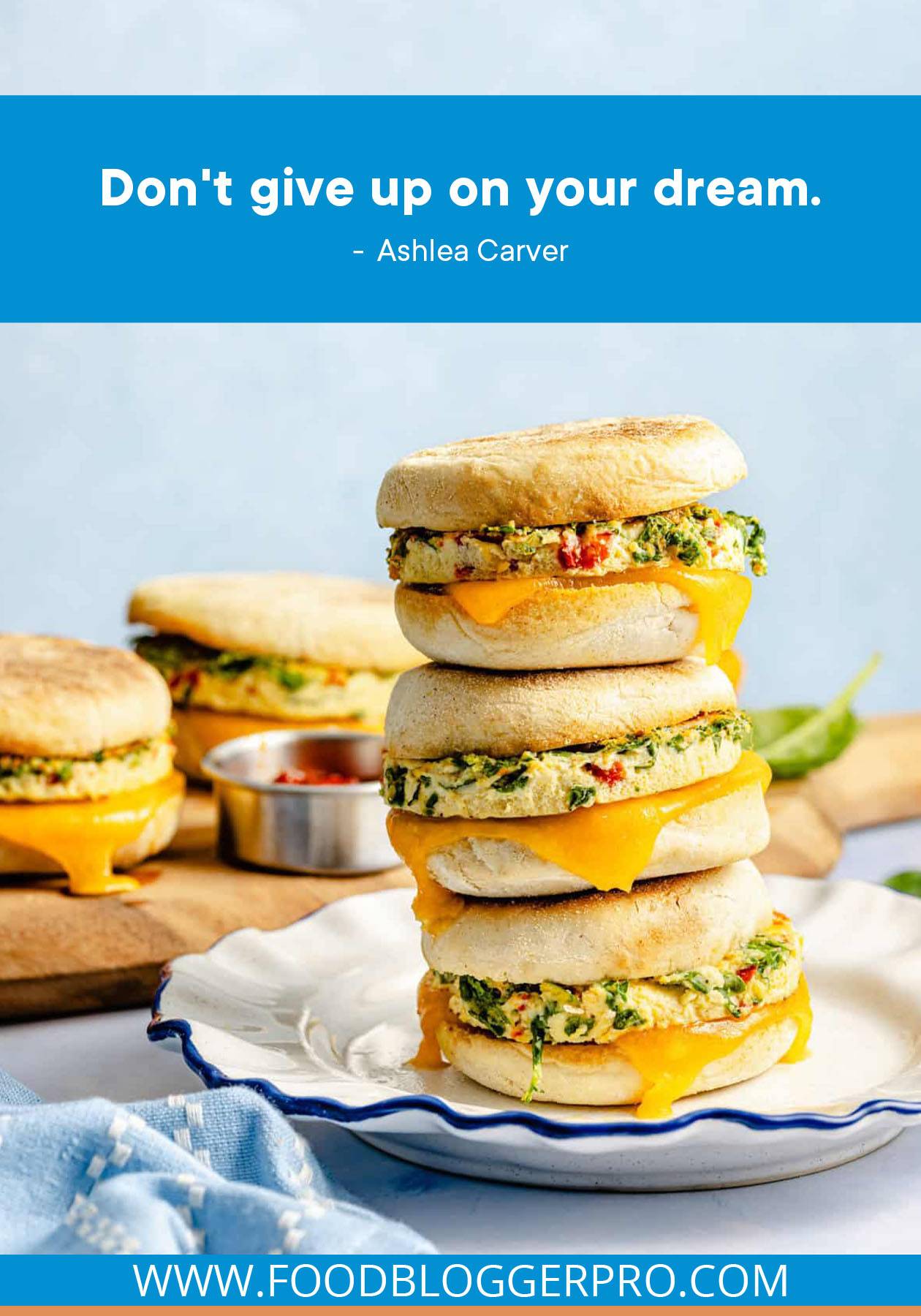
Ashlea Carver: And then it’s just like all of these milestones. But don’t give up on your dream essentially, I think is what I’m trying to say, is that there are a lot of reasons to look around and feel like the market is saturated. AI is taking over. This is a terrible time to blog. This is a terrible time to start and create a business. And all of those reasons can exist and will continue to exist. There’s always a reason not to do something, but do not give up on your reason why you do want to do it. Lock into that, give it everything you’ve got, give yourself grace and patience to be down for the journey because it is a journey. It might not happen overnight, but I can guarantee you that if you just keep putting one foot forward, that you will see the success that you’re looking for.
Ashlea Carver: And that success might change what you want from your online business or your online dream. It may evolve over time as you change and as your life changes. But I think having a dream, knowing that that dream is worthwhile and worthy of pursuit and never giving up on it until you actually take hold of it and having that great and determination is really powerful. And I think that if you do that, you can see more success than you can ever dream of.
Bjork Ostrom: That’s amazing. Ashlea, I love that so much. If people want to follow along with what you’re up to, what’s the best place to do that? My guest is Instagram, the site, anywhere else that you’d want to mention.
Ashlea Carver: I’m all the healthy things on all platforms, so just come and find me wherever you are. I’m there.
Bjork Ostrom: Awesome. Ashlea, thanks so much for coming on. Super fun. To be able to talk to you as somebody who knew the podcast and was familiar with it, to be able to have you on is so great. So thanks for following along and then also coming on and sharing all that you’ve learned over the years. Really appreciate it.
Ashlea Carver: Thanks, Bjork. It was so fun. Thanks for having me.
Emily Walker: Hey there, this is Emily. Again, thank you so much for listening to that episode of the podcast. If you enjoyed the episode, please take a moment to leave a rating or review wherever you listen to your podcasts. We’ll be back next week with another great episode. Buick is interviewing Adam Gallagher from the food blog Inspired Taste. In the meantime, hope you guys have a wonderful week and we’ll see you soon.
I just posted the most raw and ridiculous video on my page becasue it is simply time to show up. The top prioirty of helping people is allowing them to connect to the creator because humanity is lonely. They needs us on a one on one level and the more ways we show up with our faces the closest we can get to one on one is going to not just build our brands but save hearts and souls along the way from the pain of being alone. Its just a step, but it is needed. Love Yall!
Yes!! This is exactly it. There’s something so powerful about choosing to show up as you are, even when it feels uncomfortable or a little unpolished. That’s the kind of content people actually feel! Proud of you for showing up!