
For years, food bloggers have been told the same thing: grow your traffic, optimize for ads, chase SEO, repeat.
And while blogs are still incredibly valuable, many creators are realizing something important: relying on one income stream is risky and building a deeper connection with your audience matters more than ever.
And so, that’s where paid newsletters come in!
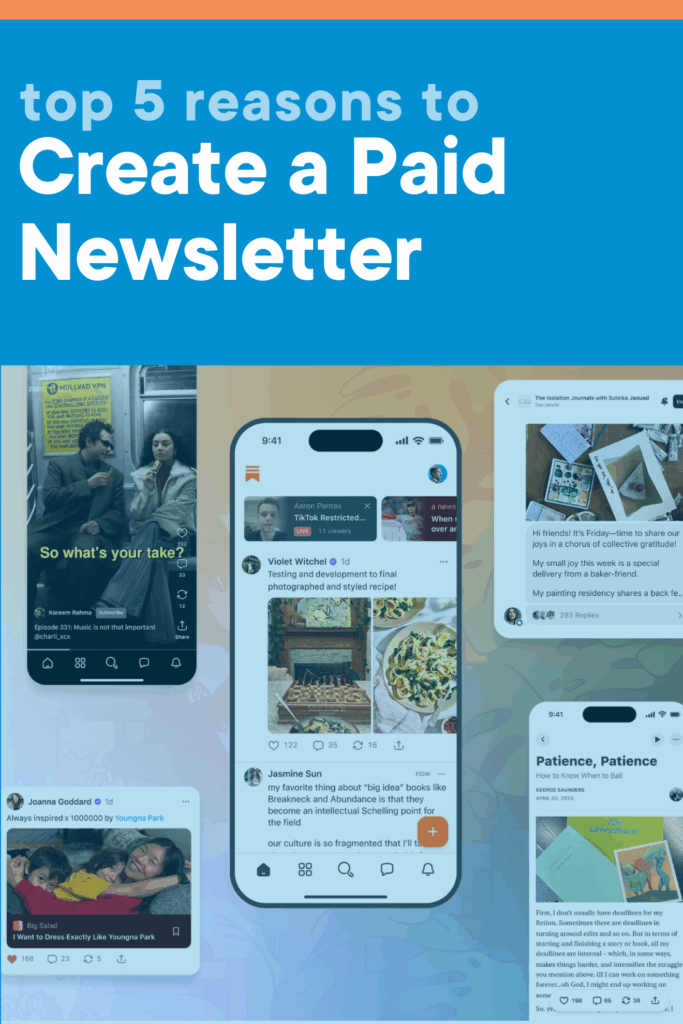
A paid newsletter isn’t about “locking everything behind a paywall.” It’s about offering your most engaged readers a more intentional, supportive, and sustainable way to support your work.
So, here are the top five reasons food bloggers should consider adding a paid newsletter. Plus at the end we have a quick section on who shouldn’t start one (at least not yet).
1. You Own the Relationship (Not an Algorithm)
Social platforms will always be unpredictable. Algorithms change without warning, search traffic ebbs and flows, and ad rates fluctuate based on factors entirely outside your control. One update can dramatically affect how many people see your work, even if you’re creating your best content yet.
Your email list, on the other hand, is something you truly own.
When someone subscribes to your newsletter, they’re choosing to hear from you directly. When they pay for it, they’re making an even stronger commitment.
A paid newsletter allows you to build a direct, intentional relationship with your most loyal readers without needing permission from an algorithm or platform to reach them. Your content lands straight in their inbox, in a space they check daily, and in a format designed for depth rather than speed and entertainment.
Instead of constantly chasing reach, trends, or virality, you’re nurturing connection.
And that kind of relationship has real, long-term value:
- Trust builds faster when readers hear from you consistently, in your own voice, without distractions or competing content
- Feedback and conversation increase, because subscribers feel invested and are more likely to reply, engage, and share what they want more of
Over time, this creates a virtuous cycle: the more you show up thoughtfully for your readers, the more they trust you and the more stable and resilient your business becomes.
A paid newsletter isn’t just another content channel; it’s a foundation that supports everything else you create!
2. Predictable, Recurring Income
Paid newsletters also create predictable, recurring revenue, which makes planning, goal-setting, and decision-making far easier than relying solely on ads or brand deals.
Instead of starting from zero every month, you’re building a steady baseline of income that compounds over time. You know roughly what’s coming in, which allows you to make smarter, calmer choices about your business.
And here’s the thing: you don’t need a massive audience for this to matter.
Even a relatively small group of paid subscribers can make a meaningful difference:
- 100 subscribers at $7/month = $700/month
- 300 subscribers = $2,100/month
- 1,000 subscribers = $7,000/month
For many creators, that level of income can cover groceries, rent, business costs, or even replace a part-time job.
This kind of stability can:
- Reduce the pressure to say yes to every brand deal, especially ones that don’t fully align with your values or audience
- Give you more creative breathing room, so you can focus on work that feels meaningful rather than rushed or trend-driven
- Support slower, higher-quality content, whether that’s deeper writing, better testing, or more intentional storytelling
Most importantly, this income grows alongside your audience, not at the mercy of traffic spikes, seasonal dips, or algorithm changes. As trust deepens and your community grows, your revenue grows with it.
Over time, that predictability doesn’t just change your finances. It changes how you show up creatively and how sustainable your work feels day-to-day.
Caroline Chambers was on the podcast to talk about how she grew her Substack newsletter into a 7-Figure business!3. A Space for Deeper, More Creative Content
Your blog often needs to be optimized for SEO. Social content needs to be quick, catchy, and scrollable.
A paid newsletter gives you something different: space.
Space to slow down, expand on ideas, and create content that isn’t rushed, keyword-stuffed, or forced into a 7-second hook. It’s a place where depth is not only allowed but instead it’s expected.
With a paid newsletter, you can:
- Share the why behind your recipes — the season, memory, or moment that inspired them
- Offer seasonal meal plans, menus, or frameworks that help readers actually use your recipes in real life
- Write more personally or thoughtfully, weaving together food, routine, creativity, and everyday living
- Create recurring series your audience begins to look forward to and build rituals around
Many food bloggers use newsletters as a home for content that doesn’t fit neatly anywhere else, such as:
- Weekly or monthly meal plans that prioritize ease and flexibility
- In-depth cooking guides (how to stock a seasonal pantry, cook with what you have, or build flavor over time)
- Behind-the-scenes looks at recipe testing, failures, tweaks, and thought process
Because readers are paying, they’re also more invested. They’re not skimming, they’re reading, saving, replying, and actually using what you share. That creates a feedback loop where your most thoughtful work is met with the most engaged audience.
For many creators, this becomes the most creatively fulfilling part of their business: a place to experiment, reflect, teach, and connect — without the pressure to perform for an algorithm.
4. Your Most Engaged Readers Are Happy to Support You
As we mentioned, you don’t need thousands of paid subscribers for a paid newsletter to work.
In fact, most successful paid newsletters are built for a very small, very specific group: your top 1–5% of readers. These are the people who already feel connected to your work aka the ones who:
- Save your recipes and come back to them again and again
- Cook from your site regularly and trust your flavor combinations
- Open your emails consistently (and actually read them)
- Reply, ask questions, and treat you like a real person, not a content machine
These readers already receive real value from what you create. A paid newsletter doesn’t force them to pay, it simply offers them a deeper way to engage and a clear way to support you.
When expectations are clear on what they’ll receive, how often, and why it’s valuable, readers are often grateful for the option. They like knowing their support goes directly toward the recipes, writing, and resources they already love.
And for you, that support creates something powerful: permission to prioritize the people who care most, rather than chasing mass appeal or endless growth.
A paid newsletter aligns your incentives with your audience’s needs and that’s where sustainable, feel-good growth happens.
5. It Strengthens (Not Replaces) Your Existing Platforms
A paid newsletter isn’t meant to replace your blog, Instagram, or any other platform you already use. Instead, it supports and strengthens everything else you’re building.
Think of your public platforms as the front door, the place where new readers discover you. Your newsletter, on the other hand, is where the relationship deepens.
Many food bloggers use paid newsletters to:
- Share their content in a more personal, conversational way
- Drive intentional traffic back to blog posts and recipes
- Expand on ideas that don’t quite fit SEO or social formats
- Test new concepts, series, or offerings before making them public
- Create a sense of rhythm and consistency beyond algorithms
Rather than competing with your blog, a newsletter can actually extend the life of your content. A recipe post becomes a story. A social video becomes a thoughtful follow-up. A seasonal theme becomes an ongoing conversation.
It’s also one of the best tools for building community alongside content. In a newsletter, readers aren’t just consuming — they’re responding, asking questions, and engaging in a quieter, more meaningful way.
Think of it as the cozy inner circle of your brand: smaller, more intentional, and deeply supportive. A space where your most invested readers gather, and where your work can exist beyond trends, traffic spikes, and constant posting.
When used well, a paid newsletter doesn’t add pressure, instead it adds purpose to everything else you create.
Who Shouldn’t Start a Paid Newsletter (Yet)
Paid newsletters are powerful but they’re not for everyone, and that’s okay.
You might want to wait if:
1. You Don’t Have a Consistent Free Email List
A paid newsletter works best when it grows naturally from a free audience. If you’re not emailing consistently yet, that’s the first place to start.
2. You’re Already Overwhelmed With Content
If you’re struggling to keep up with your blog, social media, and life, adding another commitment can lead to burnout. A paid newsletter should feel aligned, not stressful!
3. You’re Not Clear on What You’d Offer
People don’t pay for vague promises. If you’re unsure what makes your perspective, recipes, or voice unique, take time to clarify before launching.
4. You Don’t Enjoy Writing
Newsletters are conversational and personal. If writing long-form content feels draining, this might not be the best format for you.
5. You’re Hoping for Instant Income
Paid newsletters grow slowly. They’re a long-term investment, not a quick cash grab.
For food bloggers who value connection, consistency, and sustainability, a paid newsletter can become one of the most rewarding parts of their business.
And if now isn’t the right time? That’s okay too.
The goal isn’t to monetize everything, it’s to build a business that supports the life and creative work you actually want.
P.S. If you’re looking to start and grow a paid newsletter…