
Listen to this episode of The Food Blogger Pro Podcast using the player above or check it out on Apple Podcasts or Spotify.
This episode is sponsored by Yoast.
Welcome to episode 596 of The Food Blogger Pro Podcast! This week on the podcast, we are kicking off our Yoast mini-series by sitting down to interview Carolyn Shelby from Yoast!
Last week on the podcast, Bjork chatted with Holly Erickson and Natalie Mortimer. To go back and listen to that episode, click here.
How to Stay Discoverable as Search Evolves with Carolyn Shelby
If you’ve been wondering whether you need to start over with your SEO strategy, Carolyn Shelby from Yoast has some reassuring news. She sees “generative engine optimization” (aka GEO!) as an extension of SEO because both come down to making useful content visible, accessible, and easy for machines to understand. In this episode, Carolyn shares how to keep your site crawlable, why key information should be clearly presented in text, and how firsthand experience gives AI a reason to cite and link to you.
The conversation also explores how AI is changing the way people discover content and how creators earn from it. With search spreading across chatbots, social platforms, and video, and fewer people clicking through traditional search results, Carolyn emphasizes building creating memorable content that draws your audience back to your site. If you want to stay discoverable as search continues to evolve, this episode is for you!
Three episode takeaways:
- GEO is an extension of SEO: Carolyn explains that generative engine optimization and SEO rest on the same foundation: making useful content visible, accessible, and easy for machines to understand. That means keeping your site crawlable, presenting key information clearly in text, and offering firsthand experience that gives AI a reason to cite and link to you.
- A memorable brand brings people back to your site: With search now spreading across chatbots, social platforms, and video, and fewer people clicking through traditional search results, discovery is changing! Carolyn recommends building a memorable brand and creating distinctive content that draws your audience back to your site.
- AI works best as an assistant: Along with configuring SEO tools like Yoast, Carolyn shares how to use AI as a personalized drafting and learning assistant. The key is to give it specific context about what you need and to review its work before you publish.
Resources:
- Yoast
- Binging with Babish — YouTube
- Dan Martell
- WisprFlow
- The SEO Update: Yoast’s podcast!
- Follow Yoast on Instagram
- Join the Food Blogger Pro Podcast Facebook Group
Thank you to our sponsors!
This episode is sponsored by Yoast. Learn more about our sponsors at foodbloggerpro.com/sponsors.
Find your next great post idea with Yoast.
If you’re a food creator, you’ve probably hit a creative roadblock. You want to make more content, but you’re not sure what’s missing. Where are the gaps on your site? That’s where the Yoast AI Content Planner comes in. It looks at the posts you’ve already published and finds new ideas to build on, like a side dish for one of your mains or a seasonal twist on a reader favorite. Working right inside the WordPress block editor, you can:
- Get five content ideas built around your own site, not generic suggestions
- Pick an idea and get a starter outline
- See what you could create next (it won’t write your recipe for you)
The AI Content Planner is included with Yoast SEO Premium, Yoast WooCommerce SEO, and Yoast SEO AI+. Use code foodblogger10% at checkout for 10% off.
Interested in working with us too? Learn more about our sponsorship opportunities and how to get started here.
If you have any comments, questions, or suggestions for interviews, be sure to email them to [email protected].
Transcript (click to expand):
Bjork Ostrom: Carolyn, welcome back to the podcast.
Carolyn Shelby: Thank you for having me back.
Bjork Ostrom: Yeah, it makes sense to have somebody like yourself on the podcast repeatedly, because you do the type of work and are deep in a world that people who listen to this podcast want to know about, which is SEO. Also, increasingly now, people are using this term GEO, which, in your opinion— you don’t necessarily love the term GEO or the acronym GEO. Explain what that is for people, and maybe why you don’t necessarily love that as an acronym to use.
Carolyn Shelby: Okay, so GEO purportedly stands for generative engine optimization. And I don’t like it for a number of reasons. Reason number one is your brain looks at that and says “geo.” And geo is a very, very old word, thousands of years old, from the Greek, that means earth. It’s got a lot of baggage. So just from a strictly SEO point of view, it’s going to be very hard to get that to rank for what they mean for it to rank for, rather than all of these, you know, earth-related terms. So, yeah, it already means something. It’s not like you’re making up something new and trying to give the new thing a meaning. You’re trying to change something that has literally thousands of years of meaning attached to it and redefine it randomly for a very small subset of people.
Bjork Ostrom: Already has a meaning. Geocaching. Yeah. Yeah.
Carolyn Shelby: The other reason I don’t particularly care for it is that it implies that the things you do to improve your visibility in the AIs and the LLMs are fundamentally different from what we’ve been doing for SEO. SEO was never, at its core, supposed to be about getting clicks from Google. It was about visibility and making sure that your content was presented in a way that was accessible and visible. And that’s really all GEO is supposed to be, too, right? So to call it a new discipline, I think, is not accurate. I look at it more like a burrito versus a soft taco. The ingredients are essentially the same.
Bjork Ostrom: Sure. Just wrap— yeah. Yeah, wrapped a little bit different.
Carolyn Shelby: The proportions are a little bit different, and it’s folded differently. So, yeah, you know. That’s why GEO kind of makes my skin crawl. But I understand that sometimes we have to roll with what everybody else is using. That doesn’t mean I have to like it, and I don’t.
Bjork Ostrom: Yeah. Can you talk about the things that are the same? You talked about the similarities between them, and, at its core, a lot of the things that we are trying to do— there’s two— what did you say? It was visibility and accessibility. Talk to me about what those mean and how those are the same, whether it’s GEO or SEO.
Carolyn Shelby: Accessibility. So the primary function of SEO was to make sure that the crawlers could read your website and understand the message in the same way, ideally, that people understand it, so that when people go looking for your website, search engines like Google know enough about it to serve it up as an option to the people who are looking for it. So they’re matching the searcher’s intent with what’s on your website, right? How is that different from the way we’re interacting with the LLMs? It’s not. It’s the same. So rather than focusing on specifically making sure that Google can crawl your site and understand your site and is serving it up the way that you want it served up, we now just have to consider other platforms. And, to be fair, had Google not accelerated so fast and developed such a stranglehold on the market, all along we would have had to consider other platforms. It’s just the way it shook out; it kind of ended up being, you know, the Google show. But that’s no longer the case. And Google is still also shifting over to a more AI-centric experience, which I’m sure we’ll get into later. So the things that are still the same: your site still has to be crawlable, your content still has to be readable, and in a way that makes the message you’re communicating to the humans the same as the message you’re communicating to the machines. And that means things like not burying things behind images. You know, back in the day, the machines were not good at reading pictures. So anything that was stuck inside of a picture, the machines could not perceive, and that information would not then be known to them, which is very similar to what we have going on now. At inference time, the LLMs come and just grab the text off your page. So they’re not necessarily looking at what’s in the picture. They’ll see the alt text behind it, but they won’t see the picture. And that is identical to the way search engines were for a very long time. Let’s see what else is very similar.
Bjork Ostrom: Can you talk about— when you say inference, what is that moment? What is the inference moment? What does that mean, and what’s happening?
Carolyn Shelby: So when you ask a question of, like, ChatGPT, let’s say, and you ask it a question that it determines is best answered by something new, rather than something that it knows in its training set— because its training set might not necessarily be up to the minute, up to date, right?— it will go out and run searches, and it will check websites for that information. So that’s the inference time. It’s going out, it’s finding live data, it’s grabbing that data, and it’s processing it, and then it synthesizes all the answers that it gets into a single answer that it tells to you. And when it goes out to grab content from web pages, don’t imagine it like a crawler, because it’s not really crawling. It’s more like it identifies targets and drops in through the ceiling like Tom Cruise in Mission: Impossible, right? And it grabs what it wants, and it pops right back out the ceiling. So it’s not searching.
Bjork Ostrom: Amazing.
Carolyn Shelby: And it’s not taking its time to open up filing cabinets and dig around. It’s grabbing the thing that’s on the desk and leaving through the ceiling. That’s inference time. At that point in time, it is only grabbing the text on the page. It might see the alt text behind the images, but it’s just gonna grab the text on the page. So that’s where you want to make sure that the important data, the message that you want to have communicated, is easy for it to access. And the easiest way for it to access it is to have it in text, visible on the page, visible on first load, and not hidden behind tabs or in toggles or requiring a human interaction to make it visible.
Bjork Ostrom: Hmm. Yeah. And what you’re saying here is that’s a similar behavior to what we would have been thinking about 10 years ago. At its core, what we’re trying to do is, number one, we create the page that a human looks at. We’re creating content that humans read and interact with in the world of recipe content. They’re making that recipe. But also we’re making content now that, increasingly, and in a lot of cases the majority of the time—
Carolyn Shelby: Mm-hmm.
Bjork Ostrom: —it’s a bot interacting with. And what you’re saying is we want to make sure that we are structuring things on our page in a way where it is as conducive as possible to having that bot come and know right where to go, know the information to pull, not make it difficult. That’s kind of this idea of the technical considerations within that. If somebody wants to get good at that, both for the sake of SEO broadly or GEO or whatever the term is that we’re going to be using for it, how can we do that? What are the things that we need to do in order to set ourselves up well, so our site is structured in a way where it’s going to be easy for, you know, that Tom Cruise bot to drop in and get what it needs?
Carolyn Shelby: You know, it’s remarkably easy. Don’t impede the crawl. So if you have things at the top of the page that could possibly prevent a crawler from reading down the page, that’s going to be your biggest blocker right there. I’m so hesitant— I don’t want this to seem like I’m picking on any particular platform, but there have been ad platforms that will want you to put banners right across the top of your page. And I’ve had situations where not all the ads that are delivered work 100% well. And sometimes, when those ads are broken, it will prevent a crawler from going down the page and crawling. Ideally, for the LLMs, that’s not a problem, or it should be less of a problem, because they’re not going to try to render that JavaScript in the first place. But just making sure that there’s nothing preventing a crawler from grabbing that text off of the page is going to be 99% of what you need to do. You don’t need to worry about having exactly the right amount of text or a specific quantity or density of keywords. You need to have topical relevance. You need to communicate your message clearly and in language that the user is using. You need to have unique content and perspectives. Like, if an AI can reliably reproduce what it is you’re communicating on your page, you have to ask, what am I contributing to the conversation? So even if you feel like you’re adding too much text to the page— the nice thing about these robots is that people might not read all of that. And we know from recipes that we have to have our life story on it, right? Because otherwise, you know, people just want the recipe; Google wants your life story.
Bjork Ostrom: Yeah, it’s such an interesting point. I’ve never heard anybody describe it like that, but I think it’s really true. And it’s one of the reasons why stories exist. Like, if those people had the context around why people are adding them, then they would know it’s because there’s a reason that it’s happening.
Carolyn Shelby: Literally, yeah. So you go to the page, and you have to scroll through nine miles of, you know, Nana’s backstory, and then you see 90 ads, and then you get to the recipe, which is really the only thing you wanted in the first place. With the LLMs and with, like, AI Overviews, they’re going to be skipping a lot of that anyway, and they’re probably going to be going straight for the recipe, which creates a “why would I want to do this, then, if they’re not going to come to my site?” Which is an entirely different problem, which is: how do we continue monetizing? I actually just got back from an affiliate conference in London, where I talked to the creators about that, because there are now ways that you can build your audience and continue to influence their purchases, but you’re going to have to take some steps to drive them back to a page on your site so that you can cookie them and get your credit with your affiliate partners. But that’s probably outside of the scope of this question.
Bjork Ostrom: Hm. But just real quick on that, the point is you can continue, as an authority, to influence somebody within the context of an LLM chat. At some point they would need to come to your site, and— yeah.
Carolyn Shelby: Which is what— yeah. So when you’re— rather than just having a generic story about Nana’s banana bread, if there’s any way you can do what is effectively original research that the LLMs could not possibly reproduce because they haven’t seen it yet, right? That is going to give them a reason to cite you; that is going to give them a reason to include a link to your page when they present the answer to the user. So let’s go with the banana bread example. If you were to say, try 47 different banana bread recipes and talk about why the recipe that’s on this page is the one that you finally settled on, because you literally tested 47 other ones. And this is the data from my tests. Like, don’t just say “I tested 47 other recipes.” “Recipe number one: the problem with that one was it was too dry. I think there was too much butter in it. I think there was X, Y, or Z.” These were the results from my test. This was the sample size that I had. Like, treat it like a research paper, right? You can find a way to write that in a compelling, friendly way that your readers will enjoy, but it’s that unique research and that unique data that the LLMs desperately want. That is going to be your differentiator. That’s what’s going to make them cite you and not any of the 800 other people who have banana bread recipes passed down to them from their nana.
Bjork Ostrom: Yeah. And talk to me about the Tom Cruise moment. So Tom Cruise comes in. Could Tom Cruise just grab that information and bring it back to the LLM?
Carolyn Shelby: Yes, but the LLMs are— they like to present things with proof. So when they don’t present something with proof, it’s because they have determined that the thing they’re presenting is so commonly known it doesn’t require specific citations. But—
Bjork Ostrom: Hard— how to hard-boil an egg, for instance.
Carolyn Shelby: Yeah, that’s a known commodity. People know how to hard-boil an egg. Unless you come up with a specific trick that involves something really unusual, they’re going to treat that as a known fact: I don’t need to cite you. So giving them reasons to have to cite you is how you get them to repeat not only your brand and your message but drop a link to your website too. And you want those links, because that’s an opportunity for people to click through and not only verify what they just read, but they’re exposed to your brand now. If they like you, they might start asking for you by name. If you can get the users to mention you by name or by brand when they ask a question, you are guaranteeing that your site is going to come up, because the LLMs, of all the things that they do questionably, they are very good about saying, “My person right here has identified that she really likes this lady’s cooking recipes. So I’m going to make sure that I hit this hard, because I know she likes it, and above all else, I want to make her happy.”
Bjork Ostrom: Yeah. These— ChatGPT, Claude, Gemini, whatever it might be— are really good at having context. If part of their context is preference for a brand— it could be a clothing brand; in our case, it’s a food brand— that’s going to be important for future interactions that are food-adjacent. So if you’re looking for a recipe and you mentioned Pinch of Yum two weeks ago and that you really liked a recipe, they—
Carolyn Shelby: Mm-hmm. Yes.
Bjork Ostrom: —these LLMs will be intelligent enough to know, “Hey, maybe I’ll surface a Pinch of Yum recipe if they ask for another recipe that they could make that night.” One of the things that a lot of people are trying to make decisions on in our world right now is whether to block LLM bots or not. And we’ve made the decision not to, but I know a lot of people have made the decision to block them. What would your advice be for a company that makes the majority of its income from people who are literally on its site?
Carolyn Shelby: You have to find a way to drive them to your site, but blocking the LLMs is going to be counterproductive to branding and to exposure. It is tantamount to blocking Google, you know, five years ago. Why would you do that?
Bjork Ostrom: Yeah. And draw that out a little bit more. So, like, I think the people who would be blocking would be saying, “But they’re just going to train on my data, and then they’re going to surface my data, and they’re going to put my recipe in the content, and they’re never going to need to come to my site.” How do you reconcile that?
Carolyn Shelby: So if you’re doing something with your recipe that is truly novel, it is unlikely that they’re going to not credit you with that truly novel thing that you did. The problem is it’s very difficult to come up with a truly novel recipe, which is why your presentation is so important, and the, you know, the data or that research that you might be able to add to it, or that first-person experience and the little tidbits that you can add to it. But the LLMs are not only 100% versed in every recipe that’s ever existed, they’re also really good at coming up with new recipes, because they understand chemistry. And this isn’t a situation where they’re going to recommend glue anymore. You can literally say, “I want to make brisket sliders for Thanksgiving. I want to use the Crock-Pot. My stepfather won’t eat onions or mushrooms. And these are the five wines I have on hand.” And it will come up with recipes, and it will come up with recipes that use those wines, and not only use those wines, it’ll come up with custom cocktails that you can make and seven different side dishes that you can put that same wine in. And it will explain to you the chemistry behind it, too: “Because this wine has 17% alcohol, and blah blah blah, you want to use this much sugar, and this particular kind of sugar is going to, you know, pair very well with that.” They’re really smart. So to think that your recipe is so unique that there’s no possibility that the LLM could have come up with it, I think, is hubris. Unless you have genuinely done the culinary equivalent of curing cancer, it’s unlikely that you’re as original as you think you are.
Bjork Ostrom: Yeah. Yep. And I think what you hear often is a lot of people using some of those examples, like you talked about— this was probably two or three years ago, where somebody asked it for a recipe and it included, you know, glue in a pizza or whatever it was. And two years in the world of AI is like 20 years in normal business development. And the case that you’re making, which I would tend to agree with, is that—
Carolyn Shelby: Absolutely.
Bjork Ostrom: —there’s been so much that has advanced in the world of AI that the glue problem, for sure, is solved. You might have some nuanced takes on, quote, unquote, taste. Doesn’t an LLM have taste? No. But I’ve never heard somebody describe it like this, and I think this is really true: it does understand chemistry. And a lot of cooking, baking for sure, is chemistry. And—
Carolyn Shelby: Yeah.
Bjork Ostrom: It’ll only be better in a year or two. And I think sometimes, as a creator, especially in the world of food, it feels good to be able to say, “It’s not going to be able to do this thing that I can do.” But the reality is— and I hear this even from people that I’m having conversations with that are maybe not food creators but are in the world— they’re like, “Yeah, I’m actually starting to use it quite a bit for whatever it might be, meal planning or— you know, I asked it to do this one recipe, and it turned out really well.” And I think you’ll hear more and more of that. So then what does that mean for us as creators? How do we differentiate ourselves if that’s the reality? What I hear you saying is a unique story, unique data. I would also guess part of it would be unique media. Like, how do you create something— yeah, videos. Can you talk more about that?
Carolyn Shelby: Videos. So, if you look, there are a couple of advantages to videos. Advantage number one: let’s look at Gemini and AI Overviews. One thing that you’ll notice about them is that they push videos, right? Why is Google pushing videos? Because they can still make money on YouTube videos, because they’ve got the ads that run in them, and people still have to have eyeballs and go physically watch it, because the LLMs aren’t spending that time watching those videos, but people will, right? So the videos are going to be disproportionately promoted compared to text. So you’ve got that going for you. When you get the videos, now you’ve got an opportunity— maybe you don’t have a great story, maybe you really are just cooking. But the presentation, the video presentation of you going through the process of cooking, is interesting enough to stand on its own. And the LLM can extract that and repeat it to somebody, but it cannot replace the video of you doing the cooking. So you’ve got that. That’s the advantage that we have over the machines right now. Until they get really good at making fake videos, we’re probably really screwed. So we’ve got that advantage right now. What you can do from those videos is direct people back to your website. You can direct them back to maybe some vanity URLs that you’ve made, where you’ve got a special landing page where they can, you know, “If you like this recipe, go to mywebsite.com/this-recipe, and you can print off a recipe card, and I’ve got some coupons where you can buy this particular ingredient.” Get them back to your website, because if you can get them to come back to your website, now you can cookie them. Now you can present them with your affiliate links, and now you can make your extra money, and you’re driving that traffic. It’s a circuitous route to drive the traffic, to be sure, but it’s going to be far more helpful than just adding new pages to your website, because that is definitely content that the LLMs are not yet in a position to replicate perfectly. And people know if it’s AI or not. I mean, some of it can fool you, but not a video that long.
Bjork Ostrom: Yeah. Mm-hmm. Yeah. It seems like what has been happening is there is a shift, and the shift is around discoverability. And search is still an important place to get discovered. But what I hear you saying is one path of discoverability might be that somebody sees the video that you’ve created, they watch that video, they interact with your video, they eventually get back to your site. But it’s almost like, in the example you just shared, it’s Google to video to site. We see it also where the discoverability path is on social itself. You’re creating a video, it’s on Instagram, and then people are interacting with your site. Sometimes it is from Instagram to Google to your site. That’s another path that I think is important. And a lot of this ties into one of the opinions that it sounds like you have, which is that search isn’t necessarily dying. It’s just changing—
Carolyn Shelby: Mm-hmm.
Bjork Ostrom: —and maybe even expanding. Can you talk about that a little bit?
Carolyn Shelby: Search is expanding but also contracting. So what’s happening is we had this entire economy built on monetizing the friction in the search journey. So when people would do a search for a keyword, they would get, you know, your 10 blue links, and they would have to— so that’s touch one, right? They would go to one website and go, “Maybe this isn’t what I want.” That was two touches. Then they go back to the search list; that’s three touches. Then they go to another website; that’s four touches. And it would be 10 to 15 or more touches on all these different surfaces that we could monetize, and we could get their attention and have an opportunity to present them with ads, to get them to do something. It was a lot of opportunity. Now all of those research touches are being compressed, from 15 down to zero to one, because it’s all happening within ChatGPT, or even in Google; it’s happening in AI Overviews, because everything is spawning an AI Overview now. There’s no reason for them to go out and see all of these additional touches. So that’s the contraction part. The search expansion is more—
Bjork Ostrom: Hm. ‘Cause it’s all happening within ChatGPT.
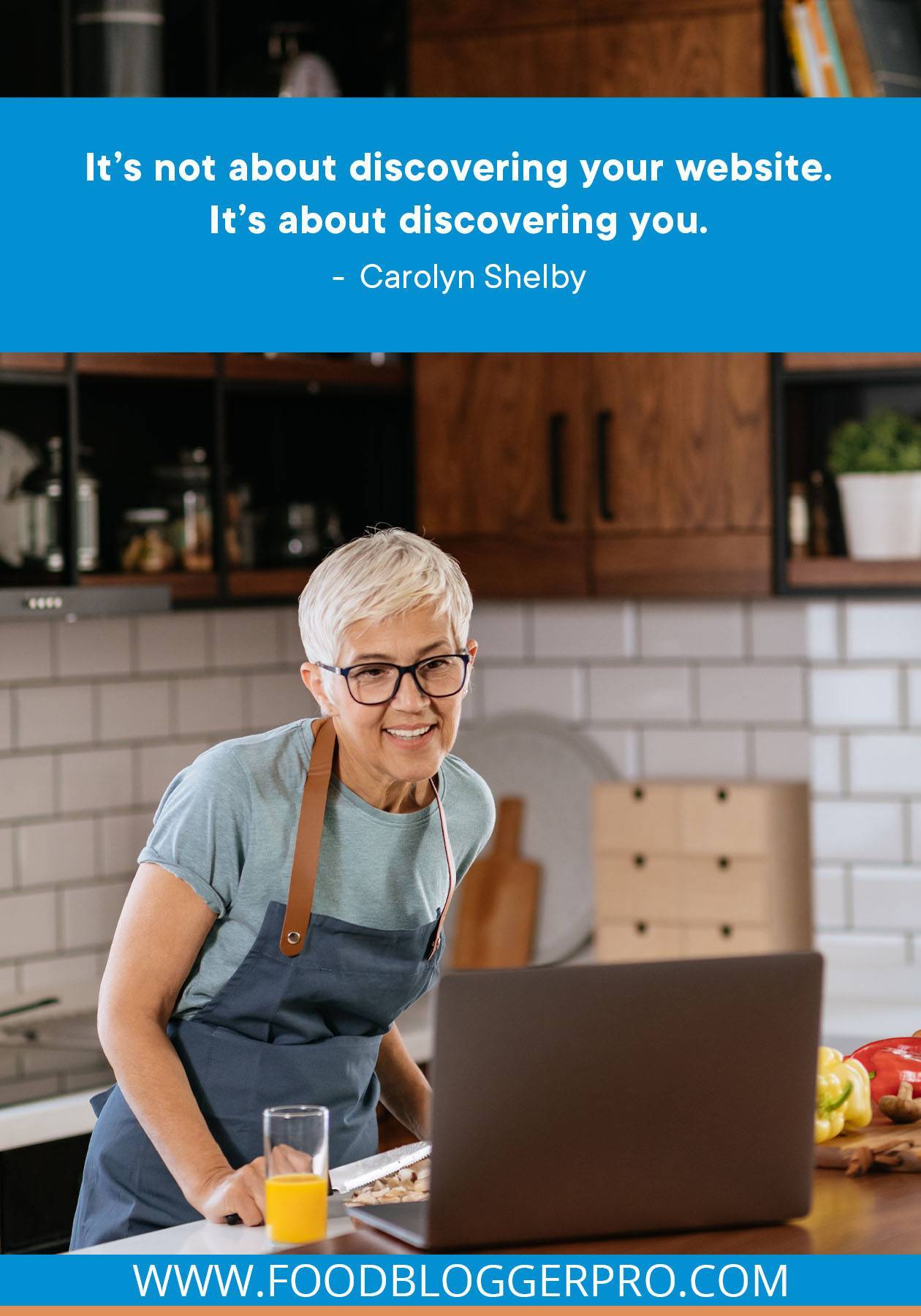
Carolyn Shelby: —it’s less laser-focused on “This is the keyword I must rank for. I must squash this keyword into every single nook and cranny on this page, and therefore I will be number one and I will dominate the search results.” It’s not like that anymore. And it’s not all Google. It’s expanding out to your other LLMs, your social media. There are so many different places where someone has an opportunity to discover your brand, because it’s not about discovering your website. It’s about discovering you, your brand, and then what do you do with them once you’ve got their attention? You drive them to your video, or you— do you ultimately want to drive them back to your website? Yes. Because that’s still how we control the monetization mechanisms, for the most part. But the opportunities to be discovered have expanded way beyond just Google. The strategies have expanded way beyond just keyword targeting. So that’s how I would, I think, explain that.
Bjork Ostrom: Yeah, and it’s all search, right? It’s search, or discoverability. It’s all under this broad umbrella of getting discovered. And I think it’s one of the things that I am really excited about and that we keep coming back to in the conversations we’re having on this podcast, which is that things are shifting, things are changing. And you had said this: you can’t just publish three new posts to your website and then know that those will eventually rank and then people will click on those and come to your website. That’s just changed. It’s shifted. But people are using digital interfaces, whether they’re phones or computers, more than they ever have before. But it feels like what has happened is that those places where people are interacting with content are much more spread out. It’s social media platforms, it’s websites, it’s ChatGPT, it’s Claude. Maybe there’s this intermingling of all of them, where you are doing a little bit of research in ChatGPT and then maybe you pull up a website and you do a little bit of research there, and, you know, then you listen to a podcast— who knows what it is. But talk to me a little bit more about that idea of brand and your brand and the value of that, because I think a lot of people hear that and they’re trying to make sense of it. If I want to build a successful business online, let’s call it a business that is the equivalent of what my full-time job would be— maybe it pays me $75,000 a year; that’s my goal right now. I want to build that as a digital business that is this thing that I’ve built. What does that look like, to build a brand? People are kind of searching for this new playbook. Do you have any advice for people who are starting to enter into that world?
Carolyn Shelby: If you boil it down to the molecular level, what is a brand? A brand is what people think or say when they’re thinking about you. So let’s look at big brands and zoom in from there. Disney: What do we think about? Mickey Mouse, right? First thing we think of: ears. GEICO: got the gecko, right? Your brand is shorthand. It’s a mnemonic for what your business is, one that’s easy for the consumer’s brain to retrieve and associate. So when you’re making a brand, what is it you want? If nobody knows what your name is or what the name of your business is, how do you want them to describe you to ChatGPT or to Google to find you? Make sure that you’re memorable. You’re easy to remember and worth remembering, I guess, is the shortest way to do it. The hard part is getting the audience. Monetizing the audience once you have the audience, there’s a playbook for that. You know, you monetize your videos, you drive people back to your website, and your website maybe shows ads, you have affiliate partnerships where you’re selling, you know, cookware or something, you sell your book. There are things you can do once you have the audience. It’s getting the audience that’s the hard part. And how do you do that? You have to be memorable, you have to be worth remembering, and have a message that customers want to find and experience. So if all you’re doing is being one more random guy cooking something on the internet, how are people going to find you again? There’s a guy who cooks that I saw recently.
Bjork Ostrom: Yeah.
Carolyn Shelby: He has a great, very memorable style. And I don’t remember— see, and now I don’t remember his name, and I don’t remember exactly what he calls himself, but I would go to ChatGPT— yeah, I would go to ChatGPT and say, “There’s this guy who cooks, and he does this, like, gangster thug persona, and it’s funny as hell, because he’s describing things in—”
Bjork Ostrom: It’d be enough for you. There obviously was a file created. Yeah, and you’d find it.
Carolyn Shelby: —not at all culinarily accurate terms. And it’s just funny. It’s fun to watch him. He’s got a great shtick. And I would describe that to ChatGPT, and ChatGPT would go, “I know exactly who you’re talking about. Here are his videos, here’s his YouTube channel.” And it would show me those things. So what are you doing for your brand that makes you that kind of memorable?
Bjork Ostrom: Yeah. We talk about this idea, within the world of food— this would be more for informational content— the difference between a vitamin and a painkiller. And I think one of the things we can think about, if we are wanting to create content that’s informational as opposed to entertainment, which would be another category— but informational, knowledge-based— you can’t produce content anymore that is transactional, like how to boil an egg, as an example. It has to be more toward a painkiller. It has to be something where somebody has an issue and they’re trying to figure it out. How can you come alongside them and be that kind of Sherpa on that journey, to help them get to the other side or walk along the path? I think there— Sure.
Carolyn Shelby: Well, I mean, I might push back a little on that. I think you could still do transactional content if you’ve got a shtick. Solving somebody’s problem is your hook. It’s your angle to lure them in. But you could still have a good hook or angle with transactional content. I think it’s the presentation, and I think it’s the memorability of how you present that content, that makes it a brand builder or not a brand builder.
Bjork Ostrom: Yeah, yeah, yeah. Binging with Babish, I think, is a YouTube channel where— I think how he started was doing recipes from TV shows. And that might be considered transactional content. It’s a recipe, but in terms of how you are wrapping that, it’s unique, it’s interesting, it’s novel. He was a great storyteller in the content that he was creating in order to present that. So that makes a lot of sense. So for people who want to figure out how to solve some of the technical components that come along with that— they still want to build a site, they still want something that is structurally sound, they want to check all of these boxes— I know that Yoast builds plugins that are doing a lot of this kind of information building on the back end. Can you talk about how somebody can ensure that they are checking all of the boxes that they need to from a technical standpoint, so then they can do that creative work that supports the strong technical foundation that they’ve built on their website?
Carolyn Shelby: Yeah, so the plugin actually does a lot of the heavy lifting, and now you can’t just install it and say, “Look, problem solved.” You have to configure it. And, honestly, if I had a nickel for every time someone said, “I’ve got Yoast, it does— I don’t know what it’s doing, but it does stuff.” Ten bucks says you have not configured it. If I had a nickel for every one of those conversations, I would have a very expensive Frappuccino right now. The plugin itself does—
Bjork Ostrom: Yes. Yeah. Yeah. Yeah.
Carolyn Shelby: —a lot of the basic things that you might not know how to do or you might not want to take the time to learn how to do, like making sure your robots.txt is not blocking things that it shouldn’t be blocking. It fixes your sitemaps; it creates sitemaps for things that aren’t necessarily text pages. It makes sure that you have H1s on all your pages, that your titles are there and correct. It covers a lot of the bases. And the thing that I especially like is that there are default catch-all settings that you can set up. So if you forget to put in a custom page title on a recipe, it has a catch-all formula where it will take whatever you put in for the variables and put those in there for you. So it’s not truly default. It’s still customized; you still have control over it. It just catches you in case you stumble, kind of thing. And I really value that. The premium package also lets you set a lot of predefined defaults and backstops for your social media sharing, which I think is also very important. So it ensures that, if you forget to attach an image, you have a standard backup image. It’s got logos, schema, organizational schema, schema for you as an individual author. I don’t think we have time to go through all of the features, but it is helpful in that there’s no expectation that you suddenly become an SEO expert. And it walks you through. It doesn’t let you push buttons that maybe you shouldn’t push unless you need to push the button, kind of thing. So there’s an explanation about, you know—
Bjork Ostrom: Mm-hmm.
Carolyn Shelby: —”The reason we don’t have this turned on is because for most cases it’s not necessary. Are you sure you really want to turn this on? This is what’s gonna happen if you turn this on.” And it’s not—
Bjork Ostrom: Yeah, like paginated comments, as an example. Yeah.
Carolyn Shelby: Yeah. Yeah. So there’s flexibility in that you can do those things if you want to, but we do try to provide, you know, some guardrails for our less seasoned SEO clients, because not everybody knows all this stuff, and it changes. The information in SEO in the past 10 minutes— I’m sure during this interview, SEO has changed, because AI is moving so fast. So no human being who is not a professional SEO can reasonably be expected to keep up with all of that. And that’s what we try to do for them: keep up with all of the changes and make sure that those are just seamlessly and quietly incorporated into the plugin, so that the content producers can focus on producing the content.
Bjork Ostrom: Yeah. I think even just that example of social sharing is a really important one. The difference between sharing a link that is fully optimized for social sharing and not is pretty drastic. And I think we all maybe recognize that when we even think of sending a message back and forth via text message or Messages, you know, on iOS or whatever app you use. When it is fully optimized, there’s a beautiful image that goes with it, and you can see the description down below. Whereas if it’s just a link, it’s just the link. And so, for anybody who hasn’t done it before, grab a URL from one of your posts and just send yourself a message to see how that looks, because that in and of itself can make such a difference. And there’s a hundred different examples of doing that. One of the things that I’ve started to do with Claude or ChatGPT more is I’ve asked it to come alongside as an audit partner in anything that I’m trying to optimize. Could you see that working with something like Yoast, where, if you have Yoast Premium installed, you say, “Hey, I have this installed. Do some research on the best practices for this and help me walk through the fields that I need to ensure that I have filled out, to ensure that all of the things that I need to have filled out are filled out”?
Carolyn Shelby: So that absolutely will work. And the nice thing about Claude and ChatGPT, especially, is that they know where the documentation is for Yoast. So not only are they telling you, “These are the fields you’re going to see, and this is what I recommend that you put in there,” it also knows what changes have been made recently. So it’ll say, “There was a new release that came out last Thursday. This is what changed; this affects this field over here. You might notice that it looks a little bit different now.” It knows these things. So as it’s walking you through them, it can give you extra guidance and specifically tailored guidance for your situation, which I think is very helpful. And I think it’s also reassuring to people who are comfortable having those conversations with their LLM. I feel like sometimes you’re presented with all these fields, you don’t necessarily know what they’re for, and it can be overwhelming. And I think having someone there kind of holding your hand is helpful, just for your own peace of mind. It makes it less stressful.
Bjork Ostrom: Yeah. Totally. One of the things that I’ve found myself doing is having this grade-level graduation of knowledge explanation. So I’ll start by saying, if I come up against a thing that I don’t understand— which is often, throughout any given day— I’ll say, “Explain it to me like I’m a fifth grader. Use simple language, short sentences.” And I’m like, “Okay, I can wrap my head around that.” Okay. “Now explain it to me like I’m an eighth grader.” And kind of graduating up to start to understand what is actually happening here. And I do that with any of these optimizations that I’m trying to do. But within the context of Yoast, if you are trying to ensure that you have everything filled out, everything is optimized, and you come up against a thing and you’re like, “Wait, I don’t know what this technically means,” then: “Explain it to me like I’m a fifth grader.” Okay. And then kind of graduating up until you have knowledge around it. Once you have that knowledge, then you can confidently fill out whatever it is that needs to be filled out or, you know, pick your preference for how you want it to present. I know that you are knowledgeable to a deep degree on these tools, Claude, ChatGPT. Can you talk about some of the ways that maybe you are using these tools from an SEO perspective, or that you’d recommend other creators and publishers think about using these tools, to ensure that they are thinking strategically around how to partner with Claude or ChatGPT without losing their voice or, you know, just outsourcing all the work to Claude or ChatGPT?
Carolyn Shelby: So I spent a great deal of time on ChatGPT teaching it. I set up a project— I did this a couple of years ago, when the amount of tokens you were allowed to have was much smaller. There was a limit of 20 documents you could upload to a project. So I took everything that I’ve ever written, like the entire corpus of my life’s work, right? And I made them into PDFs, and then I stitched the PDFs together into what are called PDF binders, so that I would have 20 binders with all of my writing in it. And I taught it how to write like me. And I found that that’s been incredibly helpful just to speed up my productivity. It’s not that I’m letting it write everything for me, and it certainly doesn’t know all the nuance of the topics, but it can get you 75, 80 percent of the way there on the first draft. And then you go back and fix some of the “Why did you say this? This isn’t even true” kind of stuff. But what it doesn’t do is read like an AI wrote it, which is super important to me. Or if I give it something and say, “Can you fix this?” it doesn’t fix it in a way that then makes it not sound like me. It can fix it in a way that sounds like me. So it’s been—
Bjork Ostrom: Mm-hmm.
Carolyn Shelby: —that effort and that time investment— I don’t know that I can put a value on that. It’s been very helpful, especially in terms of writer’s block. I would stare at a blank piece of paper. If you gave me a week to write something, I would take six days and eleven hours of staring at a blank piece of paper, because I would wait until the guilt and shame and urgency—
Bjork Ostrom: Yeah.
Carolyn Shelby: —provided the motivation to write. And now I can say, “Hey, this is the topic. Why don’t you give me a draft?” Whatever. And it gives me a bad draft, but written like me. So I look at it and I’m like, “I could never publish this. What did you do?” And then I start editing it like a crazy person. And look, I’m done in 45 minutes. And I’ve got, like, six days left of my life that I don’t know what to do with now, because I’m done six days early. So it’s—
Bjork Ostrom: Yeah.
Carolyn Shelby: —it’s given me back a lot of my life that I used to spend in just paralysis, staring at blank pieces of paper.
Bjork Ostrom: Yeah. I’ve heard Dan Martell, who talks a lot about productivity and business building, talk about this idea of 10-80-10. He talks about it within the context of delegating to team members or employees, where you give them 10 percent of kind of what you’re looking for, the shape of what you’re looking for. Somebody does the 80 percent, and then you refine the last 10 percent. But I’ve used that a lot in my thought process around AI, where I know I’m not giving it 90 percent. It’s not doing the first 90 percent. I know what I’m looking for. I know what I’m trying to accomplish. Here’s the 10 percent. A lot of times for me it’s just using something like Wispr Flow and talking. Letting it shape 80 percent of it. I’m not pressing publish after that 90 percent, because that last 10 percent still has to get shaped, adjusted, changed. And I hear you saying that a little bit too, with—
Carolyn Shelby: Absolutely.
Bjork Ostrom: —the additional benefit of giving it context around how you think, how you write, and that combination of context and goal, I think, is so important with AI. So—
Carolyn Shelby: Well, and making sure that you’re giving it really thoughtfully detailed and articulate prompts. You can’t just say, “Write me a story about banana bread.” You’re going to get garbage, because that’s a ridiculously vague prompt. “I need a recipe about banana bread, and I want to talk about all these tests that I ran, and I want to include the backstory about Nana. And I want to make sure that I include something, you know, very unique to me.” You have to give it a lot of data points. The more data points you give it to work with, the better the output’s going to be. There’s an acronym— I’m sure you’ve heard of “first in, first out.” There’s one: GIGO, which is “garbage in, garbage out.” Don’t give it garbage and expect, you know, something publishable.
Bjork Ostrom: Yeah.
Carolyn Shelby: Give it some thought and some effort, and then you will get something out of it that is worthy of you.
Bjork Ostrom: Yeah, that’s great. We’re coming to the end here, Carolyn. You have such a depth of knowledge. Obviously, we’re going to have you on again at some point, if you’re willing to come back on. I would love to hear you lay out— Yoast has been kind enough to partner with this series— for people who want to stair-step into that world, Yoast, assuming they have a food blog, what’s the best way to get started with that? Or even if they already are using Yoast, maybe level up into that, if that’s something that they’re looking to do, kind of shoring up the technical SEO on their site.
Carolyn Shelby: We have an extensive amount of documentation on the website. So if the user in question has ChatGPT or Claude, they can always ask questions of that and say, “Hey, I’m using Yoast. What does Yoast say about—?” And it will tell you what we say. So rather than— I could direct you to our website and say, “Hey, go scoot around our website and look for this content.” Why, when you have ChatGPT, and it will find it for you? So you can definitely do that. Also, Alex, who you had on yesterday, and I do a monthly podcast called The SEO Update by Yoast. And we just go over all of the changes in AI and SEO from the last month, and we talk about what the changes mean, and if they mean anything to you as a website owner, and what you need to do about it if they do have potential ramifications. So we would love to have people join us on that. I think you can find that at yoast.com/podcasts. But yeah, I think the website is a wealth of knowledge. Between the developer documentation and the other documentation that we have, I think there’s plenty there to level you up, and by all means, leverage your AI to find those nuggets of gold rather than, you know, just getting lost on the site for six hours, which would be great for traffic. Don’t get me wrong. If you want to do that, by all means, please do that. But I’m not going to force you to.
Bjork Ostrom: Yeah. That’s great. Carolyn, thanks for coming on again. Great to talk to you.
Carolyn Shelby: Thank you so much.