
Listen to this episode of The Food Blogger Pro Podcast using the player above or check it out on Apple Podcasts or Spotify.
This episode is sponsored by Yoast and Clariti.
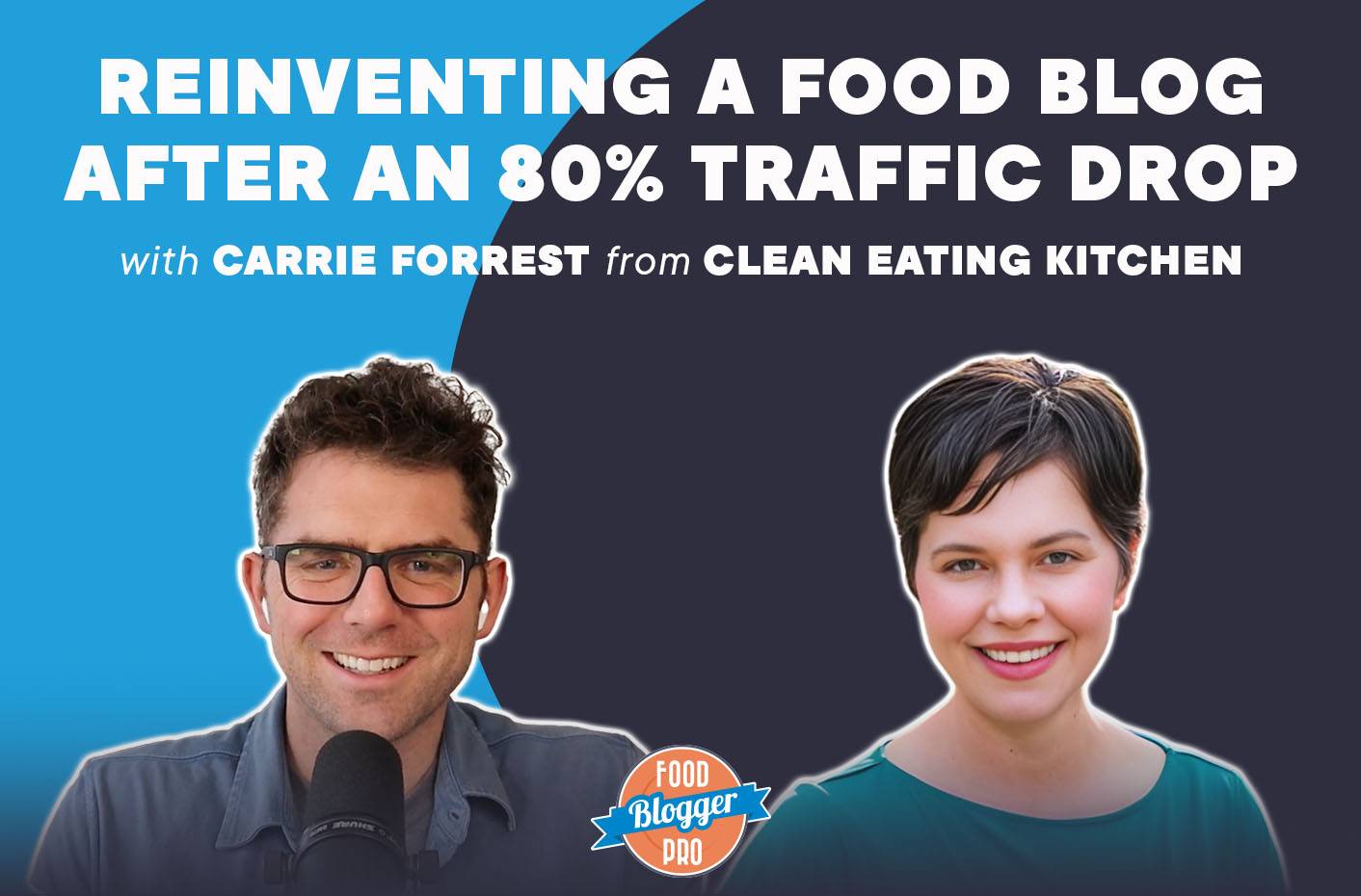
Welcome to episode 564 of The Food Blogger Pro Podcast! This week on the podcast, Bjork interviews Carrie Forrest from Clean Eating Kitchen.
Last week on the podcast, Bjork chatted with Jason Glaspey. To go back and listen to that episode, click here.
Reinventing a Food Blog After an 80% Traffic Drop
Carrie Forrest has been blogging since 2009 and has experienced the full range of highs and lows that come with building an online business. When Bjork first interviewed her in 2018, she was already growing Clean Eating Kitchen with simple, healthy recipes and a strong foundation in SEO and keyword research.
Between 2022 and 2024, that strategy paid off in a big way — Carrie grew her site from a few hundred thousand monthly pageviews to nearly one million. But with the rollout of AI Overviews, many of the keyword-driven and how-to posts she relied on were hit hard, leading to an 80% traffic drop almost overnight.
In this episode, Carrie shares how she’s navigating this rebuild season — from leaning into her email list and YouTube to focusing on what AI can’t replicate: human connection, empathy, and transformation. It’s an honest conversation about the shifting landscape for online creators and what reinvention can look like after years of success.
Three episode takeaways:
- Why it can be difficult to diversify when one strategy is working extremely well — We talk all the time about the importance of diversifying your revenue and traffic streams, but that can be hard to do in reality! Carrie talks about why she struggled to listen to that advice and how hard it is to focus energy on diversifying when your current strategy is doing so well.
- How Carrie is approaching a rebuild season after an 80% drop in traffic — Bjork and Carrie discuss the ebbs and flows of running an online business, how Carrie recovers from big traffic dips, and how a beginner mindset is helping her feel more creative than ever before.
- Why focusing on human connection, creativity, and audience relationships matters more than ever — Carrie shares her current outlook for her blog and explains why she is leaning into her humanity and connection with her audience instead of information and transaction.
Resources:
- Clean Eating Kitchen
- 152: 6 Blogging Mistakes Made By a Veteran Food Blogger with Carrie Forrest
- 278: Lessons from a Veteran Food Blogger – How to Overcome a 60% Dip in Traffic with Carrie Forrest
- Media Wyse
- TopHatRank
- The Money Café with Alan Kohler
- NerdPress
- February Blogging Newsletter — debunking the myth that search is dying, AI Frankenstein recipes, Pinterest, and more!
- The Gap and The Gain
- Follow Carrie on Instagram, YouTube, and Facebook
- Join the Food Blogger Pro Podcast Facebook Group
Thank you to our sponsors!
This episode is sponsored by Yoast and Clariti.
Thanks to Yoast for sponsoring this episode!
If you’re a food blogger, you’ve probably spent years mastering traditional SEO — optimizing for Google, tracking rankings, and monitoring your traffic. But here’s the big question: how does your brand show up inside AI answers? Are you being cited in ChatGPT, Perplexity, or Gemini… or completely left out?
That’s where Yoast comes in. Included with Yoast SEO AI+, Yoast SEO Brand Insights scans how your brand appears across AI platforms like Perplexity, Gemini, and ChatGPT. You can:
- See when (and if) you’re mentioned in AI-generated answers
- Track sentiment around your brand
- Compare your visibility to competitors
It’s a whole new layer of search visibility — beyond traditional rankings. Use code foodblogger10% at checkout for 10% off Yoast SEO Premium, Yoast WooCommerce, and Yoast SEO AI+.
Clariti is a content organization and optimization platform that helps you uncover SEO insights and monitor performance improvements by analyzing your WordPress and Google data in real-time — so you can audit your content, understand performance, and see real opportunities instead of guessing.
And it doesn’t stop at insights. Clariti helps you turn what you’re learning into actual projects and tasks — so you can go from analysis to action and actually get stuff done.
Go to clariti.com to learn more.
And, if you’re a Mediavine publisher, Clariti has a dedicated partnership just for you. Just go to clariti.com/mediavine to see what’s included.
Interested in working with us too? Learn more about our sponsorship opportunities and how to get started here.
If you have any comments, questions, or suggestions for interviews, be sure to email them to [email protected].
Transcript (click to expand):
Disclaimer: this transcript was generated using AI.
Bjork Ostrom: If you’ve been blogging for a while, you’ve probably become very accustomed to spending a lot of time on traditional SEO. Optimizing posts, updating old content, and tracking to see if that helps you show up in Google search results. And tools like the Yoast SEO Premium plugin have helped make that process a lot easier for WordPress creators. But now there’s a new place people are searching, AI tools like ChatGPT, Gemini, and Perplexity. And a lot of creators have no idea how their sites are showing up in those answers. That’s where Yoast SEO AI Plus comes in. If you upgrade to Yoast SEO AI+, you can see if your brand is actually being mentioned in AI generated responses, whether AI is speaking positively about your content and how often your site appears compared to other sites. And it now scans across ChatGPT Perplexity and Gemini. If you want to discover how your site is appearing in AI responses, head to Yoast and use the code Foodblogger 10%. That’s F-O-O-D-B-L-O-G-G-E-R–1–0-% sign at checkout for 10% off Yoast SEO Premium, Yoast WooCommerce, or Yoast SEO AI Plus.
Emily Walker: Hey there, this is Emily from the Food Blogger Pro team, and you are listening to the Food Blogger Pro podcast. This week on the podcast, we are welcoming back Carrie Forrest from the Food Blog Cleaning Kitchen. Carrie has been blogging since 2009 and has experienced the full range of highs and lows that come with building an online business. When Bjork first interviewed her in 2018, she was already growing clean eating kitchen with simple, healthy recipes and a strong foundation in SEO and keyword research. Between 2022 and 2024, that strategy paid off in a big way. She grew her site from a few hundred thousand monthly page views to nearly one million. But with the rollout of AI overviews, many of the keyword driven and how to post she relied on were hit hard, leading to an 80% traffic drop almost overnight. And we know she’s not alone with this experience.
In this episode, Carrie shares how she’s navigating this rebuild season from leaning into her email list and YouTube to focusing on what AI can’t replicate, human connection, empathy, and transformation. It’s an honest conversation about the shifting landscape for online creators and what reinvention can look like after years of success. We think this episode will resonate with a lot of you and we’re really excited for you to listen, so I’m just going to let Bjork take it away.
Bjork Ostrom: Gary, welcome back to the podcast.
Carrie Forrest: Thank you, Bjork. It’s nice to be back.
Bjork Ostrom: We’re doing a little bit of research before we press record. Episode number three for you, which is amazing. We’ve touched on kind of, interestingly, a similar topic when you were back on in 2020, which we can refer back to that. But before we do that, share a little bit about who you are, what type of content that you publish, and then maybe give us a state of where you’re at right now, because I think this will be the really interesting thing to dig into and relatable for a lot of people.
Carrie Forrest: Hi, everybody. I’m Carrie, and my website is cleaneatingkitchen.com. And yeah, I think I was an old school food blogger pro member. So a lot of what I learned about food blogging was from Lindsay and Bjork. So thank you guys.
Bjork Ostrom: Love it. Yep. 2018 was the first time we did an interview, which in my mind still feels like not that long ago. And then I’m like, actually, that’s eight years ago.
Carrie Forrest: Yeah. And I’ve been blogging since 2009, so I think it’s similar journey to you guys.
Bjork Ostrom: So
Carrie Forrest: This will be, I don’t know, year 16, 17. I’m not even sure anymore. And so yeah, I mean, it’s just been an amazing ride. I feel like the times that I’ve come on the Food Blogger Pro podcast, I was thinking about it those three times, this is a third, have been times of change for me. And I think maybe that’s part of why I’ve reached out to you to talk about what I’m going through and hoping that other people
Carrie Forrest: Can relate. So my site is gluten-free and dairy-free recipes. I’m a certified holistic nutritionist, and I have a master’s degree in public health. And so really from the very beginning of my blogging journey, I’ve incorporated my personal story, and then also just what I’ve learned from my own experience, and then my education along the way. And I’ve always shared that. So my site has always had nutrition information and recipes. In fact, I never actually wanted to become a food blogger, and I kept asking my audience, “What do you want more of? ” And they always said recipes. And I was like, “Oh, really? Recipes? You want more recipes?” So a lot of my recipes are very simple because I’m not … I don’t know, I just don’t do a lot of elaborate cooking. And this is actually partly, I think, why my site is getting hurt right now is because my recipes are on the simple slide and we’re going to talk about that with the introduction of AI.
Carrie Forrest: But my site, over the years, I got more and more into SEO. Learned from you guys. I’ve just followed the industry and listened to everything like Casey Marque has done. I’ve done several audits with him and Arsen Rabinovich. I learned a lot from his team. So I’ve kept up with that. And that’s probably been the most fascinating part for me is the SEO side. I just really got into the game of blogging or the keywords and creating a strategy for my site.
Bjork Ostrom: System. Yeah,
Carrie Forrest: A system. That was the part that really I just felt very motivated by where some bloggers, I would say more of the time seem to be more creative. I would say I’m more analytical. And so especially since we talked last time, which was 2018, I would say starting around 20-
Bjork Ostrom: 2020, then 2018. Yep.
Carrie Forrest: So then I would say around that time, and I’d have to go back and listen, but I think that’s when I really started really, really getting serious about SEO and my site responded. I mean, Google responded. Google gave me tons of traffic from 20, I would say starting 2022 to 2024, my site went from, I don’t know, a few hundred thousand page views and up to about a million page views a month. I don’t think I ever officially crossed that million page view a month, but I was very close. And so things were going great and was making the kind of money I’d always dreamed of making. I put in so much work, hired a team. So contract employees, like food photographers, writers, I just was like, wow, this is working. And so I may as well make hay while the sun shines. And I did.
Bjork Ostrom: And that was over what span, 2020 to 2024-ish, 2025? Yeah,
Carrie Forrest: I would say my traffic really started picking up. You know what really kicked it up was the web stories. If anybody remembers those now, now they’re a distant memory and I really dragged my feet on the web stories. I was like, “What? These are stupid.” I never saw the value in them. But then a friend of mine, she said, “Carrie, do the web stories.” And I had one web store. I ended up doing 400 web stories. And I remember one day, I think in one day from one web story, I had, I don’t know, six or 7,000 views. I mean, and that translates to quite a bit of revenue just for one day.
Bjork Ostrom: Because those had ads that were running on them on those pages.
Carrie Forrest: Yeah. And then what it did was people would click through.
Bjork Ostrom: Sure. You had links on the stories and-
Carrie Forrest: Yeah. So this one particular web story, I think it was kind of like a teaser for juice recipes because that’s kind of like the bread and butter of my site are juice recipes. And they’re usually very visually pretty, like juice recipes, they’re vibrant colored. And it’s one web story, it was like best juice recipes for beginners. And so it was just visually pretty. And then it had like each slide was like a different juice recipe, so people were clicking through. So that’s where I really got the revenue benefit and the traffic benefit. So I want to say that was maybe 2021 or 2022. And then again, just probably through 2024, I was just like, “I’m taking it all in. Just give me the interviews.” Yeah, it was
Bjork Ostrom: Great.
Carrie Forrest: It was great.
Bjork Ostrom: And so for those who aren’t familiar, web stories was something that Google was experimenting with. It was essentially Google saying, “Hey, we see platforms like Instagram implementing stories. What if we created an open web version of that? ” We call it web stories, you host them on your site, but then they show up in different places like on Google search results. And so similar to having a web page, which is a page that you go to, they would have web stories, which would function in the same way that Instagram stories would. And one of the things that we always needed to make a decision on as creators is like, do we want to experiment with this new medium on a certain platform? Sometimes if you do that, it’s a waste of time. You’ve invested a lot of energy and time and you don’t get a return for it.
Bjork Ostrom: Sometimes when you do that, or other times when you do that, you are an early adopter, there’s less competition, the platform decides to ratchet that up and you benefit from it. And it sounds like in this case, you benefited from that. One of the variables that resulted in you going from 200 to 800 plus quadrupling your traffic over a few years. And my guess is that felt pretty awesome to be at that point where you do the work, you put a penny in the machine and you get two pennies out. And once you find that playbook where you can continually do that, work feels really good because you do it, you get rewarded for it, traffic increases, you make more money, you build a team who can create more content, you can put more pennies in the machine and get more out and suddenly you’re earning tens of thousands of dollars and it kind of feels like, let me know if this feels accurate, a little bit of a version of winning the lottery.
Bjork Ostrom: You work really hard and you, for you, it’s like you’ve been doing this since 2009, so it’s not luck in the way that lottery is, but I think the feeling is similar where it’s like you wake up and it’s like, “Hey, I made $2,000 from my site yesterday.” Wow, what an amazing feeling that is. Is that a little bit of what was happening for you as you were going through this process?
Carrie Forrest: Exactly. It was exactly like that. It was just like, wow, all the work that I put in, and it wasn’t just web stories, but it seemed like the web stories really just got the ball rolling. And then all of a sudden, because so many people were clicking through to this one recipe, then that recipe moves up. And it was like, winning, I’m winning. Finally, I’m winning. It was a really good feeling. I will say that looking back on it, there were sacrifices for sure. I mean, I work-
Bjork Ostrom: 100%. Every
Carrie Forrest: Single day. Yeah. Every single day, birthday, Christmas, Thanksgiving, every day I was working on it. And I felt like I started this ball rolling, especially when I was hiring people. And then every morning, there was just this machine that was running and I was like the engine. And so if I slowed down, then the whole machine was going to slow down and I didn’t want it to.
Bjork Ostrom: You’re the bottleneck. Yeah.
Carrie Forrest: Yeah. It was getting a little overwhelming. I would say my health suffered, my self-care and personal time, work-life balance suffered, but looking back on it, it was pretty fun. It was exciting. I don’t know if it was really sustainable. Eventually, if that had continued, I probably would’ve had to hire a blog manager or somehow have some more help on
Bjork Ostrom: The executive side.
Carrie Forrest: But yeah, it was really fun while it lasted. And I did, in the back of my mind, I was like, in a way, I was like, this is too easy, but it wasn’t easy, but I was like, this could end at any time. I’ve seen Google shift gears before. I’ve been hurt by a core update before. And then also around this time was when the helpful content update was released. I want to say that was September 2023. That’s the date that comes to mind. And my site actually did not get hit. So I was like, “Wow, we’re winning. We’re still winning here,” where a lot of sites did get hit by that. And I don’t know if that was kind of an early introduction of what’s to come, but AI was not part of this conversation in 2023. It wasn’t until 2024, I think there was another core update and then ChatGPT from my notes and my memory was really released widely, I want to say May 2024.
Carrie Forrest: And so I would say 2023 for me was the banner year, early 2024, I started to see some wobbling and I was like,
Bjork Ostrom: “Uh-oh.”
Carrie Forrest: But my revenue was still good, very good, so I wasn’t really that concerned. And then it was summer of 2024, make sure I get my dates right, and actually my revenue started to drop, and really traffic started to drop. And I think that was when the AI overviews were pretty … I think that’s when the AI overviews were starting to become widespread.
Bjork Ostrom: Yeah, it’s interesting. One of the things that’s so hard for us as we navigate any change is like, where’s this coming from? And I think anytime it’s multi-variate, external, internal, all of those different things at play. And the other piece that I think plays into it, when I say internal, it’s like there’s external changes that are happening, like AI overviews, I think is probably a big one you’ve kind of alluded to that. But then internally, there are probably certain categories that were especially impacted by AI overviews for you. And the quintessential example that I always give when talking about AI overviews is if you had a page that ranked well for how to cook tofu or how to boil an egg, those are all candidates for AI overviews in a way where the person who is Googling that will actually get the answer in a way that they don’t need to go to the site.
Bjork Ostrom: Is that a little bit what was happening for you in this situation was you had certain content that you had been working on that worked from a search perspective from that 2020 to 2024-ish perspective. I think ChatGPT was released late 2022, but was slow to get picked up. And so really 2023 was a ramping up year for it. But really, I think AI overviews in the world of search especially become significant in that a lot of the content that provides an answer within the overview itself will then cannibalize the search click that somebody would’ve gotten. Was that happening for you? Or if you diagnose the specifics around where the traffic drop came from, what would you say it was?
Carrie Forrest: Yeah, I would say a hundred percent, and it’s happening to this very day. So during this last years, when I was getting so much traffic, I was also developing just tons and tons of content. So my keyword strategy was on point. I was just going after keywords. I was getting rewarded because my site was decent authority had been around-
Bjork Ostrom: 2009. Yeah.
Carrie Forrest: Yeah. I mean, I think in 2020, I know we’re reviewing a lot of dates here, but in one year, I think it was 2024 or maybe it was 2023, I published almost every single day. So I had 365 new articles published in 23. And when I would publish them, literally the next day, top of Google, how to freeze sweet potatoes, how to cut a banana, just sell rage use recipe. And because I was so keyword focused, they were very kind of simple terms like that. And every single one of those now is answered by an AI overview. So I wasn’t doing what you … To your credit, you’ve always talked about building your brand, having a variety of revenue sources. But as you said, when you’re making a thousand dollars from Google because of search a day, you’re like, “Yeah, I’m going to do more of that.
Carrie Forrest: “
Bjork Ostrom: Secure the bag. Yeah, for sure.
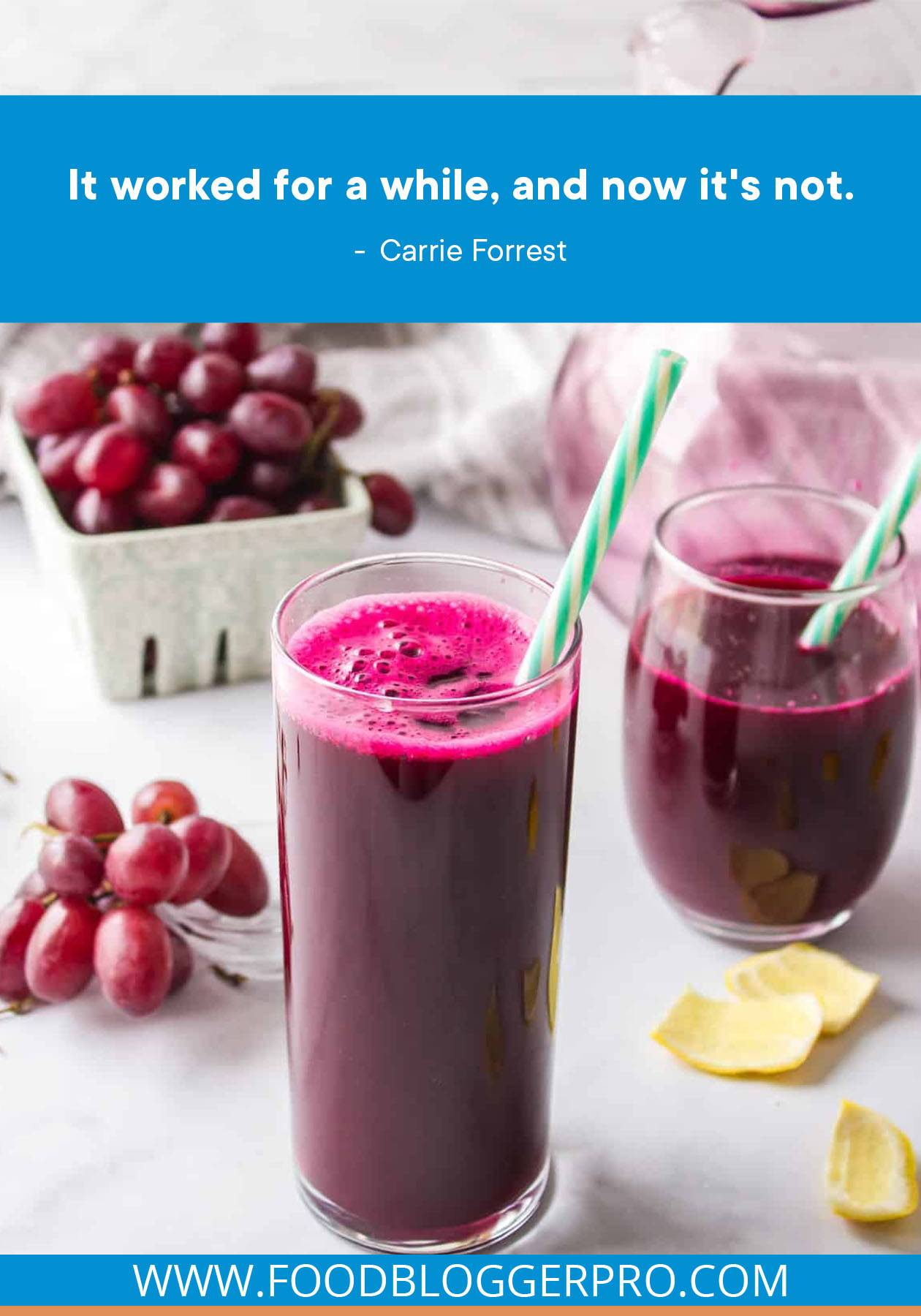
Carrie Forrest: So I went with what was working and it worked for a while and now it’s not.
Bjork Ostrom: And I think that is the hardest thing as a business owner with limited resources, both time and money, don’t have unlimited money, don’t have unlimited time. It would make less sense for you in that season when you are publishing content, it shows up on Google and the next day and you get traffic from that, you’re able to earn that money from that, to then suddenly start a Substack account. And I think that’s one of the things that is so difficult for us to do. And I would even make the case, and I want to hear how you would approach it with the mindset that you have now, but I would even make the case that maybe the best way for a creator who has figured out something that works, like in your case, you are getting Google traffic, SEO, you have a strategy, you’re making money from that, then you hear in the back of your head, “Hey, diversify, this could go away someday.” What are the options that you have for that?
Bjork Ostrom: You could redirect your attention to somewhere else where it might not work. You create a Substack account, you build your Instagram following, and if half of your attention now goes there, you’re trying to earn incremental $50 more, $100 more on Substack, and the 50% of time that you’re giving to Instagram could have gone to Google and you could have made 50% more on $1,000 maybe. And that’s not exactly how it works out, but that’s probably the mindset. And I think it makes so much sense. I’d almost say part of it is diversification into completely unrelated areas like, “Hey, just take that money you’re earning and put it into the S&P 500.” Or something where you’re able to continually able to just dive deep on the thing that is working, continue to go after that, continue to go deep with it, and still diversify revenue, but maybe not even diversify it within the business, continue to do the thing that’s working.
Bjork Ostrom: So I think I would’ve maybe taken the same approach given all this variables being the same, but then what happens is nothing lasts forever, and you get to this point where you are now, where there’s some big changes that have happened that have undone a lot of that work that you did in the sense that you’re not getting rewarded for it in the same way. So talk through what that process was like as you started to see that happen and how did you navigate that? It feels like the head space around it is the hardest part.
Carrie Forrest: Yeah, I agree. I mean, the only thing that I’m so, so grateful is that I didn’t go out and spend money on … I didn’t just throw
Bjork Ostrom: In
Carrie Forrest: Money that I was making. Exactly. Or
Bjork Ostrom: A
Carrie Forrest: Car or … I mean, I saved my money. I mean, I’m not independently wealthy and I put money into my savings and I am so, so glad I did. And I think just because I did have, I really did say this could end any day for, I don’t know, a year I was saying that this could end any … And I think that started more with the web stories because I really felt like, oh, the web stories, they’re so useless. They’re not even that helpful, but they’re driving so much traffic. I was like, okay, I’m going to do them, but these could end any day. But little did I know really I was talking about the whole dang strategy because I mean, at this point, early 2026, it’s pretty bad. It’s pretty bad. I’m just kind of working on my projections. It’s kind of like tax season now.
Carrie Forrest: And I mean, I’m talking about breaking even this year, that’s pretty bad.
Bjork Ostrom: Yeah. Well, it’s also realistic. I think it’s important for people to understand the ebbs and flows of business. And I did a trip with some friends who are close business creators and business owners, not creator businesses, but just like online businesses. And he talked about going through this season of two or three years of breakeven or even investing into the business a little bit. And so I think those are important stories to have because it’s not always up and to the right. And it is one of the risks that we take as business owners. The risk, it exists for W2 jobs too. I have a friend who worked hard at a job for four years and they just let go of the whole team last month and it’s like a similar drop off. You had one client, you were making decent money from them, and then six weeks later, you were making zero money.
Bjork Ostrom: And so we all have this risk and exposure. And I think your point around saving that, being strategic around it. I remember a call that I had early on, it’s actually a attorney, he’s a CPA, he has a podcast, does a lot of online content. Mark Kohler is his name. He has a great content on small business. I had a consultation call with him 2018, 2019, and was asking him about just some money stuff, tax stuff. And he talked about, I have this vivid memory of him being like, it’s like Joseph in the code of many colors story from the Bible where it’s like … And I wasn’t super familiar with it. And he’s like, where there’s this season of abundance, but then he was like, “You also need to be really aware that there’s going to be a season where you don’t have that and you need to think about storing some of your earnings away in anticipation of that season.” But when you’re in it, it feels like it’s really hard to imagine what that would look like.
Bjork Ostrom: So you were intentional to put some of that money away. Now in a season where you are breakeven, you have the hard decision around, how do I invest my time and potentially my money? So can you talk a little bit about what that looks like where you had a season of abundance, you were earning a lot more than you needed, you were able to put that in savings, you were able to put that away, and now you’re in a season that maybe is a little bit of a rebuild season where you’re looking at the business again and saying, “Okay, now what? Do I want to learn how to build a new playbook that I’m going to implement? If I do build a new playbook, where am I going to focus on? ” Tell me a little bit about what your mindset is like right now after going through this season of almost getting to a million page views, that dropping down.
Bjork Ostrom: What does that look like right now if you’d be willing to share? What did that drop look like percentage wise or page view wise?
Carrie Forrest: Yeah, I would say, well, the drop has been about 80%. So I want to say I’m around, I’m between 100 and 200,000 page views now, my site. So it’s not totally to zero and I am still making money, but again, everybody knows there’s expenses associated with running a website, especially a mature website that could be a target for hackers, things like that. You have to put money
Bjork Ostrom: In
Carrie Forrest: To protect your site
Bjork Ostrom: Or- Contractors, consultants, you can’t do all the work yourself. Yeah.
Carrie Forrest: Right. So it’s not to zero. And of course I have an audience. I would say that I didn’t, because I was so focused on probably one-time visitors search traffic, but over those years, I did build an audience, a core audience. I did have a email list from … I went to a conference in 2014 where I remember they said, “You need an email list.” I was like, “What? You want me to do an email in addition to running my site?” I was like, “Oh, what are you talking about? ” I’m so glad I did. So
Carrie Forrest: My email list is key right now. It’s been one of the things that I can still send traffic to a post. I’m still updating my site. The content now, I have about a thousand posts. The content is aging. Also, I keep learning from Casey, from Arson, just I keep up with the SEO changes. So they might say, “Well, really the format should be this way.” And so the content is aging. So I am going in pretty much still on a daily basis. I mean, my hours are, I used to work probably seven hours a day now on the site, it’s maybe two. So I have a much better work life balance now. I actually, I have NerdPress, I have no other contractors. I let everybody go. And that was hard because they were really talented food photographers and writers, but they understood. I mean, it wasn’t just me that was experiencing the changes in traffic and had to let them go.
Carrie Forrest: But that was hard because it was personal relationships, but it’s been a while now. So the mind shift has gone from just really, really complete, what am I doing with my life and was this all a waste? What am I going to do now? I’m really too young to retire.
Carrie Forrest: I’m not financially able to retire at this at my age, so I’ve really gone through it. And I would say I’m still going through it. I don’t have answers. I can say I’ve tried a lot of things and I’m still trying things. I could say for sure my audience doesn’t want to pay for content. I can tell you-
Bjork Ostrom: Sure. Can you tell me more about that? What did that look like and how did you discover that?
Carrie Forrest: I mean, I’ve tried workshops and there’s some interest in workshops, but it’s just not enough. I mean, if you sell something for $20 or $15, you really need a lot of people to make it worth it. For me, I did a workshop in January because as I mentioned, I’m a nutritionist, so I do have some knowledge and things that I can offer my audience and they just They’re not really that interested in paying. I tried an ebook, really no interest, no interest in paying for an ebook. And so that’s why I’ve kind of stayed away from the Substack because I just know a subscription I just don’t think is going to fly.
Carrie Forrest: During my journey, I’ve also been building my YouTube channel. I kind of let it go when I was getting so much traffic from the site, but now I am finding. So now really my focus is what can I do that AI can’t do? Because that’s the only thing that I feel like I have and that we have as creators is whatever can we provide that AI can’t provide. So I can provide empathy. I can provide a human connection with people. And so I can do that with video, at least for now. I have seen some AI generated, I don’t know what they call it, but it looks like a person. I don’t think you
Bjork Ostrom: Cannot
Carrie Forrest: Replicate what you look like just yet.
Bjork Ostrom: Yet, but kind of you can. If anybody hasn’t seen it, there’s a Brad Pitt, Tom Cruise fight scene. It’s this 15 second and it’s mind-blowingly convincing. And then there’s this sequence of Brad Pitt fighting a zombie ninja and all of it’s like, oh wow, I wouldn’t have thought that’s AI unless somebody said it’s AI. So I do think it’s definitely going to get there. And if I fed into one of these algorithms … Well, I’ve also seen some stuff. I haven’t seen it with the audio on, but there was the guy who did, he was kind of controversial, but he passed away recently, the Dilbert guy. But he for a long time had this … I just would see little clips here and there. I wasn’t like a follower to be clear, but they’d do a show on video and he passed away. But now people are doing clips of him that are AI and they’re super convincing, which is a super dystopian, weird space.
Bjork Ostrom: All that to say, I think it will get there. In a year, if I fed the latest model, all of the videos of me doing a podcast interview, all of the audio of me doing a podcast interview, it would be able to convincingly create something that unless you really knew me, you would say, “Hey, that’s probably AI.” So it’s one of the hard things about this world is all of this is going to get to a place where it can create written content as well, photographic content as well, video content as well, human content, like a human in a video as well. But here’s the big piece with it. That doesn’t mean that the role of a creator is going away. I think that we still will show up online and look to people for things. What are those things? I think it will change.
Bjork Ostrom: It won’t be how to … What was the example you used? How to cut a banana or how to slice a banana. It won’t be that. That chip has sailed on humans creating content that they are able to monetize for that category. But there are categories of content that we will continue to be able to create. At least that’s what I think. I think that’s kind of the stage that we’re in, is figuring out what that will be. This podcast is maybe an example of that. People will still want to hear people talking about and working through problems and learning about what people are learning in real time. As an example, in the food world, I think we’re still discovering what that looks like and how we figure that out. But I do think it’s such an important piece that it’s the humanity. It’s your connection.
Bjork Ostrom: It’s not the information, the transactional information. That’s a piece of it, but it’s the relationship, it’s the connection. And I think it’s the transformation. And maybe this is the age of transaction to transformation. And for creators, one of the things that we can be thinking about isn’t how we transact. What’s the keyword opportunity and how do I rank for it? How do I get somebody to come to my site? But instead, how do I help people have a transformation in their life and become known for that? Do you have thoughts around that and how does that resonate with what you’ve been thinking about lately as a creator? Before we continue, let’s take a moment to hear from our sponsors.
Bjork Ostrom: If you’ve ever opened Google Analytics or Google Search Console and then just looked at it for a little bit and closed the tab because it felt overwhelming, this is for you. And here’s the thing, it’s not just analytics or search console. It’s also WordPress. Maybe you’re trying to find a post quickly, understand how it’s performing. And after a while, you’re jumping from tab to tab, trying to piece together information about how your content is doing. It really is one of the hardest parts about growing a content business. It’s getting clarity. It’s not always necessarily effort. It’s just knowing what you should do next because your data is scattered, your priorities are getting fuzzy, and you’re staying busy, but you’re not confident that you’re working on the right things. That’s why we created Clariti. It’s C-L-A-R-I-T-I. Clariti is a content organization and optimization platform that pulls all that messy data into one clear place.
So you can audit your content, understand performance, and see real opportunities instead of just guessing. And it doesn’t stop at just insights. Clariti helps you turn what you’re learning into actual projects and tasks. So you can go from analysis to action and actually get stuff done. It’s not about quick wins or hacks. It’s about building a calmer, more sustainable system so you can grow with clarity and confidence. Go to C-L-A-R-I-T-I to learn more. And if you’re a Mediavine publisher, Clariti has a dedicated partnership just for you. Just go to clariti.com/mediavine to see what’s included.
Carrie Forrest: Yeah, no, I love that. I never thought about that. And I think that would be, to me, that feels very inspiring because to be real, when I was getting all of that traffic, it wasn’t that rewarding. I mean, it was financially rewarding. It was kind of cool that I was winning at SEO, but I would not say that I was happier two years ago, even though I’m feeling very challenged right now and there’s some fears about what the future is going to look like and what am I doing with my life and what is my legacy going to be if my site is … It’s not even that. People aren’t really coming to it and things like that. That has been very challenging, but the idea that there is still some value that I can present to people and helping somebody with a transformation is very motivating.
Carrie Forrest: And I do also think that this is very much the Wild West right now, and that it’s not going to stay this way. I think, I mean, I feel strongly that AI content really should be labeled as such. I don’t think that it would be fair or right, and I don’t think it would stand that there would be AI content that looks like humans. If you and I right now were AI generated and it weren’t labeled as such, and it was being presented as if we were actually BORC and Carrie, and we weren’t.
Bjork Ostrom: Wouldn’t that be the greatest rep pull though at this moment if we revealed it? We were like, “And surprise, we are AI.” The transition has happened. Yeah.
Carrie Forrest: But to me, that is going to have to be labeled in the future. It’s risking people’s mental health too much and it’s just going into a realm that I just really don’t think we can go there, that that line gets too blurred and it’s not labeled as such. But I mean, right now, I do feel like we’re in the Wild West and easily you can go on the social media platforms and you’re not sure if something’s AI
Bjork Ostrom: Or
Carrie Forrest: Not. So I’m hoping that that will change and I’m hoping-
Bjork Ostrom: And I think the piece that’s important with that is this is anecdotal. I think people want to know. I think if people didn’t care, it’d be different, but I think that there’s some cognitive dissonance that happens or tension that occurs when you’re watching something and you’re forced to figure out, is this real or not? I’m talking specifically around video and maybe photography a little bit, like photos or like a website is another example. And I think when you are interacting with something and you are trying to figure out is it real or not, or maybe you get through it and you realize that it’s not real, the feeling that you have once you have that realization is not good. You feel like you’ve been duped or tricked and that creates a negative relationship with the content. I think if you are creating AI content, people know it’s AI content and people are opting in to consume it, maybe it’s funny, maybe it’s interesting, whatever, great.That’s a new medium that exists in the world.
Bjork Ostrom: I think where the tension is, is around somebody who is creating content in an effort to trick somebody into thinking that it’s a human who is creating it. And that’s where it feels like the biggest issue occurs for a consumer specifically, that doesn’t feel good. So I agree with you on that.
Carrie Forrest: Yeah. Yeah, I agree. And I think that is also where to take the conversation a different direction, I’m feeling, I’ve heard some other creators say that we as creators almost have an obligation to educate our readers about this whole environment, specifically around recipes too, apparently a lot of the general public really, they don’t know that … They haven’t graphs that when they used to put in a recipe, that it was always a blog, a blogger that would come up and it was always a real tested recipe. Now it’s almost, not almost always, but if you put in something, something recipe, more often than not, at least for more of the simple recipes, you will get an AI overview. And I don’t know that the general public really just knows yet that that is AI. It’s not a real recipe. And so right now I’m working on an email to my audience and I’ll probably end up making a video, maybe a long form and a short form video, educating my audience like, “Okay, this is what is happening right now.” And I don’t necessarily want to be like, “And this is how it’s affected me, ” but it’s more like I want you to be protected as a reader and who’s going to maybe go buy some ingredients and make a recipe that you need to know whether or not you’re getting a tested recipe or some mishmash of AI that it just came up with.
Bjork Ostrom: Yeah. Just as you’re talking, did a couple example searches, did a green smoothie recipe, didn’t get an AI overview. The next one I did was chicken salad recipe. I did get an AI overview. So it has the description, prep time, yield ingredients, instructions, all of it. And then throughout, it’s linking to the kitchen, YouTube, Simply Recipes, but it’s like the link is a little button essentially within the AI overview. And in Food Blogger Pro newsletter Roundup, we had an article where we were talking about this, just talking about search traffic and AI overviews. Right now, AI overviews are showing up in this article. It said, I think it was like 30% of search terms, but that’s broadly. What we don’t know is what percentage of recipes are showing an AI overview. What we do know from this article is they said there’s been across food and cooking, a 15% industry-wide decline in search traffic, of which I would attribute a lot of that to AI overviews because search itself is relatively similar year over year.
Bjork Ostrom: And so to your point, there is this, and the graph, if you look at how often is an AI overview displaying, it is up and to the right. And so right now, if it’s at 30%, there’s a good chance that continues to go up.
Bjork Ostrom: I don’t think it’s quite as drastic universally as people think it is macro for food, but I do think for a lot of sites, like you were talking about, where you had more instructional content that was had a higher probability of having an AI overview, then it will more significantly impact your traffic, which you had talked about seeing and feeling. So with that in mind, the last time that we had a conversation, you had talked about overcoming a 60% decline in traffic, which is really interesting to me that you did that. And essentially the starting point of this journey that you talked about to getting to this amazing place where you’re like, “Hey, this is awesome and I have this momentum.” The starting point for it was essentially a drop. And I think about that in the world of investing and stock markets where I think they talk about the idea that the worst time to sell is when you’ve dipped and the stock market is at its lowest, it’s not the same thing here, but a similar analogy.
Bjork Ostrom: And I’m wondering how this time is different than last time and the things that you learned coming out of last time experiencing a dip to getting to a new peak and mindsets that you might bring with you from that time.
Carrie Forrest: Yeah, that’s interesting. I hadn’t really thought about that, but I would say that the feeling is similar of I don’t see a future, I feel very, very, very frustrated. But I guess the through line is probably, it’s not like I want to give up. That’s the thing that I don’t feel. I don’t feel like I’m ready to call it quits. And I might have days where I felt like that, but it’s not like something that goes on and on for me. But the feeling of frustrated, being frustrated, the feeling of not knowing what is ahead, that feels very familiar as that time a few years ago, and in case people don’t remember that interview from that long ago, my site had gotten hit by a Google Core update and my traffic got devastated.
Carrie Forrest: And you’re right, I did recover from that and reach new highs. I think I was listening to you on a podcast, I can’t remember which one it was, but you talked about having a beginner mindset and I’ve been thinking about that a lot lately because it is hard when you’re used to a certain page views or certain revenue and then you’re almost starting from the beginning, that is hard. If you’re at the beginning, it’s not hard. If you’re 16 years in, it is hard. So I’m not trying to rebuild what I had. I just, like you said, those days I think are over. AI overviews are here to stay, AI is here to stay. So I don’t feel like I’m irrelevant and I don’t feel like I’m ready to give up. I’ve tried some things that haven’t worked for whatever reason. Maybe my audience isn’t ready, maybe it’s just not the right thing.
Carrie Forrest: I am feeling more creative than I was. I’m back in touch. I’m not sitting in front of a computer looking at keyword monthly search volume. That is not my life anymore. I’m seeing what other people are doing. I’m playing with video later this afternoon, I’m going to do a webinar with the folks at YouTube about their AI tools for video. I’m like, “Okay, well, let’s see what you have to offer. I don’t know how to do that, so I’ll try it. ” So yeah, I have a beginner mindset.
Carrie Forrest: One thing that has gotten me through the really scary, how am I going to pay my bills is a radical acceptance mindset as well of I can feel sorry for myself or wish things were different, but that’s really not going to do much. And so it’s just like, okay, this is where we are and it’s kind of just up to my own motivation and creativity to see where it goes from here. And in a way, that’s kind of exciting to start from scratch. And I no longer have that daily grind that I had gotten myself into, which was starting to feel a little bit repetitive and overwhelming. That’s not there anymore. As hard as that was to let it go, in a way I have more freedom than I did. So I would say that’s where I am now. And I mostly wanted to talk to you today because I feel like a lot of times we do just hear from people who are having the greatest success ever.
Carrie Forrest: I mean, not on your podcast, but because
Bjork Ostrom: You’re- Yeah, but also yes, on the podcast. Yeah.
Carrie Forrest: Yeah. Yeah. But if I see … Honestly, I didn’t even listen to podcasts for a while because I was feeling so frustrated and it was like, “Oh, this person is making this much money.” And I was like, “I don’t want to hear that right now.” That’s not
Bjork Ostrom: Going to be good for me. Totally. I’ve gone through seasons like that too. Yeah. One of the things that I’ve been thinking a lot about is this idea of a one-of-one game. I’ve alluded to it before on the podcast, but
Bjork Ostrom: I have a game that I’m playing and it’s the game of life and there’s really one player and it is me and there’s one set of rules that I establish. And those rules are extremely unique because the circumstances of my life are extremely unique and I can get better by observing other people who are playing in a similar way in a certain arena, but they’re not playing the same game. They’re just like having a skill that is relevant to the game that I’m playing. And an example would be, I met this morning with a mentor who’s in his seventies, he’s played the game of dad for 40 years, for 50 years, and he has done it from the standpoint of being considerate around his community, his faith, his family. And so I sat with him and I just asked him questions and that’s like skill acquisition for me around the game that I’m playing.
Bjork Ostrom: There’s also a game of business that I’m playing and I get the joy and privilege of having conversations with people like you this morning, having conversations with Emily on our team around what’s happening in the industry, reading content in business. I’m trying to acquire skills for that portion of my game, but that’s been super helpful for me to have this one-of-one idea, one player, one set of rules, my set of rules and my game, not in a selfish way. It’s also important for me to serve the community so there’s somebody in our community that needs a ride home from work today. And so I’m like, “Okay, how can I make time after this interview? I’ll close out and I go and pick them up.” And that’s not like business optimization. That’s something that’s important because that’s one of the rules of the game that I’m playing.
Bjork Ostrom: So I think about that a lot. And then the other piece with it is just the long-term reality within business of the ebbs and flows. And I think it’s so helpful to have a conversation with you at this point because it acknowledges the reality that if you’re doing this for 16 years, that you will have a stretch. We’ve had these stretches and everybody that I know in the world of business has as well had a stretch where it’s like you’re in the pit of despair, I’m not saying you are, but in a version of that. And the question is, do you want to try and figure within the context of business how to get out of that? And sometimes people get there and they’re like, “I’m just burnt out. I don’t want to do this anymore. I’m going to switch. I’m going to use the skills that I’ve acquired and apply them within a different context.” And they do that in a super inspiring, really awesome way because that’s one of the things that we all get regardless coming out of this, no matter where your traffic or your revenue or your business is, you’ve accumulated some massively important skills that are valuable in lots of different ways.
Bjork Ostrom: What you’ve been using them for is obviously within your own business, but those could be applied anywhere. And so I think for all of us as we’re thinking about this, I think that’s one of the things that we need to acknowledge is we’re not only building traffic, we’re not building revenue, we’re building a skillset that is super valuable in the marketplace. Part of what’s hard, and this is what we hear so often as we have conversations with people, is the psychological feeling that you get when you find something that works and then can work hard on that thing that continues to work is a really great feeling psychologically. The feeling that you get when you are working on a thing and it’s not working is a really frustrating feeling psychologically. And I think the hard part is to sit in that season of figuring out, it’s almost like the work isn’t doing the work like it used to be.
Bjork Ostrom: Like you write a post and it ranks well and then you repeat that. And so then it’s like, I can do a post a day if this is it, this feels good, but it’s hard work. It’s almost like the work switches to figure out what the next playbook is and what the next thing is that you can work hard on and have some level of predictability around that because that psychologically feels so much better, but it’s hard to be in that season and figure out what that is. So it’s not a solution, it’s just an acknowledgement that that’s hard. But I do think that you’re so sharp and you get it. If you do stick with it, that you’ll figure out what that next playbook is that you’re able to run. And my guess is you’ll do it quicker than you would’ve 16 years ago when you were first getting started because of all of the history and experience that you have.
Bjork Ostrom: So that’s a lot of me talking. What are your thoughts on that? Yeah,
Carrie Forrest: Yeah. No, no, thank you, Bjork. And I would just say that probably the biggest difference that I’ve noticed now is that now I’m not necessarily … I mean, I am looking for what’s going to work, quote unquote, but I’m really trying, and I’m open to sacrificing some of the scale of what’s going to work with what is authentic to me and what I can continue doing for let’s say the next 16 years. So there’s got to be the more of me authentic me and authentic what I like to do because I do not like writing posts about how to freeze sweet potatoes, how to cut bananas. No, I don’t want to do more of that. Even if we could go back to that old model, that is boring and that’s
Bjork Ostrom: Going
Carrie Forrest: To keep me going. It did for a while, it was worth it for a while, but I don’t want to go back to that, especially, I mean, I’m 50 now. I’m thinking about, I don’t want to work forever. I mean, like, okay, maybe I’ll work 20 more years. That would be a lot. But if I could do something that was really fulfilling and it will be something with my website, it’ll be something in nutrition, probably be something with video that isn’t AI replicable for now, then even if I’m not going to get that kind of scale, at least it’ll be something that feels more rewarding.
Bjork Ostrom: Yeah, that’s great. So we continue, I suppose.
Bjork Ostrom: It’s a great point for us to say, “Hey, let’s have another conversation in a few years and see what that looks like as you kind of explore next steps and figure that out. ” It’s one of the things that we continually see is the reinvention of people and the work that they’re doing. And so often, if you think of a mountain peak, it’s like there’s the dip, but the dip is hard because you are lower than where you previously were, but even in the dip, you are still higher than where you started. And there’s a book called The Gap and the Gain, and I think about it all the time because it’s like my perpetual mindset is like, I’m always living in a gap like, “Ugh, I haven’t done this. I got to do this. ” But to actually look and say, “Hey, there’s a little bit of a gap in front of you, but there’s a huge gain behind you.
Bjork Ostrom: ” And I think it’s important for people listening too. It’s not going to be relevant to everybody, but it is going to be relevant, I think, for a lot of people, especially people who have been creating longer like you have or like we have, as the industry shifts because we’re all feeling it, it’s not impacting everybody in the same way, it’s impacting others more, some more than others, but eventually it will change. It will always change. And so to have these stories of people who are navigating that in the middle, I think is super valuable. So I just really appreciate you coming on and sharing that, Carrie. And through the years, our connection through the years has been a fun one to have to see those kind of checkpoints along the way. And it’s one of my great honors is to be able to have these connections to creators through the years who continue to show up and figure out how to do good work and try and make people’s lives better.
Bjork Ostrom: So appreciate you coming on this time and the other times as well to share your story. I’m sure people will be appreciative of you doing that and I’m excited to see where things go for you, Carrie. So thanks so much for coming on.
Carrie Forrest: Yeah. Thanks so much, Bjork, for everything you do as well.
Bjork Ostrom: Oh, well, thanks really We appreciate it. And maybe we’ll talk to you in a few years again.
Carrie Forrest: Okay. I hope so.
Bjork Ostrom: All right.
Emily Walker: Hey there. This is Emily. Thank you so much for listening to that episode of the podcast. We really appreciate Carrie taking the time to come on here and be so vulnerable and open about her experience. We hope it makes some of you feel less alone. If you enjoyed this episode, please take a moment to share it with your community or to leave a rating or review wherever you listen to podcasts. It makes a huge difference for our podcast. Next week on the podcast, Bjork will be chatting with Ashley Carver from the food blog, All the Healthy Things. We’re really looking forward to that episode, and in the meantime, hope you have a great week.