
Listen to this episode of The Food Blogger Pro Podcast using the player above or check it out on Apple Podcasts or Spotify.

This episode is sponsored by Yoast and Grocers List.
Welcome to episode 562 of The Food Blogger Pro Podcast! This week on the podcast, Bjork interviews Rachel Kirk from Laughing Spatula.
Last week on the podcast, Bjork chatted with Alia and Radwa Elkaffas from Food Dolls. To go back and listen to that episode, click here.
The Road to 1 Million Pageviews
Rachel’s mom, Kathi, started Laughing Spatula 20 years ago, and it has now grown into a full-time business for both women. In this interview, Bjork and Rachel talk through the changing search landscape, the challenges of the last few years as food creators, and what is keeping them going.
Rachel is working towards a goal of 1 million monthly pageviews (they’re currently around 300,000 – 500,000 pageviews a month) and Bjork provides his advice on what changes he would recommend to move the needle. If you’re looking to increase your pageviews or revenue this year (hello, who isn’t?) and want to join Rachel in her challenge, don’t miss this episode!
Three episode takeaways:
- Solve problems for your audience — Leaning into your humanity and authenticity is more important than ever, and one easy way to do that is to document your life, solve your own problems, and share that with your audience. Rachel shares her goal to share more behind-the-scenes content and problem-solving series on social media to boost engagement and highlight her humanity.
- The importance of updating old content — Laughing Spatula has almost 1,000 recipes, and Rachel has been focusing on updating old recipes, improving internal linking, and compiling how-to posts to refresh existing content.
- How to respond to algorithm updates — The increase of AI and constant algorithm updates can without a doubt be demoralizing. Bjork and Rachel discuss how to stay positive and what changes you can make to your business to create more stability and predictability.
Resources:
- Laughing Spatula
- Giggling Fork
- Mediavine
- Clariti
- NerdPress
- Raptive
- Grocers List
- Kit
- Applesauce and ADHD
- Follow Rachel and Kathi on Instagram
- Join the Food Blogger Pro Podcast Facebook Group
Thank you to our sponsors!
This episode is sponsored by Yoast and Grocers List.
Thanks to Yoast for sponsoring this episode!
If you’re a food blogger, you’ve probably spent years mastering traditional SEO — optimizing for Google, tracking rankings, and monitoring your traffic. But here’s the big question: how does your brand show up inside AI answers? Are you being cited in ChatGPT, Perplexity, or Gemini… or completely left out?
That’s where Yoast comes in. Included with Yoast SEO AI+, Yoast SEO Brand Insights scans how your brand appears across AI platforms like Perplexity, Gemini, and ChatGPT. You can:
- See when (and if) you’re mentioned in AI-generated answers
- Track sentiment around your brand
- Compare your visibility to competitors
It’s a whole new layer of search visibility — beyond traditional rankings. Use code foodblogger10% at checkout for 10% off Yoast SEO Premium, Yoast WooCommerce, and Yoast SEO AI+.

Built specifically for food creators, GRO is the ‘comment for recipe’ platform designed to help you effortlessly grow your email list, drive more traffic to your site, and earn more affiliate sales.
Learn how top food creators see 75% click-through rates and 5% opt-in rates during upcoming office hours at GRO. You can register for the event at gro.co and use promo code PODCAST to get your first month totally free.
Interested in working with us too? Learn more about our sponsorship opportunities and how to get started here.
If you have any comments, questions, or suggestions for interviews, be sure to email them to [email protected].
Transcript (click to expand):
This transcript was generated using AI.
Bjork Ostrom: If you’ve been blogging for a while, you’ve probably become very accustomed to spending a lot of time on traditional SEO. Optimizing posts, updating old content, and tracking to see if that helps you show up in Google search results. And tools like the Yoast SEO Premium plugin have helped make that process a lot easier for WordPress creators. But now there’s a new place people are searching, AI tools like ChatGPT, Gemini and Perplexity. And a lot of creators have no idea how their sites are showing up in those answers. That’s where Yoast SEO AI Plus comes in. If you upgrade to Yoast SEO AI+, you can see if your brand is actually being mentioned in AI generated responses, whether AI is speaking positively about your content and how often your site appears compared to other sites. And it now scans across ChatGPT Perplexity and Gemini. If you want to discover how your site is appearing in AI responses, head to Yoast and use the code Foodblogger 10%.
That’s F-O-O-D-B-L-O-G-G-E-R 10% sign at checkout for 10% off Yoast SEO Premium, Yoast WooCommerce, or Yoast SEO AI Plus.
Emily Walker: Hey there. This is Emily from the Food Blogger Pro team, and you’re listening to the Food Blogger Pro podcast. This week on the podcast, Bjork is interviewing Rachel Kirk from the food blog Laughing Spatula and now also giggling fork. Rachel’s mom, Kathy, started laughing Spatula almost 20 years ago, and it has now grown into a full-time business for both women. In this interview, Bjork and Rachel talk through the changing search landscape, the challenges of the last few years as food creators, and what is keeping them going through all of this. Rachel is working towards a goal of one million monthly page views. They’re currently sitting around 300,000 to 500,000 page views a month, and Bjork provides his advice on what changes he would recommend to move the needle. If you are looking to increase your page views or revenue this year and want to join Rachel and her challenge, don’t miss this episode.
Without further ado, I’ll just let Bjork take it away.
Bjork Ostrom: Rachel, welcome to the podcast.
Rachel Kirk: Hi, thanks for having me.
Bjork Ostrom: Yeah, this is a fun conversation for me because I have known your mom for a really long time, have emailed back and forth with her, was a Food Blogger Pro member early on the first year that we had launched. And one of the great joys that I have in doing this work, both for Pinch of Yum as creators, but also with Food Blogger Pro, with the broader Food Blogger Pro community, is getting to see some pretty significant story arcs with people and their content and their businesses. I want to hear a little bit of background on yours because yours is especially interesting. Your mom started the site. You were younger when your mom, obviously, as we all were, younger when she started it, so you weren’t involved like you are today. But talk through a little bit of the journey with your mom starting the site, you starting to take it over.
What does that look like? I want to hear a little bit of background, and then we’re going to be talking about this road to a million page views.
Rachel Kirk: Sure, of course. So my mom started the blog probably 15 to 17 years ago. She was an executive assistant. We lived in Seattle and she had some time on her hands and she always loved to cook. And we’re always going to really cool restaurants growing up. And she thought, “I want to start sharing some recipes.” I thought, “That’s cute, mom.” I had no
Idea what this was. I mean, I was probably 16 when she started it, and I’m 36 now. So yeah, I guess it’s been almost 20 years that we’ve been food blogging. And she started it and it was a really, really basic site and she grew a following. And it got to the point where she said, “Reach, I think I have something here and I want you to try to help me. ” And I had no idea what a food blog was. I was younger, so I wasn’t cooking meals for a family. I wasn’t looking at food blog, but I didn’t know. And it took me a while to learn. And so now it’s our full-time gig. We’ve since moved to Palm Springs, California from Seattle. Love it. Yeah. We live a half mile from each other. We’re partners, we’re best friends. And I would say our blog is one of the best things that’s happened.
Bjork Ostrom: Oh, talk more about that. Why is that?
Rachel Kirk: I worked in HR and I didn’t love it. I get to be home and make meatloaf in my jammies and take pictures of it with my mom. I mean, it’s wonderful. It’s a business and it’s great. I mean, we work with brands. We make revenue on our ads, obviously. And we just started a second site called Giggling Fork and just signed up for Media Vine for that one, which is a big milestone for us and we’re really excited. And that niche is for recipes for families with kids. So I have a five-year-old and now it’s kind of evolving into these two sites and got our own little mini empire is what we’re hoping for.
Bjork Ostrom: That’s awesome. So you have Laughing Spatula, which your mom, Kathy, started 20 years ago. Amazing. Do you remember what she started on? What was she publishing at that point?
Rachel Kirk: Oh, I think it was WordPress.
Bjork Ostrom: Like a blog spot. Okay. It was a WordPress.
Rachel Kirk: Yeah, it
Bjork Ostrom: Was WordSpot
Rachel Kirk: Actually. A blogger, one of them.
Bjork Ostrom: Yep.That makes sense.
Rachel Kirk: Yeah,
Bjork Ostrom: Moved
Rachel Kirk: Over to WordPress.
Bjork Ostrom: Just kind of casually posting and kind of an interesting side gig. And then eventually got to the point where it’s like, “Hey, I think this is a thing.” When did you start being involved from a business standpoint?
Rachel Kirk: I would say I really became involved with the blog probably around 2016, 2017. It was a hobby that made some side cash. And now I would say the last four years is when we really started treating it like a business. You don’t know what you don’t know. And I always wish I could go back with my knowledge now and implement some things. But I would say the last four years is when we really started looking at it like our business.
Bjork Ostrom: What didn’t you know that you now know that you wish you would’ve known? What are those things?
Rachel Kirk: I would say not only focusing on new content, but optimizing older content is important and refreshing those recipes with new pictures, old links, and definitely a focus on SEO. We’ve gotten more into social media the last few years too and videos. And I would say just an all around approach of treating it like a business and marketing these recipes as
Bjork Ostrom: Well. Yeah, that makes sense. And then when did you … So your mom transitioned to working on it full-time at some point, and then you did as well. Can you talk a little bit about what that timeline looked like?
Rachel Kirk: Yeah. So she transitioned full-time, I would say probably eight years ago, full-time for me about five years ago, which kind of coincided with having my son. So timing was great. And about a year prior to that, we moved to California. And I just can’t even believe this is my life, if I’m being honest.
Bjork Ostrom: It’s so great. Yeah. And I think- It’s
Rachel Kirk: Great. Really?
Bjork Ostrom: And get to work from home and you have the flexibility. I really think it’s one of the things that is most beneficial about this type of work for people who want that. And a lot of people do want that, which is the autonomy. I think there’s the ability to earn income, to make money from a business, but there’s all different types of businesses. And I think one of the truly desirable things about this type of business is that it can have autonomy and flexibility in a way that is super advantageous, especially for people who have a family and have kids and you want to have flexibility. Lindsay’s at home with our five-year-old today. She has our preschooler does three-day preschool, and that’s great. Lindsay loves that. Also true if you don’t have kids and you just want flexibility for travel or whatever it might be.
The other benefit is you kind of have this uncapped potential. You can grow your site, you can grow your business, and you can be rewarded for that. We’re going to talk a little bit about that, some ways that we can be thinking about growing, but there’s also some really hard things about this work and some really challenging things psychologically, but also just the work is relentless and it’s never done and it’s not time boxed. You’re not in an office where you can come home and be done with it. And so there’s also some real challenges with it. Can you talk about those a little bit? What have the challenges been in the last year or two for you and your mom?
Rachel Kirk: Well, first of all, the landscape of the internet is changing almost every day. It feels like you get clobbered with a Google update, you’re doing really good, and then all of a sudden there’s an update.
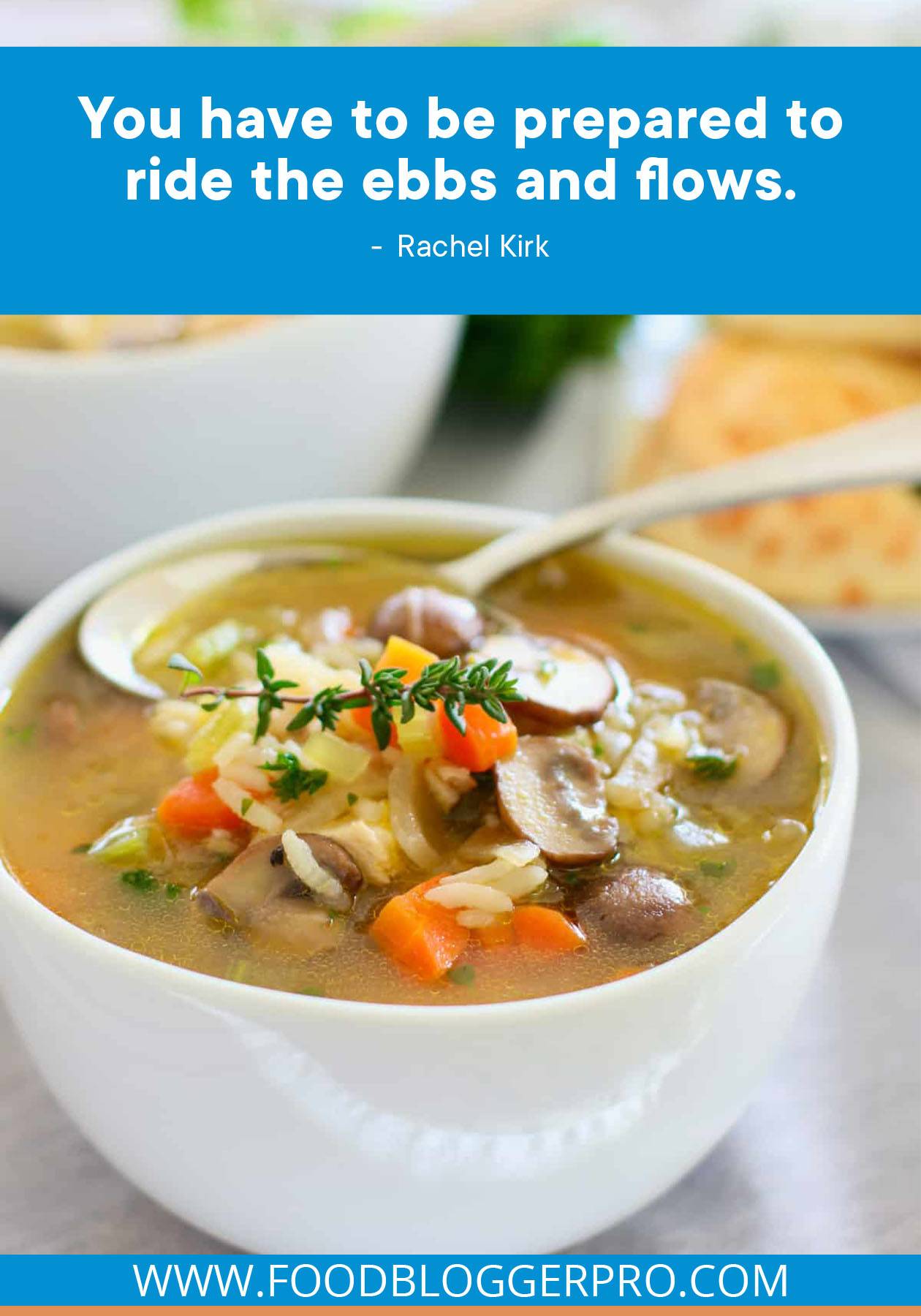
So I would say you have to be prepared to ride the ebbs and flows. And this is not by any means a business you can get into and expect to make cash the next day. You really have to have a lot of heart when you do this and you have to love what you do, otherwise it’s not going to work. I mean, for me, I have a love of cooking. I have a love of creativity, so does my mom, and it’s fun for us. And so I think there has to be that natural intersection of enjoying what you do, but also treating it like a business. As far as feeling like it never ends, I mean, anytime I get a free second, I feel like I’m on my laptop. I want to be working. I would do this 12 hours a day if I could, but obviously you have to have a healthy work-life balance.
So I think it can go anywhere you take it, as long as you
Bjork Ostrom: Have a
Rachel Kirk: Heart.
Bjork Ostrom: The changing landscape, I think really resonates with a lot of people. We did this, the team at Clarity, I know you’re a Clarity user, did this survey, this kind of snapshot, this was Jen, general manager Clarity sent out that she included in this email that just went out today was, she said, “Here’s what we heard from the survey that the AI impact on your traffic is real and demoralizing.” Talked about this idea of clarity users running better ways to compare performance year over year, seeing that as a trend, and this idea of diversifying beyond just Google and talked about Pinterest and email kind of leading the charge in terms of the two platforms that people are thinking about the most. But I think what you’re saying really resonates with a lot of people, which is this landscape is changing and it’s changing faster than it ever has before.
And I think one of the things that can be really difficult is that a lot of times what has happened is people have put in the work years of work. And like you said, it takes a long time to build up momentum from a traffic perspective where you can get to the point where suddenly you’re earning income that is substantial enough in this case to support two people. But what can happen then is you can have an update that drastically cuts that or change that results in that going away. And even if that hasn’t happened to you or it doesn’t happen to you, there’s always that kind of potential on the horizon. When you look out and you see a storm happening, you’re like, “I don’t know if that’s going to hit here, but I can see it. ” And somebody’s getting really wet. It feels like that’s the landscape right now where people are seeing that happening and there’s a little bit of discomfort or tension or it can kind of feel demoralizing that you do these years and years of work and then potentially with one update, one change, that can go away.
And I think that saying that more so just as a way to acknowledge it as a reality, but also to then have a conversation around like, “Okay, what can we be doing as creators to create some stability within our businesses, to create some predictability within our businesses, and to get it to a point where we feel confident about it. ” So tell me where you’re at right now as you assess where your two sites are, because you have both of these sites, Laughing Spatula, The Giggling Fork. Can you give me a state of the sights? Where are things at generally from a page view perspective? What are your goals and what are you looking to do moving forward? So kind of state of where things are at and what are your hopes looking forward?
Rachel Kirk: Sure. Yeah. I think before answering that, it’s so important to, what’s it called? Selection bias. So
I don’t hear a lot of feedback from other bloggers who get corroborated by Google updates, but what you’re not going to hear are the people who are steady and the people who are kind of weathering the AI swarm and trying everything they can to maintain relativity. And I think it’s important to take some of those louder comments about how bad the internet is and AI and all that and just keep it in perspective that the internet still exists. Google changes things every day and don’t let that discourage you too bad from trying to build your business. Just have heart and do what works for you is kind of just how I operate in life. I think true to who you are and doing what you love will get you the furthest with anything, blogging, life, sports.
Bjork Ostrom: Yep. I love that.
Rachel Kirk: Yeah. It took me a long time to learn too. I wish I
Bjork Ostrom: Would’ve known that
Rachel Kirk: In my 20s.
Bjork Ostrom: Yeah. There’s something around the combination of heads down doing the work, not getting distracted and having awareness around the industry, the changes and the shifts and responding to those. And that feels like a really difficult balance to strike where you are head down doing your work and continuing to publish, continuing to create new content, but also you’re aware of the shifting landscape and making those adjustments along the way. And the people that I see persevere the most lean more so towards doing the work, continuing to show up and have, if it’s a split, it’s like 90% of their work is that 10 to 20% of their effort, their headspace is around awareness of the industry changes. So it’s not like they’ve completely shut that off, but that’s not the main focus. Maybe it’s enough to listen to a one hour Food Blogger Pro podcast a week, but that would be the one thing to not cut out.
But that type of idea, you’re listening to podcasts, you’re reading forums, you’re interacting in Facebook groups, but to not have that be the thing that becomes all encompassing and to continue to show up and do the work. So what does that look like for you? What does a normal day look like? How much are you working on the business? How much is your mom working on the business? Any other people that are involved?
Rachel Kirk: Well, we have various people who help us with certain things, people who are a lot smarter than us, like NerdPress. They help us on the backend. We love Ned Press.
Bjork Ostrom: Love it. Yep. Love that team. Love Andrew. Yep.
Rachel Kirk: Yeah, they’re awesome. I would say a normal day. Obviously I’m a mom, so my son is first and foremost, but I am constantly on my phone looking at my laptop, seeing where our recipes rank. I use Clarity very, very often. And to be honest, this is not sponsored by Clarity. It’s just a program that I
Bjork Ostrom: Love. Yep. Appreciate it.
Rachel Kirk: It’s great to see where you’re at and where the potential is for your recipes on your site. And so I would say I’m constantly tweaking. We have almost a thousand recipes on La Pinskatchewa and there’s a lot of room to improve some of those. And that landscape changes often. You could have one recipe that’s doing great. There’s an update overnight and you got to go in and you got to tweak it again. And it’s kind of just the name of the game. Like I said, I’m a firm believer of just kind of like you said, keeping your head down and staying in your lane, doing what you can to maintain your sight. And so I would say I kind of embody that every day. We’re doing something on the blog every single day. If I had to quantify hours, my mom’s going to hear me say this.
We live in Palm Springs and she’s president of her golf league and she’s having a good time.
Bjork Ostrom: That’s great. She’s worked on something for 20 years. Yeah.
Rachel Kirk: She started this and I hope she continues to go up and have fun and lets me do this on the back end because I really
Bjork Ostrom: Enjoy
Rachel Kirk: It too. But she’s got her specialty and I have mine and she’s working on Pinterest and she’s developing recipes alongside her golf league. We’re working towards a goal of a million views a month. That’s been our lofty goal for a long time. And we’ve had a hard time getting there. We’ve inched closer and closer and then it’s kind of like two steps forward, one step back sometimes with these updates and AI, but we’re getting
Bjork Ostrom: There and that’s our goal. That’s awesome. And so around 500,000 right now, give or take the month, if you were to average out, does that feel kind of in that range? 300, 500?
Rachel Kirk: 300, 500. Yeah.
Bjork Ostrom: Yeah, right. Yeah. Seasonal. Yep. Right. So that changes, that shifts. Yep, totally. Rain
Rachel Kirk: Dances depends.
Bjork Ostrom: So tell me about what has worked. Tell me about some of the things that you’ve tried. Tell me about some of the things that you’ve learned along the way. Give me an update on that.
Rachel Kirk: Oh, gosh. We’re having good luck with how to posts and some linking strategies. So like right now we have a sheep and chicken best recipe and we’ve been intentionally linking those to other chicken best recipes. This is just an example, but making sure you have a strong internal linking structure. I would say social media is huge, so making sure that you’re highlighting recipes that you want to get clicks. But in the same time, trying to have fun with it and making sure it’s authentic and that it feels authentic to us in our kitchens and what we like cooking, because that’s how we built our audience over the years.
Bjork Ostrom: Yeah. That authenticity piece I think is so important. You alluded to that before. How do you show up and really love the work that you’re doing every day? That’s going to make it easier to continue to show up every day, which is such an important part of the formula for success. Let’s do a little live kind of workshop thing to see if we can come up with some ideas. As you think about this million page view mark, I know a lot of people have their own goals. One of the things we’d encourage anybody else who’s listening to it is to set your own goal. For some people that is Mediavine, Raptive, getting to that point where you can join one of these ad networks and start to earn some money from your site. Even if you’re at the point where you’re getting, let’s say, a thousand page views a day, you might be able to make $30, $40, $50 a day.
That’s substantial. And that adds up and it’s encouraging to know that, hey, you created a thing, maybe you aren’t working a day and you make money from it. That’s a really amazing feeling to have a day off and you make $100, you make $50 without in that day having to do work. There’s something really cool about that. So people might be, “Hey, I want to get to a million.” Other people might be saying, “Right now I’m at 500,000.” Or sorry, the first one was to get Miniva and Raptive. Some people might be at hundreds of thousands. I want to get to a million. Maybe you’re at a million, you want to get to two. We all have these goals that we have. So this would be open to anybody, would encourage anybody listening to join in to set your own goal. And then as we workshop some of these things to think through what that might look like.
So right now, it sounds like have been working within Clarity, have been pinpointing content that you can update, have been thinking about site health related things like linking. The piece that I’m interested in is you had also mentioned social media, and I think that’s an extremely important consideration, especially for creators who have a long history of thinking about SEO first, like, “Hey, I’m going to publish this onto my site, and I know my site’s been around for 10 years, 15 years, five years, whatever it is. And so it has some authority. I might be able to rank for this. ” That mindset, I think that still exists. It’s still important. SEO best practices are still important, but I think increasingly social is going to be more and more important as a marketing platform for the content that we’re creating. So tell me a little bit about what you’ve been doing with social right now, what’s been working, and maybe we can workshop and think through some ideas that you could implement or that other people who are also doing this could think about as they think about increasing their social presence as well.
Rachel Kirk: Yeah. For us, our social media is pretty much hands in hands closeup recipes. I like to show really quick snapshots of one pan meals are kind of our specialty. So this morning I posted, it’s like chicken meatballs with garlicdition. It’s all in one fan. Stuff like that generally does pretty well for us. One thing I struggle with that I know I need to do is get in front of that camera.
Bjork Ostrom: I
Rachel Kirk: Know a lot of other bloggers struggle with that too. And I think where I could do that is I need to step out of myself and stop overthinking it. I don’t need to have full makeup, full hair, nice outfit. I’m a mom. Get out there in my yoga pants, minimal makeup, hair in a ponytail, cook dinner, just take a video of that.
Bjork Ostrom: Just
Rachel Kirk: Start there, Rach, it’s fine.
Bjork Ostrom: Yeah. And I would even go so far as to say it’s like, “Hey, just start where you are. ” And the point you were making is you don’t need to be over the top, you don’t need to super get ready. I would even go so far as to say that’s an advantage. And I think you showing up as any of us showing up as our normal selves will increasingly become an advantage because I think that a lot of the content that’s going to be created, that is artificially created will feel less that. And so I think we’re at the point where we’ve seen this already. Three years ago, we contemplated. What would it look like if you got to a point where images were so good that you couldn’t distinguish them from a real image and we’re there. You go onto Pinterest, you look through Pinterest, you don’t know if something was created by I or not.
Okay, so we’re there. I think now we’re at the point where we say, “Hey, what if you saw a video and you didn’t know if it was a hands in pans video that was artificially created or not? ” We’re kind of in the contemplative state of that, but next year, definitely two years from now, we’ll be there. And so that market will become saturated with recipe videos, hands and pans. How do you distinguish that? How do you become novel within that? You lean into your humanity. And so I think you’re really onto something there by saying, “Hey, I need to figure out how to show up as Rachel Kirk for a content creator on video in order to promote a piece of content that you are creating.” Because I think that’s the thing that we are going to have to get really good at is not just, how do I create a great recipe and structure it well from a SEO perspective and then hope that people discover it on Google?
I think more and more the discovery mechanism will be on social. And then the question is, once you’ve captured them that attention on social, what do you do with it? And so tell me a little bit about that. As you have started to work on social more, what have been the primary platforms and then what are the things that you’ve started to experiment with regarding the kind of call to action that people would take once they do consume content on social?
Rachel Kirk: Yeah. So we do use grocers list and I love them. They’re great. We are, I’ll admit, behind the times in email, so that’s been something we’re really working on is building our email list, which I know so many people are because that’s the one thing you can really own as far
Bjork Ostrom: As
Rachel Kirk: An audience goes. So we’re transitioning right now from MailChimp to Kit, which is something everybody else probably did probably 10 years ago.
Bjork Ostrom: Yeah, but also not. I think a lot of people … I just had a conversation with somebody in a group chat, it was a different business, but they’re like, “I think it’s finally, I got to switch over to Kit. Has anybody done that before?”
Rachel Kirk: Yeah. I
Bjork Ostrom: Think it’s comments. It’s
Rachel Kirk: Very easy to use, but we’re integrating grocery with some kit while working on that.
Bjork Ostrom: So you had talked about Pinterest. Pinterest continues to be important platform. Can you talk about right now, if you were at a high level traffic sources, my guess is that it would be Google, maybe Direct, Pinterest, and then social? Absolutely.
Rachel Kirk: Yep.
Bjork Ostrom: Okay. Yeah. Actually
Rachel Kirk: In that order too.
Bjork Ostrom: Great. Okay. I’ve done this. I’ve done this before. And so I think what we’ll start to see over the next three to five years is that for you, especially as you start to focus on email, that will go up as a traffic source. How often are you emailing right now?
Rachel Kirk: We do twice a week right now.
Bjork Ostrom: Okay. Yep. Yeah.
Rachel Kirk: And I think we’re going to increase that a little bit and
Bjork Ostrom: Cut
Rachel Kirk: Maybe some of our lists too.
Bjork Ostrom: That’s great. Yep. And we know people that are emailing up to twice a day. We’re not doing that. We’re doing three to four times a week. Can you talk about in each of your emails, what are those two emails that you’re sending?
Rachel Kirk: Yeah. Well, with our email list specifically, and I don’t think this is unique to us, but you get so stuck doing things a certain way that you don’t always branch out and think of other ideas. It’s just, I posted a new recipe, I’m going to send this one out. So we’ve been trying to reuse content. Instead of just only emailing out the new ones, do a chicken breast email, and it’s got 15 chicken breast recipes. Another thing we’re going to try to do is grocery’s list has meal plans now, and I know a
Bjork Ostrom: Lot
Rachel Kirk: Of bloggers have had success with that. And so our niche really loves 30 minute easy meals for busy weeknights. So having a meal plan that we can start emailing out every week to try to engage our audience a little bit more.
Bjork Ostrom: That’s great. And I think as much as possible, those resources are super helpful. So as creators, as we can think about not just recipes singularly, but what are the collective resources that we have that we can put together? And meal plan, like you said, I think is so great. Collections of recipes to help people, okay, if you have a Super Bowl party coming up, to quickly put in front of people the solution to the problem that they’re having and then anticipating what that is, I think is super helpful.
Before we continue, let’s take a moment to hear from our sponsors.
If you’re a food creator, chances are you’ve come across comment for DM tools. Using that functionality within Instagram can result in some huge wins, but the tools are really complicated and they’re oftentimes built for marketers, like people who are in the tool day in and day out, not built for food bloggers or recipe creators specifically. That’s where grocer’s list comes in. It’s built from the ground up for food creators. So if you’re looking to grow your email list, get more traffic to your site or maybe earn more affiliate sales, all without spending a ton of extra time or having to learn a complicated tool, then grocer’s list is for you. And what’s really cool is they’re seeing some pretty impressive numbers like 75% click-through rates, which is kind of mind-blowing, and 5% opt-in rates from people who are engaging with content that is sent through the Grocers List platform.
And they’re actually doing an office hour session soon. So if you want to see the behind the scenes of how creators are using it, you can sign up at grocerslist.com. And a little bonus for you as a podcast listener, if you use the promo code podcast, you’ll get your first month completely free. Again, that’s grocerslist.com promo code podcast.
So let’s go back to social. I think there’s been a lot of content on SEO, best practices for SEO. That world is shifting and changing pretty significantly. It’s still totally possible, important, and impactful to implement SEO best practices, but let’s jump down to talk about the social component video using grocers list and maybe kind of workshop and talk through some of the ideas that you have there. As we think about increasing page views, let’s say it’s easy math, 500, two million, what does it look like to double that? And one of the things that I like to do as a though exercise is like, what if you in the next year created zero more content? If you couldn’t double it through creating new content, how do you do that? And I think one of the great ways you can do that is through social content using a tool like Grocer’s List where I’m an advisor in grocers list, investor in grocers list, disclosure on that.
We’re also a user of grocers list. And so I think it’s a great tool. ManyChat is another one that a lot of people use. Have you had any pieces of content that you’ve produced on social that have worked well and Using that combination of a piece of social content and grocers list that has resulted in list growth. Talk a little bit about the things that you have done there that have worked, and maybe we can workshop some ideas around other opportunities that might exist within that area.
Rachel Kirk: Yeah, I think the one thing we’ve done that has worked is anytime we’ve post something with the intent of solving a problem, you have a fridge full of ingredients and you don’t know what to cook, here’s a recipe. But then so many times I think people surf or scroll social media and they see a recipe they like and they, at least for me, I don’t always think to go back. You see something and it’s gone out of your mind in five seconds with how quickly you can scroll. So groceries, this is great. I like to tell people comment recipe so you can save the recipe so you don’t forget about it later. I think that’s something that’s super useful.
Bjork Ostrom: Yeah. And have there been any instances of that working better for a certain recipe than others or are you still early on in figuring that out?
Rachel Kirk: I would say we’re still relatively early on and trying to figure out what really works for us on social. But I would say it’s the simpler recipes that work well.
Bjork Ostrom: That makes sense. Kind of
Rachel Kirk: Grown chicken and you don’t know what to do with it kind of thing.
Bjork Ostrom: Yep. And the other thing that I think is a good reminder in situations like this is you talked about this idea of solving a problem. And I think that there is all different ways … I’m going to try and articulate this. Let me know if it resonates because I think that you’ve tapped into this with the second site that you launched. There are multiple different ways that you can approach building a content business and creating content. And I think one of the ways historically that recipe creators have approached it is I am going to look for opportunities from search engines to create a piece of content and solve the problem of this person who knows that they want to make this thing, then finding my piece of content and making that thing. An example being you are interested in making a chocolate chip cookie, you search for it and you find it.
You are interested in making spaghetti, you search for it, you find it. That is the problem solution. It is, I’ve figured out, I’ve made the decision, this is what I want to make. Now I have the problem of which recipe do I use? I search for that. There’s a bunch of criteria that I use to filter that. Ratings, how high does it show up on the page? What are some of the comments? How easy is it going to be? And then I decide on a recipe. I think another way to approach content creation is what is the broader problem that somebody has in their life right now and how will I be the resource for them for that general problem? And an example that’s not industry specific is that we have friends who have a wedding venue that they built. It’s beautiful. It’s one of the new venues in Minnesota.
Their problem is how do we run the most efficient, profitable wedding venue business? And there are solutions that exist that people create content for. They immediately go to that and they know, “Hey, this is me. ” And my guess is their initial entry into those communities that they pay to be a part of was social media. They were looking for it. They started to get surface content and they joined those communities because that came up. I think that will become increasingly more important for food creators. And to me, not only does it give you the opportunity to have a narrow focus for the content that you’re creating and have really clear opportunities to engage, “Hey, comment recipe to get my complete guide for picky five-year-old eaters.” I don’t know if your son’s picky, but that would be an example. Okay. It seems like you have tapped into that with the second site that you’ve launched, The Giggling Fork, where there is this focus, not just on recipes in general, but on a specific problem solution, life stage specific.
And I’m interested to hear your reflection on the thought process in going about creating that site and picking that niche, because I think that that will become increasingly important for food creators.
Rachel Kirk: Yeah. I think part of that goes back to authenticity and being authentic with maybe a problem that you’re trying to solve yourself. For me, my son loves kinetic sand, but he loves connected colors. So I spend 15 bucks on two colors of kinetic sand, bitter toast within five minutes. So it’s like, how can I make this for cheap? Because it just drives me insane that you combine two colors and now you can’t play with it the way you want to anymore. So on Giggling Fork, I posted a recipe for homemade kinetic band, and I think all said and done, the recipe maybe cost $4, but that’s not a recipe I could post to Laughing Spatula because it’s a different audience. So having a platform and knowing your different audiences is important and solving a problem that’s maybe niche specific because people who cook on Laughing Spatula might not want to hear about Kinetic Band.
They have kids who are in college or maybe they’re empty nesters. That’s not content they really care about. So with having the second site, I really wanted an appropriate platform to share those kinds of recipes for this stage of life that I’m in right now.
Bjork Ostrom: Yeah. And I was just talking to a friend yesterday at lunch, he’s transitioning jobs, let go. The previous company was acquired, let go of the team. And now he’s like, “I’m trying to figure out what to do. ” And he’s like, “I’m really excited about AI. I’m also excited about product development.” He’s like, “I’m trying to figure out, do I update my resume and send that out to people? Do I focus on LinkedIn? And also, how do I know what I actually want to do? I’m trying to figure out what is my passion.” And the thing that I was talking to him about and the idea that I shared was maybe what you do is all of those things, but you document the process of you doing it. And so you create a product that is for people who are going through the process of trying to figure out what they want to do and helping them get clarity around that.
And as you’re doing that, you post a LinkedIn, which will give you opportunities from people who are looking to hire, but also potential leads for this product that you are creating. And I think it’s one of the greatest ways. We do it here with the podcast. It’s like that’s what a huge benefit for us is me having conversations with creators every day and experts who work with creators to say, “What’s happening within the industry? Because we want to know our primary business is a food and recipe website.” And so it’s one of the great hacks that you can do is to essentially document your life. And as you are solving your own problems, share those with other people who would have the same problem. And I think as we tap into this idea of, hey, the road to a million page use, how do you get to a million page use?
I think over the next five years, the easiest way to get there, whether it’s page use or revenue, I think that could be another metric that you could use is growing revenue. Maybe it’s a $500,000 business. You could talk about that as kind of the equivalent roughly with easy numbers of a million page view site, is this idea of getting hyper clear on the problem that you’re solving and the solution for that. So I’m interested what you think about that as it relates to Laughing Spatula, because that’s the one where you have the deepest archive of content. And do you have thoughts? You maybe shared a little bit around the meal plans and things like that, but do you have thoughts around how you could narrow, even if it’s just within a category or a series that you do, it wouldn’t be the site necessarily overall.
Do you have thoughts on how you could frame up different series that you do around problem solution within the world of Laughing Spatula?
Rachel Kirk: Yeah, absolutely. That’s something I’ve been wanting to do for a long time is I hear from a lot of people who love these easy meals. And naturally, if they’re searching for easy meals, they might not be super well versed in cooking. So maybe like a how-to series or teaching a novice hub cook how to chop a certain vegetable or use a certain knife or really being a resource for people who love these meals that need extra help in the kitchen.
Bjork Ostrom: Yeah, that’s great. So point being, you see this trend around easy meals, a trend around a need for that, and extrapolating from that, maybe a question around somebody’s capabilities. If they’re not the most advanced chef, what are the ways that you could help them transition to or level up maybe is another way to say it. I think so much of what we do in the world of content is about transformations. And an example from Pinch of Yum that we’ve done is the transformation from chaotic to simple. And I think a lot of us feel like we are in this stage where things feel chaotic. You have a ton of stuff going on, you’re trying to work, you have kids, you have these schedules, and your desire is for control. It is for simplicity. It is for, I think a lot of times in the world of food, whole food that you’re putting in front of your family at the end of the day, as opposed to grabbing fast food, which we do.
We are a family that will occasionally have fast food. So it’s not like that’s a bad thing, but I think it’s what you’re wanting to do is figure out what is the problem and what is the solution. And then leaning into social around that, I think is the other piece that’s so valuable. So can you talk about the switch that you’ve had as you’ve started to think about social more? It sounds like you have a focus, you understand SEO, you have established content, you know kind of what that looks like and are now starting to lean into social a little bit more, think about video a little bit more. How have you navigated that transition being an established site with a lot of deep roots in search to a degree, but like a deep bank of content and now starting to focus on social a little bit more?
Rachel Kirk: Yeah. I think that’s where we need to get into building more trust on a face-to-face level with our audience and stepping in front of the camera and giving them a glimpse into our lives and sharing why we do what we do and how we know how to do what we do and maybe being more pork right about that. We have a good amount of readers per month, but I think we need to do better at showing them who we are personality-wise. And like I said, knowing how we know how to do these things, how do we know how to create recipes? Why should you trust us? Why should you follow our recipe? I guess answering that as a question on our social media overall would probably be a good strategy.
Bjork Ostrom: Yeah. One of the creators that I’m super fascinated by her site is called Applesauce and ADHD. And there’s a group of creators who don’t think about blogging at all. They’re purely social. And a lot of times it’s people who have started within the last three, four, five years. Sometimes what will happen is those folks will come to us and be like, “Hey, I’m at the point where I want to figure out how to create some more sustainable revenue for my content. I’m working with brands. I’m maybe earning a little bit from Facebook.” And this individual didn’t reach out to us. We haven’t never connected. She’d be great. If anybody knows her, I would love to interview on the podcast. Her name is Jess, but it’s people who are deeply social. And one of the things that is a through line with all of those is they are also deeply personal.
All of them are so human forward and you feel like you know them and they are not doing fancy editing and they are talking to you person to person. And it feels like these are people you know and connect with. And the shift it feels like is going from the recipe being the feature to the person being the feature and the recipe being the bonus. And I think that’s a significant change that occurs, especially for people who are used to the recipe being the feature. And it’s also kind of intimidating because the internet is kind of a scary place and putting yourself out there is a scary thing. So do you feel like you run into that as you contemplate being more front and center in some of the content that you’re creating?
Rachel Kirk: Yeah, kind of. I mean, for the longest time, our main focus has been SEO and I feel like we’re almost experts in at least our SEO and how we think and how we write and how we market a recipe for Google. But I think because there’s some technicality behind that, you go to get in front of a camera for social media and it feels unnatural because you’re used to this being more of a technical process.
Bjork Ostrom: Yes, yes, totally. And it’s one of those things where there are these different waves we’ve seen, your mom, you have been involved a long time too, has seen this. We’ve seen it for sure. And there are these waves that occur with the internet where people who have a specific skillset will be able to ride those in really gracefully. And we talk about this idea of a surfer and a wave and the idea being like you can be a really good surfer and there can be a really good wave. And when you have that combination, you can have a super successful business. And an example being, if you’re a really great SEO at SEO and there’s a season where technical SEO and systems and processes is working well, that’s going to be awesome. That’s going to be great. Eventually that will shift. And another example would be Instagram.
It’s like if you can craft a beautiful photo that looks like it could be in a magazine, there was a season where there was a wave for people who are a good surfer, they could ride that wave of beautifully crafted photos. And now that wave is short form video. If you are an expert at short form video that’s engaging, that can drop people in, that’s an incredible benefit to you because that’s what’s working really well right now. The question for us as creators is like, do we want to learn how to ride another wave or do we want to ride the wave that we’re currently on even though we know that it’s going to be changing and shifting? And that’s a hard transition to make. And some people are like, “Hey, you know what? I’m good. I rode that wave and I’m going to pack it up and go to the next thing.” And other people will say, “Hey, I actually want to learn how to ride this next wave and figure that out.
” And it doesn’t happen immediately. It’s not overnight, but what we’ve seen is there generally is always a wave that is diminishing and a wave that is kind of cresting. And the balance that we need to strike as creators is like how to transition from one to the other. And it sounds like that’s something that you’re right in the middle of contemplating and thinking about, which I think is really cool. And I think it’s what is required to make that jump from if we have these goals of growing page use or growing revenue to make that transition. So as you look forward over the next three or four or five years, can you talk a little bit about what your focus will be and then maybe also a little bit of what your hope is. And the thing that I thought was really interesting in your kind of initial stuff that you submitted for the podcast, you talked about this idea of, for you, the site is more than just business and you said it’s much more personal than many other businesses.
And you talk about this idea of your mom’s involvement of it in it and the meaningfulness of that. So can you talk a little bit about your hopes as you think about your kind of future as a creator, not only from a business perspective, but also what it means from a personal perspective?
Rachel Kirk: Yeah. I think, well, from a personal perspective, I mean, what’s more personal than something you make that somebody else will make and put on their Christmas table or their Easter table? I mean, we’ve all had it happen where there’s a typo and a recipe before and you get a comment that’s like, “This didn’t work for me. ” And you feel horrible. I mean, I can’t think of another business that’s more personal than that. Obviously, making sure that our recipes are tight and that the work and that they’re tested is super, super important. So being a trusted source for our readers is our number one goal, obviously. And whether that’s five readers or a million readers, you want your recipes to work for your audience. And I think that’s our number one focus is making sure we’re a trusted source for them. As far as vision goes, I mean, a million views a month is my goal and it has been for a long time, but it’s hard to get to.
I think just working hard and continuing to be true to ourselves and publishing recipes we love that we feel good about. I mean, that’s the short of it, I guess. It’s a lot of heart in it.
Bjork Ostrom: Yeah, that’s great. And cool to see through the generations, your mom, and then now you picking it up. As an aside, it’s one of the things that I think about as we are working on the things that we’re working on is if we do it for another 10 years, if we do it for another 15 years, who knows what it will look like? Nothing like it looks like today, but that’ll be at the point where our girls are 20, 22, and it’s fun to think about them starting to be involved with it and to be plugged in and the meaningfulness that can come from that, not only the business, but also the legacy piece, which I know a lot of us think about as we create content. Last question that we’d like to ask people to round things out. What advice would you give to your past self?
You alluded to it a little bit, but if you were to go back to when you first got plugged in, when you first started working within the day-to-day operations of the business, you could sit down with yourself from, let’s say, five, six years ago when you really started to focus on growing the site and taking things seriously, what advice would you give to yourself?
Rachel Kirk: I mean, there’s so many things I would tell former me, but I guess if I had to pick one, and I know I’ve said this so many times over the course of this interview, but just stay true to yourself and do what feels right. Ignore the naysayers. You’re going to be in food blogging groups on Facebook and you’re going to hear a lot of negativity and this works for me and that works for her. And just focus in on what works for you the most. I mean, just ride the ebbs and flows of Google’s. Continue to publish really good content, publish recipes that work, do what you enjoy, and I think it’ll come naturally. Don’t necessarily follow the trends. There’s been a couple times, especially posting butter boards and stuff like that, the trendy TikTok stuff, it’s fun to try. It is, but I don’t think that’s necessarily natural for us.
So
Bjork Ostrom: There’s
Rachel Kirk: Been some lessons learned over the years.
Bjork Ostrom: That’s great. Rachel, this is a super fun conversation for me. It’s my first … Both my parents were teachers. My dad was an art teacher and my mom was an elementary school teacher and then eventually taught GED, adult basic ed. And they would have stories. My dad would have stories of having a kid and then having their kids kid. And this is the first time where it’s been knew your mom, talked to your mom. She’s kind of now like … Maybe this is not her words. I don’t know if she would say this, but moving into working less, I won’t call it retirement, she’s working less and you’re kind of taking over the day-to-day, which is just amazing to have a business that has been around for 15 years and now you are able to step into it. And for your mom, a note for her, that her hard work building a valuable thing has been something that has been so impactful, I don’t want to put words into your mouth, for you and your family.
And what a cool thing that must be for her to know that now a thing that you are partnering on allows for some of that flexibility and autonomy in your life. So shout out to Kathy and want to give her a kind of virtual hug and a hat tip for the work that she did and the work that you continue to do, Rachel, which is just so great.
Rachel Kirk: Yeah. And now my five-year-old Benny is partnering with me on Giggling Fork.
Bjork Ostrom: That’s great. It’s a family affair. In a few years, I’ll interview him. He
Rachel Kirk: Would probably love that. He’s a ham.
Bjork Ostrom: That’s great. Hey, Rachel, thanks for coming on. Really appreciate it.
Rachel Kirk: Thank you so much. I had a great time.
Emily Walker: Hey there. This is Emily. Thank you so much for listening to that episode of the podcast. As always, we would really appreciate it if you could leave a rating or review wherever you listen to podcasts and share the episode with your community. Next week, York will be chatting with Jason Glaspey, all about OpenClaw and using AI tools to help take some of the grunt work out of your business. We hope you’ll tune in then, and in the meantime, have a great week.