
Listen to this episode of The Food Blogger Pro Podcast using the player above or check it out on Apple Podcasts or Spotify.

This episode is sponsored by Clariti.
Welcome to episode 593 of The Food Blogger Pro Podcast! This week on the podcast, Bjork interviews Dahn Boquist from Savor the Best.
Last week on the podcast, Bjork chatted with Aaron Randhawa. To go back and listen to that episode, click here.
Recovering from a 40% Traffic Drop By Providing More Value to Readers
Dahn Boquist left her nursing career to blog full-time with her mom at Savor the Best, and the flexibility that came with that leap has been the highlight. But the journey hasn’t always been a linear one. In this interview, Dahn walks Bjork through her site’s growth, its decline, and its recovery, and what she learned and changed along the way to start growing again.
Dahn opens up about the March 2024 Helpful Content Update, the emotional toll of cutting two full-time team members, and why she decided to run her blog as if SEO was dead. She also talks about the importance of testing and reviewing data and how she’s making sure she still enjoys running her business. This is a great listen for anyone rebuilding after a traffic hit and looking for ways to make their site more valuable to the readers who already love it.
Three episode takeaways:
- What happens when you let go of SEO — After being hit by the Helpful Content Update, Dahn stopped doing keyword research and writing SEO-optimized posts altogether. She explains how SEO had been quietly dictating what she could create, and how letting go of it brought her back to the reasons she started her food blog in the first place.
- How meal plans made her site more useful to readers — Dahn shares how she set up a menu planning tool on her site using WP Recipe Maker and what the process looked like. So far, 600 people have signed up, and that group spends 4x as much time on the site and views twice as many pages. Along with a stronger focus on email and Pinterest, the meal plans have helped push revenue from direct traffic up about 76% year over year (which is especially valuable as search becomes less predictable).
- Her approach to email marketing — Dahn talks about why she always ends up back on Kit, how to use Google Postmaster Tools to keep an eye on deliverability, and how she has been using the Kit MCP to streamline her email process.
Resources:
- Savor the Best
- Savor the Best Meal Plans
- WP Recipe Maker
- How Savor the Best is giving readers more reasons to come back
- Clariti
- Email Crush by Matt Molen
- Substack
- Flodesk
- Kit
- Postmaster Tools
- Kit MCP
- Raptive
- Mediavine
- Follow Dahn on Instagram and Facebook
- Join the Food Blogger Pro Podcast Facebook Group
Thank you to our sponsors!
This episode is sponsored by Clariti.
Clariti is a content organization and optimization platform that helps you uncover SEO insights and monitor performance improvements by analyzing your WordPress and Google data in real-time — so you can audit your content, understand performance, and see real opportunities instead of guessing.
And it doesn’t stop at insights. Clariti helps you turn what you’re learning into actual projects and tasks — so you can go from analysis to action and actually get stuff done.
Go to clariti.com to learn more.
And, if you’re a Mediavine publisher, Clariti has a dedicated partnership just for you. Just go to clariti.com/mediavine to see what’s included.
Interested in working with us too? Learn more about our sponsorship opportunities and how to get started here.
If you have any comments, questions, or suggestions for interviews, be sure to email them to [email protected].
Transcript (click to expand):
Disclaimer: this transcript was generated using AI.
Bjork Ostrom: If you’ve ever opened Google Analytics or Google Search Console and then just looked at it for a little bit and closed the tab because it felt overwhelming, this is for you. And here’s the thing, it’s not just analytics or search console, it’s also WordPress. Maybe you’re trying to find a post quickly, understand how it’s performing. And after a while, you’re jumping from tab to tab, trying to piece together information about how your content is doing. It really is one of the hardest parts about growing a content business. It’s getting clarity. It’s not always necessarily effort, it’s just knowing what you should do next because your data is scattered, your priorities are getting fuzzy, and you’re staying busy, but you’re not confident that you’re working on the right things. That’s why we created Clariti. It’s C-L-A-R-I-T-I. Clariti is a content organization and optimization platform that pulls all that messy data into one clear place so you can audit your content, understand performance, and see real opportunities instead of just guessing.
And it doesn’t stop at just insights. Clariti helps you turn what you’re learning into actual projects and tasks. So you can go from analysis to action and actually get stuff done. It’s not about quick wins or hacks, it’s about building a calmer, more sustainable system so you can grow with clarity and confidence. Go to C-L-A-R-I-T-I to learn more. And if you’re a Mediavine publisher, Clariti has a dedicated partnership just for you. Just go to clariti.com/mediavine to see what’s included.
Emily Walker: Hey there, this is Emily from the Food Blogger Pro team and you are listening to the Food Blogger Pro Podcast. This week on the podcast, we are welcoming Dahn Boquist from the food blog Saver the Best. Dahn left her nursing career to blog full-time with her mom at Saver the Best, and the flexibility that came with that leap has really been the highlight for her, but the journey hasn’t always been a linear one. In this interview, Dahn walks Bjork through her site’s growth, its decline, and now it’s recovery and what she’s learned and changed along the way to start growing again. Dahn shares more about the March 2024 helpful content update, the emotional toll of cutting two full-time team members, and why she decided to run her blog as if SEO was dead. She also talks about the importance of testing and reviewing data and how she’s making sure she still enjoys running her business.
This is a really great listen for anyone rebuilding after a traffic hit and looking for ways to make their site more valuable to the readers who already love it. Without further ado, I’ll just let Bjork take it away.
Bjork Ostrom: Dahn, welcome to the podcast.
Dahn Boquist: Thank you, Bjork.
Bjork Ostrom: We’re going to talk about your journey of growth, also your journey of decline, which if you grow long enough, you’re going to have a journey of decline. We’ve experienced that. A lot of other creators have experienced that. But then on the other end, we’re going to talk about a little bit of you coming back to the table and saying, “How can we learn? How can we pivot? What can we do to grow again? And what did you learn along the way?” So before we get into it, give us a little bit of an overview, Savor the Best, what is it about? Love the story behind it. Let’s get a little bit of that context before we get into some of the numbers and talking about what it was like in the early stages.
Dahn Boquist: Yeah. Oh, early stages, I was still working as a nurse in the hospital and my mom and I were just wanting something to do for fun. She’s like my best friend and we spend so much time around the kitchen that we just thought that a food blog sounded like fun. So started that with the help of Food Blogger Pro. Great. And our intention just was to have a fun hobby that hopefully we… I knew because following Lindsay, I knew that food blogs could earn money, but it wasn’t my intention to turn it into some kind of a business. I just thought, “Well, if they could earn money, we could do this, have fun, and hopefully earn enough money to pay for hosting and any other expenses and we’ll be cooking together.” And then I ended up realizing that I had way more on my hands than I initially thought and I hated it.
Bjork Ostrom: With the site. It’s like technical stuff.
Dahn Boquist: The technical stuff. I just thought we were going to be writing recipes, taking pictures and throwing them up on a website and how fun that sounded. But I had really no technical experience and trying to learn it and how to learn how to run a business on top of that. Sure. Both
Bjork Ostrom: Of those things.
Dahn Boquist: Which I never really had the right mindset. I never looked at it as a business. Well, it’s
Bjork Ostrom: Like that wasn’t your intent even getting into it. When did you start to think of it as a business?
Dahn Boquist: After a few years, we started noticing that there was definitely some process or progress in it and we started to become aware that it was going to be bigger than we thought it would be. It was really hard for me to wrap my mind around stepping away from it as a hobby though, because I had a pretty secure job as a nurse and I just didn’t see retiring early. I didn’t see stepping away from my pension, my 401k, all the benefits and really a really good salary. I just never put my mind on this is going to be a business, but it was pretty clear that it was possible within a few years as we saw the growth, sometimes more than 30% year over year growth. So that was actually a struggle for me. But when it came to the point of about, well, definitely when my grandchildren were born, a little before that, my father started having some healthcare problems and life circumstances just started tugging at my heart that I was ready to retire.
Dahn Boquist: But really it was when my grandchildren were born, my heart grew three sizes bigger and I was ready. And the website was at a point where I though, well, it’s not going to be the same kind of security as my nursing career, but we were in a position where we could do it, so it was a good time for me.
Bjork Ostrom: Yeah. Lindsay and I actually just had this conversation this morning. Our six-year-old has asthma. She struggles with some respiratory stuff. She’s sick today and it’s one of those you’re up with her through the night, you get three hours of sleep. We get up and what happens is we kind of build the day and it’s like, okay, how do we divide and conquer? But one of the things that Lindsay mentioned this morning was essentially a gratitude for being able to do that, having a job. It’s not just entrepreneurial work, but a lot of it ends up being a lot of entrepreneurial work or the type of work that we do, which is internet business work, allows you to be pretty flexible in your work. And it definitely is one of the benefits. When you analyze a job, like your nursing job, there are some undeniable benefits, pensions, you are taken care of in a way that provides a certain level of security.
Bjork Ostrom: And also in this work, if you’re able to build something that is able to pay your bills, there are these benefits as well. And so it’s maybe not the traditional benefits of a 401k and an investment plan, but there are those benefits that you get, but it’s really hard to weigh those. And I would guess after a long career, there’s also you’re changing, it’s baked into who you are. You are a nurse, this is what you do, this is what you’re known as, and that transition obviously is a big one as well.
Bjork Ostrom: So it sounds like there’s some of these variables, some life variables that said, “Hey, I want to let go of some of the benefits that would be financial benefits like the 401 plan or the pension or health insurance, whatever it might be, in order to gain some of these benefits, which are flexibility and time freedom.” My guess is what happened was around that point you started to do it, you had more time to work on it, it continued to grow and continued to build and become this valuable thing for you. Is that kind of what it looked like when you made that switch?
Dahn Boquist: Definitely. But I think even if it hadn’t have grown, it was so, so valuable because of the freedom that it afforded me. I mean, it could have just been stagnant and I just knew I made the right decision. And even afterwards, things still kind of spiraled with just a lot of family circumstances and I though it was just perfect timing to step away from my nursing career. This is really the highlight of owning this type of a business is the flexibility for me personally, that’s the highlight.
Bjork Ostrom: And was it at the point where it was enough to replace your income? Because I think people kind of struggle a little bit with when do you make that call? When do you make that switch into this being your full-time thing? You don’t have to talk specifics, but was there any analysis for you around that just in terms of like, “Hey, I know that we’ll need this amount or I want to make sure that I get to this point with the site.” What did that look like?
Dahn Boquist: Yeah, I never made that kind of analysis because I never anticipated that… On a certain level, I did make the analysis and I had too much value in my pension and my 401k and all the benefits. And nursing is pretty flexible to begin with. My nursing career was pretty flexible with my hours to a certain point. And so it just wasn’t on my mind to find out where would I be, where I would be to the point where this would replace it. I didn’t anticipate that this would replace my nursing career salary and it hasn’t, but we were financially in a position where we could make that decision because I guess we always had enough room in our finances that if something ever happened, we weren’t dependent on my income.
Bjork Ostrom: Yep, that makes sense. It’s one of the things that I think a lot about when it comes to entrepreneurial pursuits, building a website, having a side hustle, if you’re learning a skill, if you are doing social media management, whatever it might be. I heard this actually on a Intercom, which is a customer support tool. It’s now called Finn, I think, but they had a podcast and they were doing an interview series. The concept that they talked about was that sometimes people overvalue, and I could see this even for the conversations we have on the podcast, overvalue the idea of building a thing that then becomes your main thing. So you’re hustling and you build a business and now that’s all that you’re working on and you are a full-time entrepreneur and they undervalue having something that is a side hustle that is a great fallback option.
Bjork Ostrom: And so you continue to maybe have a W–2 job, the 1099 job, but then you’re learning this skill, you’re building this business, you have this thing that you’re working on so that if or when something changes in your life where you need to fall back on it, you have that as a plan B and you’re not going to zero. You’re not having to either look for another job or switch to something where you have zero income. And so I think for all of us, I think that can be one option. Maybe we love the work that we’re doing or it helps us to feel secure to have a 1099 or a W–2, but it still is great to have this side hustle that we are pursuing to have as that fallback option if or when things change in our life or for the company that we’re working with.
Bjork Ostrom: So I can see that really being true in your case. One of the things that we’ve felt is that we’ve had seasons where we’ve built for a long time and we knew the playbook, and the playbook generally was you show up, you create good content, you promote that content via email, social media, and generally speaking, year over year, you’ll look back and it’s like, “Hey, we grew. We created more content, that content was valuable.” In your case, you talked about growing 30%, you’re growing 20%, whatever it might be. I would say within the last five to seven years, that playbook has shifted significantly for people where it is less of… I think what happened was we were, especially for people creating pre maybe 2020, we were on a roller coaster and we’re just on the part where it was like tick, tick, tick, tick, tick, tick going up slowly but surely.
Bjork Ostrom: And it feels like for a lot of creators post 2020, post 2021, wherever you draw the line, but it has now gone up to the top and it is now the part of the rollercoaster where you’re going up and down and it’s like sometimes it’s up and sometimes it’s down and things just seem to be changing more drastically than they did in the early season of building a blog or a website. It seems like that happened for you, especially around Helpful Content and those who aren’t familiar, Helpful Content was a Google update that was pushed out. It was called Helpful Content Update, which really affected a lot of different sites. Can you talk about what that was like, coming up against Helpful Content and experiencing a drop in traffic?
Dahn Boquist: Yeah, for us, we were probably a little later in the process of being hit with Helpful Content, and that was, I think it was around March of 2024 when I knew that we’d been hit by the Helpful Content Update. I just knew, I confirmed it with somebody, but I knew the answer before I confirmed it. And prior to then, I’ve been hearing a lot of people in the industry were being hit and I was almost anticipating it, but you can anticipate it and still not feel prepared. And so as soon as I saw that we were hit by the Helpful Content Update, my first reaction was to just financially try to make sure we stayed in survival mode. So we went through all of our expenses. We cut a lot of expenses.
Bjork Ostrom: Within the business?
Dahn Boquist: Yeah, within the business. It was more of just a business financial survival mode.
Bjork Ostrom: Did you have a team at that point?
Dahn Boquist: Yeah, I had a full-time writer and a full-time gal working on Pinterest for me, and then I had a couple of other people left and right that would work –
Bjork Ostrom: Sure, contractors and jobs and stuff.
Dahn Boquist: But yeah, I had two full-time people helping me, and it was sad to let them go. We didn’t see a drop in our revenue right away, but I just was preparing for a drop in the revenue, and I just felt like I had to do it.
Bjork Ostrom: Yeah. It’s one of those things where you have a lot of levers in business and you have growth levers and you have savings levers, and this maybe speaks to what you were talking about a little bit before, but this idea of having a business mindset, it’s one of these things that’s like suddenly you are needing to figure out, okay, what do we cut in a line item? Never would’ve had to have that thought when you’re a nurse. It’s like you’re not managing a budget, you’re not thinking about revenue and expenses, but it’s one of the thousands of different things that we have to do as content creators. Was it around March of 2024? Does that sound like when the… Yeah.
Dahn Boquist: Yes, I’m pretty sure it was in March.
Bjork Ostrom: Yep. So maybe a Google core update. I think helpful content was clustered around 2022, end of 2022, maybe September 2023, but some type of core update rolls out. We see these all the time. I just got a text message this morning from somebody in a group of creators and was like, “Hey, what are things looking like for you now that this update has rolled out?” And we’re having to navigate these all the time as creators, these core updates. Sometimes you can benefit from them, sometimes it can be negative. We obviously hear about it more when there’s a downside to it. So traffic goes down and then maybe earnings go down eventually and you’re having to proactively cut. What does it look like post that? So traffic goes down, you’re cutting some of your team, you enter into this season where it’s a bit of a bummer.
Bjork Ostrom: Do you feel it emotionally? What was that like as a business owner or is it a little bit like, “Hey, this is what it is?”
Dahn Boquist: Yeah, I was sad because it felt devastating, but also I never saw the revenue drop as drastically as the traffic. And so there was a little bit of a grace period there. I think in the meantime, a lot of good came from it in the fact that it helped me reconsider what our site was all about and look at it a little differently. My initial reaction was SEO is dead.
Bjork Ostrom: Yeah, you hear that a lot, people being like, “SEO is dead.”
Dahn Boquist: I totally treated it like SEO was dead. How
Bjork Ostrom: So? When you say you treated SEO as dead, what does that look like?
Dahn Boquist: I stopped doing keyword research. I stopped writing my posts to optimize them for SEO. More importantly, I stopped allowing SEO to be a gatekeeper for our content strategy.
Bjork Ostrom: Can you explain what that means? How was SEO a gatekeeper before?
Dahn Boquist: Well, when we first started out, there was no gatekeeping. We made what we wanted to make. We cooked what we were eating. We cooked what we thought was going to be fun. And then as we learned more about SEO, we started to… We didn’t feel we were being constrained, but we really were being constrained because we allowed SEO to dictate what we couldn’t create. So for a long time, we never had a white rice recipe on our site because I learned, oh my gosh, we’ll never rank for white rice. So we would find recipes that we would be making, but we would choose not to put them up on our website because we though, oh, we could never make that and then rank for it. So over the years, it became much more of a gatekeeper in that respect.
Bjork Ostrom: Point being that you would have a recipe you’d be excited about, you would maybe want to publish, but if it didn’t pass the filters that you had implemented around requirements from a keyword research opportunity or traffic potential from SEO, then you wouldn’t publish it.
Dahn Boquist: Exactly. Yeah. Yeah. And then it even got to the point where sometimes we would publish a recipe simply because we though, “Well, we might rank for that.” We wouldn’t publish something that we wouldn’t like, but we wouldn’t always publish something that we were excited about either. So in that respect, it really helped us to turn back to the main reason we started the business or the hobby in the first place and started to look at it more like, “Hey, this is our content. Nobody has to dictate what’s going to be on this website.” And then in the meantime, right around the time that we took that hit from the HCO update, I had already been wanting to have a tool on our website. I wanted to have something where users could come and do more with our website than just cook a recipe. I thought the best kind of a tool to add to a recipe website would be a menu planning tool.
Dahn Boquist: I’ve been looking for something, and then once the HCU hit, I thought, well, perhaps something like a meal planning tool would definitely be more valuable. So I started to look a little bit harder for that. And so that led to the meal planning site that we have up on our site now that is still in very early stages of growing.
Bjork Ostrom: Can you talk about the reason behind it? You alluded to it a little bit, but it sounds like there’s this pivot in saying, okay, we’re not going to let keywords drive our decisions anymore. If we are going to be inspiration forward in what we’re creating, then how are we going to think about discovery or business value if we’re going to be inspiration forward? Let me know if I’m connecting the dots here. If we are going to do that, we need to give a business reason for it. The business reason being, how can we create something that people come back to? So it’s less of like, hey, how do we just make as wide of a funnel as possible at the top? Keyword research, Google search, get people to the website, and how do we widen the funnel in the middle or towards the end, which is once people are already there, once they have discovered your content, how do you get them to stick around?
Bjork Ostrom: How do you get them to come back? How do you create something that’s valuable to that person? Is that the thought process that you were getting at?
Dahn Boquist: Exactly. I wanted to have more than just recipes. I wanted to have a reason for people to come back. I wanted people to remember us, that’s that site where we can do some meal planning on. And I wanted to give a reason for them to stick around a little bit longer. You invite them in the door, but give them something to stay, and so they have something to play with and a tool to use. And my hope was that that would eventually turn into something that would send some signals that this site is useful.
Bjork Ostrom: Yeah. We always need to be thinking about this idea of value. How do we create something that is valuable? We talk about it a lot within the context of a post, but I think one of the things that we are seeing now a lot is we’re going beyond just an individual recipe. You see this on social as well, and it’s less of like, “Hey, here’s a really great recipe,” and more of, “Here is something that is going to solve a problem for you, like meal planning or you see people with dietary considerations and people building out tools and solutions for them.” The hard thing is that’s new territory, again, from a technology perspective. You talked about WordPress, how difficult WordPress is to learn as a tool and to get the hang of and to understand. It’s also, once you start to use a tool like a meal planning tool or anything that’s going to create additional complexity within a website, there’s all these new variables that come up.
Bjork Ostrom: So how did you navigate that when you started to say, “We want to create a tool. Okay, that means we’re going to have to create this thing. We’re going to have to manage this thing. We’re going to have to troubleshoot it and make sure there’s no bugs with it.” How did you go about figuring out how to build the actual tool itself and what does it do?
Dahn Boquist: Oh, well, I thought I was going to have to build it, and initially a little bit of research led me to finding out that it would cost at least $10,000 and probably a lot more to build a tool. And I though, well… So I started looking for third party apps, and I never found anything that I really felt worked until I realized that I was sitting on one the whole time. I didn’t realize that WPRM already had meal planning app technology integrated into the recipe card.
Bjork Ostrom: Built into it. So most people are familiar, WP Recipe Maker, a plugin, but there’s also the functionality to do the meal planning itself. And so you had done some research, you had looked around, “Hey, it’s going to be really expensive. I want to build out this custom solution.” But then actually this tool has that built in, and so you were able to… But you still have to create it, go through the process. Was it simple enough for you to say, “Hey, I can put this in the menu here. I can use the backend resources,” or was there still a little bit of partnership with a developer? What did that look like as you worked through it?
Dahn Boquist: No, I did it all myself. That’s not to say it was simple, although I think I’ve gotten to the point in my life with the WordPress that I couldn’t have done it 10 years ago, but I was familiar enough with WordPress, and it was easy enough for me to figure out. The developers of WPRM have some instructions, and I just followed the instructions.
Bjork Ostrom: Yeah, that’s great. I
Dahn Boquist: Got it all set up. I didn’t understand everything I was doing initially. I was just kind of following instructions and doing what it said to do, and it took a little bit of time for me to figure it out. But I mean, if I could do it, anybody could do it.
Bjork Ostrom: Yeah, that’s great. And the thing that you are unlocking there, I think about the analogy within the world of music and Spotify, and Spotify, one of the things that’s great, you can stream music anywhere, but then also there’s all these great playlists, and I think if you didn’t have playlists within Spotify, it would be a less valuable tool. I think about that for us as content creators, especially people who have been creating content for a while. We have the individual recipes that we are creating analogous to a song, but then we are now at the point where we can create playlists from those. We can create bundles, we can create meal plans, whatever it is, however you want to package it up, there’s value in the organization, packaging and communication of those, and that can exist a little bit easier within the context of social media, whether it’s a carousel that you’re posting, or it’s easier if it’s an individual blog post that’s maybe a Roundup.
Bjork Ostrom: It’s a little bit harder when you have a tool, but to your point, there’s these pre-built solutions that allow you to do that. Can you talk about now how you are using that? And then also, I think this is the key payoff in this conversation, what the result of that is after implementing it. What does that actually look like from a data perspective for your site now that you’ve created this tool?
Dahn Boquist: Yeah. Well, it’s still early stages. I think primarily because I’m trying to balance living my values, my priorities versus ambition for the business, and there’s a struggle there to a certain respect. I’d like the business to grow, but I don’t want to sacrifice the time that I have with family. So it’s been a slow growth. I haven’t been investing as much time into the meal planning app that I would really like to do if I wanted to really have it take off faster. So I’m at the point right now after, I think it’s been a year, we only have 600 people that have registered for the site. So the numbers are so small, it’s really hard to know how it’s impacting. But I have an analytics agent set up and I had it grab some analytics for me. And looking at just that small cohort of the audience, that particular part of the audience is spending twice as many page views and four times as much time on site.
Dahn Boquist: So that was encouraging. I think it’s actually got me somewhat motivated to spend a little more time on growing the meal planning site. But it’s still hard to know if it’s going to make a huge impact. I think that’s just a few numbers right now to get me encouraged.
Bjork Ostrom: Yeah. It is one of those things that I’ve learned, and we are doing this all the time, you test and you observe, and then from that you make the next decision. Just today I was looking through the different things that we are doing and the different tests that we’re currently running or things that we’re experimenting with. And it was like, oh, there’s seven active things that we’re working on right now. We’re looking at converting a nutrition label from JavaScript to HTML, loaded in. We’re testing a new ad, we’re testing some new recipe image information, we’re switching comment ordering. All of these, we do it on 10 posts and then we observe. We usually do it on a hundred posts, then we observe. And then if we feel confident, we roll it out sometimes to everything but the top 25 posts and then eventually everything. But I was listening to a podcast and the podcast was called Diary of a CEO and he was talking about he has an entire division, I think it’s a couple people, but their whole job is thinking about what are the things that you’re going to test.
Bjork Ostrom: And I see a lot of what you’re doing is like, okay, you build this thing and you test it, you get data around it. The data looks promising. If people are spending four times as much time on the site, okay, that’s great. How do we get more people to act in that way that is going to be 4X of what it would be if somebody wasn’t doing that? And then from that you can lean into it. Now, obviously in your case, you want to have this balance of not spending 12 hours a day working on your site and there’s other important things that you’re doing, but what you were seeing is data, data that is promising. And from there you’re able to extrapolate that and build on it, which I think is what we need to do as content creators in a world that’s ever evolving and changing.
Bjork Ostrom: I’m looking at the Clarity, you did the kind of a customer interview, and one of the things that you talk about in that is this idea of returning visitors going up. I forget the specific metric that they used, but oh, this was revenue from direct traffic. Do you remember having this conversation with the Clarity team?
Dahn Boquist: Oh yeah. Oh, I wish I saved those notes. I think it was something like 60% increase in revenue from just direct traffic. Do you have the numbers there with you?
Bjork Ostrom: Yeah, the number that we have is 76% year over year increase in revenue from direct traffic. And the idea behind that is leaning into, like you said, the people who are already coming to your site, trying to figure out whether that be the actual meal planning service, but then also it sounds like part of the focus was email, Pinterest, and then maybe a little video and social, but really leaning into email and Pinterest as well. Has email shifted or changed for you in terms of that as an approach and a strategy?
Dahn Boquist: Yeah. Well, email’s been kind of an ongoing process for me. I actually, probably about four, maybe five years ago, I really didn’t know what to do with email and I ended up having Matt Mullen taking a course from him and learning a lot. Then I spent some time trying to figure out how to find a cheaper way of getting my emails out. Went on Substack for a little while because that seemed like it would be a free way to do email and then tried Flodesk for a little while. And each time I would try something different, I would come back to Kit.
Bjork Ostrom: Why was that? What were the other platforms missing?
Dahn Boquist: Substack, you don’t get any analytics. And
Dahn Boquist: I’m not a writer. I don’t enjoy writing. It brings me no joy at all. And I feel like that’s a good platform for people who do like to tell their story and enjoy writing. I really only wanted to use it as an email platform and it just didn’t feel like a good fit for me. And then of course, I don’t really have decent analytics, so I suppose if I was writing or if I wanted to monetize my newsletter, it would be a better fit for me. But I ended up leaving that and then going back to Kit for a little while and then trying again with Flodesk. And the thing that didn’t feel like a good fit for me with Flodesk was I started noticing as I was slowly bringing my subscribers over to Flodesk, so it wouldn’t be just one blast out. But as I started moving my subscribers over, I started noticing that my…
Dahn Boquist: At the time, Postmaster Tools had a better ability to give you some analytics as to what was happening with your newsletter subscribers. And I started noticing that my Postmaster tools showed a higher level of spam and it just kept creeping up my spam box. So I thought immediately when it would bounce up and not come back down, I just thought it wasn’t worth testing Flodesk anymore. So I went straight back to Kit and now I’m afraid to do anything else. Sure.
Bjork Ostrom: Can you talk about what Postmaster Tools is for those who aren’t familiar?
Dahn Boquist: You’d probably be able to explain it better, but Postmaster Tools, to the best of my knowledge, is kind of like having analytics for what your email delivery is within Gmail. Is that correct?
Bjork Ostrom: Yeah. My understanding is these are all… Google has a suite of tools, a lot of different tools that they create for free. They’re incentivized to have the web be run really well because people want to use it and then more people use the web, the better experience it is, more people use Google. The ones that people are really familiar with Google Analytics, okay, you got to have Google Analytics installed. Google Search Console, you got to have that installed. Another tool that they have is Postmaster Tools, which is essentially, like you said, this much like Google Search Console is an insight into search data around your site. You verify that you own it and then you get to see the data around it. Postmaster Tools is kind of like the Postmaster is the person who delivers the mail, and so this is data and insight around mail delivery.
Bjork Ostrom: And as email becomes more important, it’s important that we understand key information around how our emails are being delivered and handled. And so this is a tool that allows you to do that for free. So for anybody who doesn’t have it set up, that would be a great tool to set up for free, which gives you insight into some of the data that is most important around email, one of which is like, “Hey, how many people are clicking spam on something that you send?” You can go really deep into a lot of email specifics, but that’s a tool that’s really great to be able to set up to monitor. So ended up back at Kit, it sounds like, along that journey.
Dahn Boquist: Yeah, which I’m glad I did because Kit now has the ability to let you attach… You can provide your LLM or any kind of agent MCP or an API. So I’ve got an API and an MCP connected to my Kit now, which has been life giving.
Bjork Ostrom: Yeah. Talk about how you use that, because I think that’s another really important piece. There’s this continued evolution where I think we’re all going to be operating more within Claude and ChatGPT, and instead of going out to a website, we’re going to have the website come to us and it’s going to come to us in some harness, ChatGPT, Claude, other people use Hermes or Open Cloud, but really it’s like ChatGPT or Claude. It goes out and does the work for you. You know what you want it to do, but then you don’t have to do the clicking, you don’t have to go through the interface. It’s a huge cognitive lift in order to get something done. But what does that look like for you in terms of using Kit?
Dahn Boquist: Well, I’m still kind of in this process of trying to figure it out, but I think for me, it just means that I’m no longer overwhelmed because one of the biggest roadblocks for me as far as email was just overwhelm. There’s just so much to do, and I just felt like I just didn’t have enough time or desire to write an email. So what I’ve done so far, and I’m kind of just in experimental phase right now, I’ve got an agent set up to help me write my emails and create the emails, and then I have an analytics agent. Now, I don’t have it publish or schedule, but I give it kind of this free range. I tell it to pull recipes that some of them are underserved and some of them that are more popular, I’m still experimenting with what will work well, and then it will optimize the photos that are in the email and it’ll add the links to the email and it adds a small intro.
Dahn Boquist: And then when it’s finished with that, I just go in and spend a little bit of time editing the intro, changing a few things around. If I don’t like the recipes that it’s selected, I can change them, but it gets everything started. And then once I finish with the final editing, I schedule it and I figured I’ll do this for a while, I don’t know how long, and then I’ll have the analytics agent go in and check things out, and then from there I’ll make some decisions on how to change things after that.
Dahn Boquist: It’s made everything more approachable.
Bjork Ostrom: Yeah. It’s amazing how, to me, some of the most transformative moments in business as it relates to AI have been when multiple tools are connected into a central spot and I’m able to give a general goal that allows data from multiple places to come back and something to be created. An example in the case that we’re talking about, you have the Kit MCP, and let’s say I know that you’re with Raptive, you have the Raptive API connection in. I know Mediavine’s also working on an API that they… So it’s like advertiser agnostic or it will be eventually. So you work with your advertiser and you work with your email, in this case, Kit and an MCP, and you could say something like, “Find the most popular pieces of content from last month in October and create an email showing with one image and a short paragraph from that post and a link to that post, and then sort order it by the highest RPM piece of content first, and then include three recipes and leave the first paragraph for me to come in and edit and set it up.” And it’s like that previously would’ve taken maybe two hours to do the research.
Bjork Ostrom: You would’ve been looking it up. You’re not having it write anything on your behalf even. It’s just pulling information that you had previously written and putting it into a blog post. And so there’s all of these different ways that we can use these tools and this data that we have to lift the cognitive burden around the content creation process. And using an MCP like the one with Kit, Clarity has one for anybody who’s a Clarity user.
Bjork Ostrom: Google Analytics is soon to release, the Google tools are soon to release MCP tools that they’ll allow people to connect in, or at least within Google Workspace. So a lot of really cool opportunities here, and I think important that you point that out. Is there any advice that you’d give to anybody who has experienced a little bit of a downturn in their business in terms of what it feels like to keep going, to keep plugging away, knowing that you have done that and continue to be creative along the way and looked for opportunities to create new valuable things?
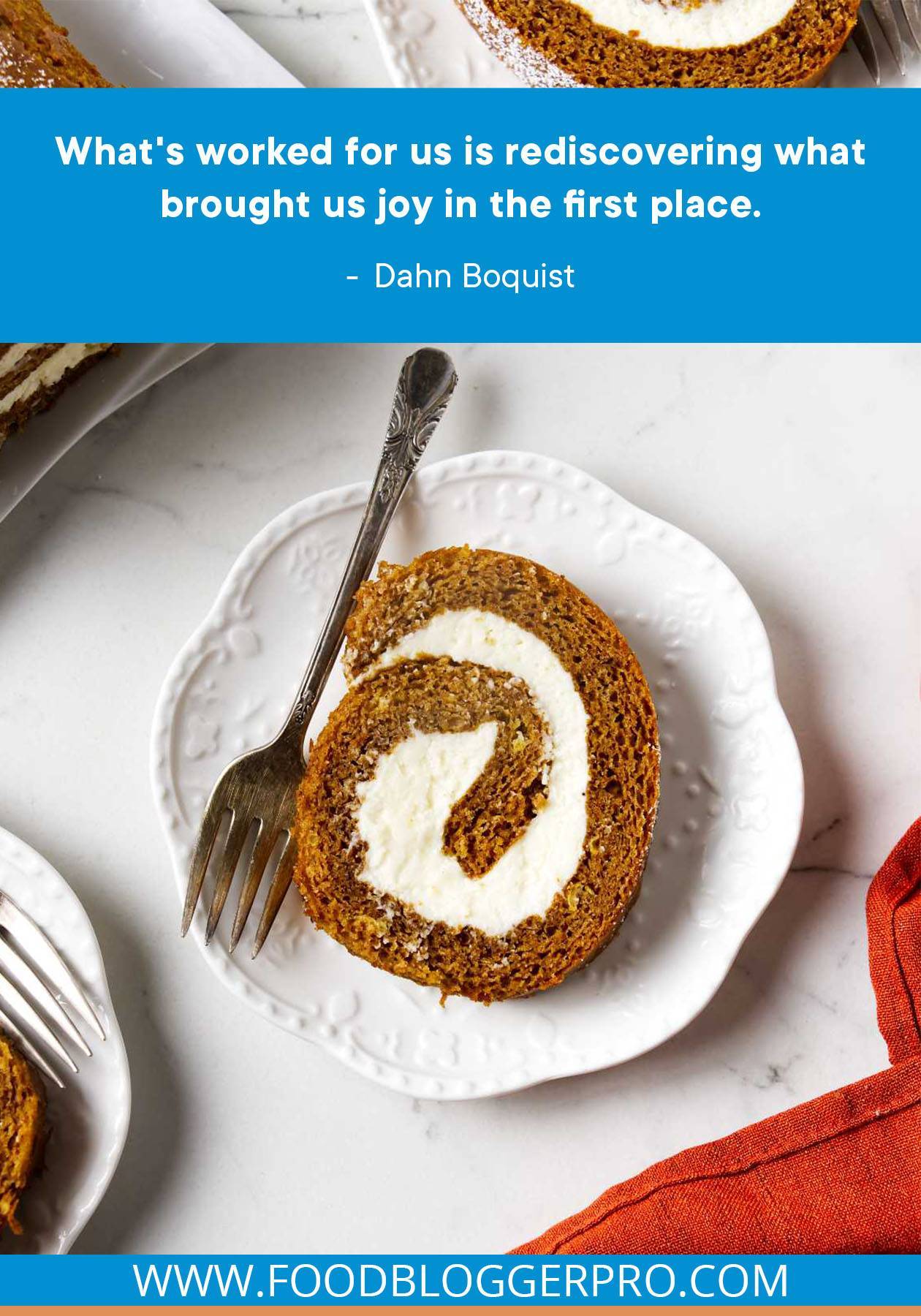
Dahn Boquist: Yeah. I think, well, what’s worked for us is to just rediscovering what brought us joy in the first place. And it’s been really important for me to not work to the point of burnout. I want to make sure I enjoy the website. I want to enjoy the business. We’re making things that we like making now. We’re not allowing SEO to dictate what we can and cannot cook. I think it’s important to find that place where you’re enjoying it. If you don’t enjoy it, then it’s not going to be something you can maintain. When we got to that point where SEO wasn’t working and we had to come back full circle to where we started, that’s when we started really enjoying it again.
Bjork Ostrom: Yeah. One of the things I think about a lot as we’ve done this for 16 years is one of the most valuable things is compounding. One of the greatest ways to compound is time. One of the greatest ways to get more time is to not get burnt out. And so you could compress your work into a short period of time, you could hustle, you could grind, and you might get some benefits from that, and there might even be seasons where you need to do that. But I also think that one of the greatest benefits that you can have in your work or one of the greatest returns on your work is doing it for a long period of time. And how do you do that? It’s like you got to make sure that you are in good relationship with your work. And so I think it’s a great point and something that’s really important to consider because if you burn out, that kind of draws a line and it’s really hard to show up and to do work and to be inspired to do the work.
Bjork Ostrom: But if you can find ways to not burn out, you’re going to be in a much better place because then you have that time and time compounds. So I love that point. Don, really great to have a conversation with you and to learn from your story. As we close out, is there anything else that you feel like we didn’t cover that would be good to talk through?
Dahn Boquist: No, sounds like we covered quite a bit.
Bjork Ostrom: That’s great. Thanks, Don. And pass along a hello to your mom as well because I know that she’s a part of the story as well, so thanks for doing
Dahn Boquist: This. Yeah, thank you very much. Okay.
Emily Walker: Hey there, this is Emily again. Thank you so much for listening to that episode of the podcast. If you enjoyed the episode, we would really appreciate it if you could share the episode with a friend or your community. It really helps us get the word out about our podcast. And as always, if you could leave a rating or review wherever you listen to podcast episodes, it makes a huge difference. We’ll be back here next week with another great interview. Bjork is chatting with Emily Christensen from the food blog Country Road Sourdough. In the meantime, we hope you have a wonderful week and we’ll see you back here next week.