
Listen to this episode of The Food Blogger Pro Podcast using the player above or check it out on Apple Podcasts or Spotify.
This episode is sponsored by Member Kitchens.
Welcome to episode 572 of The Food Blogger Pro Podcast! This week on the podcast, Bjork interviews Josh Zimmerman.
Last week on the podcast, Bjork chatted with Sharlene Murrell. To go back and listen to that episode, click here.
How to Sustain Long-Term Creativity Without Burning Out with Josh Zimmerman
What happens when your personal brand is you and the work starts to feel like too much? Josh Zimmerman knows this territory well. After a career in journalism, he made the pivot to life coaching specifically for creators, drawn to the unique pressures that come with building a business around your identity and your output.
In this episode, Josh and Bjork dig into the mental side of creative work; specifically, why burnout hits creators differently, how to reconnect with the “why” behind what you do, and what it actually looks like to build a sustainable creative business for the long haul. They also talk about the role of fractional C-suite executives and how bringing in the right support can help you manage the business side of things without losing your creative spark. If you’ve ever felt the weight of your work pressing in on your sense of self, this episode is a great reminder that you’re not alone. and that there’s a way forward.
Three episode takeaways:
- Your identity and your work are not the same thing: When your personal brand is built around who you are, it’s easy for criticism or creative slumps to feel deeply personal. Recognizing that separation — and actively protecting it — is key to long-term sustainability as a creator.
- How to reconnect with your “why”: When motivation starts to fade, the answer isn’t always to push harder. Getting clear on your core motivations and the reasons you started creating in the first place can be one of the most practical things you do for your business.
- You don’t have to run every part of your business alone: Bringing in outside support can free you up to focus on the creative work you actually love, without letting the operational side of your business drain your energy and spark.
Resources:
- Creator Coach
- YouTube Nation
- jzmanagement
- Episode 563 of The Food Blogger Pro podcast: Using AI to Eliminate Busywork and Unlock Creative Time with Jason Glaspey
- Follow Creator Coach on Instagram
- Join the Food Blogger Pro Podcast Facebook Group
Thank you to our sponsors!
This episode is sponsored by Member Kitchens. Learn more about our sponsors at foodbloggerpro.com/sponsors.

Member Kitchens allows you to build a thriving membership community on your own-branded platform — no tech skills required. Members get dynamic meal plans, automated shopping lists, and much more, all within an ad-free mobile app.
Getting started is simple. Member Kitchens imports your existing recipe library, so you can start selling subscriptions quickly and start thinking beyond site traffic.
Ready to add a new revenue stream to your business? Visit memberkitchens.com today to start your free 14-day trial.
Interested in working with us too? Learn more about our sponsorship opportunities and how to get started here.
If you have any comments, questions, or suggestions for interviews, be sure to email them to [email protected].
Transcript (click to expand):
Disclaimer: This transcript was generated using AI.
Bjork Ostrom: One of the biggest mindset shifts I see successful food creators make is this. They stop thinking only about traffic and they start thinking about product because traffic is great, but real leverage comes when you get good at selling something you own, recipes, meal plans, a membership, a system that actually helps people. The problem is that creating a product is really hard. You have to figure out the tech, the structure, the payments, the delivery, and honestly, that’s where a lot of really great ideas die. That’s why I want to tell you about Member Kitchens. Member Kitchens makes it incredibly easy for food creators to sell recipes and meal plans at scale without having to build everything from scratch. You don’t need to be a developer, you don’t have to have a complicated setup. They’ve already built the infrastructure for you. You bring what you’re great at, which is creating food content your audience loves and Member Kitchens handles the heavy lifting of turning that into a real sellable product. And if you’ve ever thought, “I know I should have a product. I just don’t know where to start,” then this is your starting point. You can check it out at memberkitchens.com and start thinking beyond traffic and toward building something that actually grows with you.
Ann Morrissey: Welcome back to another episode of the Food Blogger Pro podcast. I’m Ann from the Food Blogger Pro team, and in this episode, Bjork is sitting down to chat with Josh Zimmerman of Creator Coach to talk about the mental side of creative work. Specifically, why burnout hits creators differently, how to reconnect with the why behind what you do and what it actually looks like to build a sustainable creative business for the long haul. They also talked about the role of fractional C-suite executives and how bringing in the right support can help you manage the business side of things without losing your creative spark. If you’ve ever felt the weight of your work pressing in on your sense of self, this episode is a great reminder that you’re not alone and that there’s a way forward. And now without further ado, I’ll let Bjork take it away.
Bjork Ostrom: Josh, welcome to the podcast.
Josh Zimmerman: Thank you so much. I’m so happy to be here.
Bjork Ostrom: We’re going to be talking about what I would consider to be probably one of the most important things for us as creators. I’m going to queue it up. I’m going to explain why and I want to hear if you feel like this is accurate. So I reflect on the fact a lot that what I do primarily is I come in and I sit down at a computer maybe with a phone. And the only thing I do basically all day is think. I just use my brain. I don’t move heavy objects. I don’t paint. I’m not putting stuff together. I just use my brain. And then I go home at the end of the day and hang out with my family and then I get up and I do it again. And for a lot of people here, it’s not exactly the same. We have recipe creators and so they might be in the kitchen, they’re documenting, they’re photographing, they’re creating recipes, but primarily for us, we’re just using our brain to create things.
Bjork Ostrom: And therefore, one of the most important things for us is our brain. And one of the things that we often see is that we as creators are getting our brains are getting fatigued. Our brains are much like a car that you run with the oil and it can’t change it. They’re getting burnt out. They’re not functioning for a lot of different reasons, which we’re going to talk about.
Bjork Ostrom: You have dedicated your day-to-day to helping creators who are navigating that burnout. I want to hear a little bit about how you got started with that and then we’re going to talk about some strategies. So let’s start by how you got started in doing this work.
Josh Zimmerman: Sure. Well, thank you again for having me. I think the analogy that you had of creators or you sitting down and not having to lift heavy things, I’d respectfully challenge you on that and say that the lift that you’re doing with your mind is a workout in and of itself. And that’s what we see with burnout because our mind is working so hard that we don’t have the capacity to lift anymore. So the way that I got started in this is that I went to school for journalism. I wanted to be a hard news reporter in front of the camera telling important stories to a wider audience. And I ended up falling into entertainment, traditional entertainment, which I really didn’t have any interest in, but that’s where I landed and then fell into rights and clearances. And at that point, I then was asked to be on a show called YouTube Nation, which was the official daily show of YouTube.
Josh Zimmerman: And this was a joint venture between Jeffrey Katzenberg, Dreamworks Animation and YouTube. And that’s where I got introduced to creators and I had no idea about creators. And the whole premise of the show was to help find the hidden gems on YouTube because there was so much content in 2013 and now even more.
Bjork Ostrom: The hidden gems being creators, like creators who hadn’t been discovered.
Josh Zimmerman: Exactly. Yeah. And taking 15 seconds and say, “Hey, you should really check this person out, ” and really taking that big YouTube spotlight and shining it on them.
Josh Zimmerman: And really quickly, I fell in love with creators and the show because that was my form of journalism. I was helping people see these amazing creators and broadcasting it to a wider audience. After that show, I ended up starting two companies and then I had creators who were my friends that were asking me to manage them. And I was like, “I’m good at negotiating,” but I was like, “No, I’d rather be your friend.” And they ended up really, really hounding me and I ended up starting jzmanagement where I had a full roster of creators and I loved it. I absolutely loved helping creators build their businesses and negotiating on their behalf. But one thing really stood out to me was friends of mine who are creators were coming to me saying they were feeling burnt out and I was like, “I wonder what this burnout thing is.” And I looked more and more into it and I wrote an article on LinkedIn to other managers saying, “Hey, we got to figure this out. ” And then there are these articles in major publications that started coming out profiling creators that were burning out and it really rubbed me the wrong way because what it was doing was it was really showing the downfall of these individuals and there was no solution. And I was at lunch one day with a friend of mine and I just sort of snapped and said, “I’m going to be the solution and I’m going to help these creators and I’m going to become the first ever certified life coach for creators and burnout.” Which means that as a ICF certified coach, I went back to school for two and a half years to learn what coaching is and what coaching isn’t.
Josh Zimmerman: And as I was going through schooling and building my practice, more and more creators started coming to me and then I had businesses coming to me and then CEOs and startups and founders. So my company creator coach started really with creators and I would say 60% is still very heavily creators, but a lot of the other business and my clients are founders and startups all at that intersection of creativity.
Josh Zimmerman: And one of the things that I’ve always been very bullish on and explaining to people is that creators’ lives are blended unlike any other life in the world because you have to.
Bjork Ostrom: Blended meaning work life.
Josh Zimmerman: Work
Bjork Ostrom: And life,
Josh Zimmerman: Those you can’t separate. People can go to a nine to five and at five they drive home or turn off their computer. As a creator, you can’t do that. You are your business, you are the brand and that is inherently something new that people don’t know how to cope with and there really is no separating the business from who you are because people are watching or reading because of your unique point of view. So it presents a really interesting problem on how do you handle that? How do you scale a business when the business is you? And a lot of times you see burnout.
Bjork Ostrom: And also it’s unique in that a lot of times people say, “Hey, it’s beneficial if you can have some separation between the work that you’re doing and your personal life.” But more often than not, and especially now in a world of AI, we hear people saying that your personal brand, who you are, is one of the most important components. And I think we talk about it on the podcast all the time, experts talk about it all the time, lean into your humanity, lean into your story, but that also means that your humanity and your story and your personality becomes the product in some way. What are the ramifications that you see? A lot of times it’s framed up as a positive when we’re talking about that. This is something that you should do. It’s beneficial. People want to connect with other people. What are some of the ramifications of that that you have seen as you’ve processed through many different conversations with creators who have navigated the difficult reality of the brand and the personal being the same?
Bjork Ostrom: It is a personal brand.
Josh Zimmerman: Right. I get asked this question quite a bit and what’s so interesting is I hear a lot of experts say either AI is great or AI is bad. And my point of view is that it’s both and learning to use AI in a way to help get that time back in ways that enable you to go spend time with your family and have that life that you have outside of work, but not to outsource your why and your content and your celebrating the human spirit, who you are, that can’t be outsourced. So there is a major clash that’s happening on when it comes to AI and how do we implement that and people are really, I think the pendulum has swung this way of using AI a lot and now swinging all the way back to not using AI at all. I think there’s a middle ground that enables creators to build their businesses and their brand and focus on their why as well as the IP and also get that family time that creators a couple years ago did not have.
Josh Zimmerman: When we look at the way that people think about their business, a lot of the times it’s black and white thinking of like, “I have to have this much time. I have to dedicate this. ” And it isn’t life is not linear as much as we want it to be accepting that you are going to burn out. There is no cure for burnout, right? There’s no way to avoid it. And that’s something that I think is also important is also learning that this is going to happen again and again and again, but it’s about learning how to use the tools that I work with my clients on how to identify it so that they’re able to catch it before it becomes really destructive to their business and that starts to affect their personal brand and their why as well.
Bjork Ostrom: Yeah. And really it affects everything. It’s not that you compartmentalize it the business, it’s your entire life. We’ve had different versions of that. We’ve been in some capacity creating content for 16 years and running a business for 16 years and have come up against different types of burnout.
Bjork Ostrom: One of the things you said that I think is really interesting is this idea that it’s not a matter of avoiding it forever because you will eventually get there. You will eventually experience burnout of some type. Then the question is how do you work through that? And so two things that I think are important to identify is what is burnout? What are the early stages of burnout? In its most critical form, I think you could look at it and say, is burnout just another way of saying you’re tired, you’re exhausted, or is it something else different than that? Because we all get tired, we all get exhausted from work. Is burnout different? And if so, how do you identify, “Hey, am I just tired from a hard week or am I burnt out?
Josh Zimmerman: ” Yeah. So the World Health Organization in 2019 classified burnout and identified it as an occupational phenomenon, not a mental health issue and they very methodically laid out what burnout looks like. And while that is a great start, when we look at what burnout is, it can take on a lot of different forms, but a lot of the times it is not being motivated when you used to be. It is feeling really apathetic, not having a shorter temper. It is also not really caring and sort of checking out. And so not wanting to be around the things that you love doing or the people and that crosses over into a lot of different things that it could be. A lot of those symptoms could be something that you would need to see a mental health professional on, whether- It’s a
Bjork Ostrom: Depression or it could be anxiety. It could be presenting with something that would be classified as a mental health issue.
Josh Zimmerman: Right. And so making sure that … And they can all happen at the same time But what I look for is when did this start? What are you avoiding? And usually that is a really good indicator of, I used to love to do this and now I hate it or I can’t stand it.
Bjork Ostrom: And I think so many people will relate to that because it’s like you can think back to a time, I mean, we’ve had multiple different versions of this. I’ve said this recently with some of the new things that have come out, new tools. We did this interview a while back with my friend Jason, he’s starting to use this tool called OpenClaw. And it’s like, “Oh my goodness, this is really fun and exciting and interesting.” And it makes me remember back to what it felt like when the internet was kind of like that, like websites and it was all this kind of new, unique. And it was like, “Oh, that’s a really fun feeling for me to remember back to what that was like. ” Whereas today, 16 years into doing this, some of it feels like work in a way where before it was exploratory, it was discovery, it was fascinating.
Bjork Ostrom: So I can relate to that idea of, hey, not entirely for everything, but there are certain things that I do today that would’ve felt like, “Oh my gosh, this is magical.” You can create a signup form and people put their email address in and then you can email them. That was so cool when we did it for the first time and now it’s like there’s hundreds of people signing up a day and you don’t really even think twice about it. So let’s say somebody is-
Josh Zimmerman: That is so normal.
Bjork Ostrom: Sure.
Josh Zimmerman: It’s so, so normal because the most successful creators that I work with are ones that had an idea and it was a hobby, something that they liked doing and they’re like, “Oh, this is cool.” And then they put it online and it took off and all of a sudden their hobby became their job and if you do it for long enough that you sort of get stick of that hobby. So you start- It’s not a hobby anymore. It’s not a hobby anymore. So the thing that you love so much has now become the thing that you resent. So there’s that piece of it that you throw in there too.
Bjork Ostrom: Yeah. So what happens if that is you? What if you realize that this thing that was something that you loved that you’ve built into a successful business that’s maybe paying the bills for your family that from the outside world would be anybody would look at it and be like, oh my goodness, you create content, you make cookie recipes and you post them online and you get paid tens or maybe hundreds of thousands of dollars to do that dream job. And there’ll be some people who are listening-
Josh Zimmerman: They think it is.
Bjork Ostrom: Until they
Josh Zimmerman: See all the stuff that needs to happen.
Bjork Ostrom: Totally. Even if you’re in it, you can kind of feel some tension around that. Like, wait a minute, this is what I worked so hard to get to and now that I’m here, I don’t love it. This isn’t universal, but I think it’s really, really common with the conversations that I’ve had, different seasons that we’ve experienced, similar feelings with it. My question to you is, what do you do? If you find yourself in that position where you look at your day the next day and instead of being like, “This is the best job ever, I’m so excited to get to do this, ” it feels like dread, like, “Shoot, I have to do this thing.” What are the steps that you take to get back to a better place or can you get back to a better place or is that also the time when you need to look and say, “Maybe this isn’t the right fit anymore?”
Josh Zimmerman: That’s usually when people call me right at this junction of, “I don’t know what to do. ” And I would say that anybody who says, “I can tell you the solution, you should run the other way because there is no right answer because we’re human and this will happen. So every person that I work with or every organization that I work with, this happens, but there are different answers to how to move forward. One of the most common things that I see is that people have gone into a routine that has taken all of the fun and excitement out of why they started it. They’ve gone too far away from their why from that core and they’ve just gone into process work. And so a lot of the work that I do is looking at that from a 30,000-foot view and trying to help them instill that spark back into their daily work.
Josh Zimmerman: Everyone thinks that this is only … They’re the only ones that are experiencing this.
Josh Zimmerman: Every single founder that I work with and you can read every single Harvard Business article on this and study is that as a founder or an entrepreneur, you have this idea and you just go for it and you are leading, you’re blazing in a new path. And along the way, you hire people, but those people aren’t as passionate as you are. And so it’s sort of always pulling them along. And the bigger you get, the harder it is to find people that see the vision that you do. And I always say, nobody’s going to care about your business as much as you do no matter how much you pay them,
Bjork Ostrom: Nor should they.
Josh Zimmerman: Nor should they. That’s not their job. If that was their job, then they would be you. And so looking at what a founder does and how they need to look at their business is one of being able to get back to knowing that what they do is unique and what they are developing is something that nobody else can do. And how do we then take that spark because you’re never going to get rid of it. Everyone’s scared that when they burn out, the passion’s gone, I’m never getting it out. I was like, ” Good luck. You can’t get rid of it if you tried, but-
Bjork Ostrom: You’re saying you can’t get rid of the spark. You have something there and it might be muted in seasons of stress, anxiety, burnout, but once that’s cleared, the spark will still be there is what you’re saying.
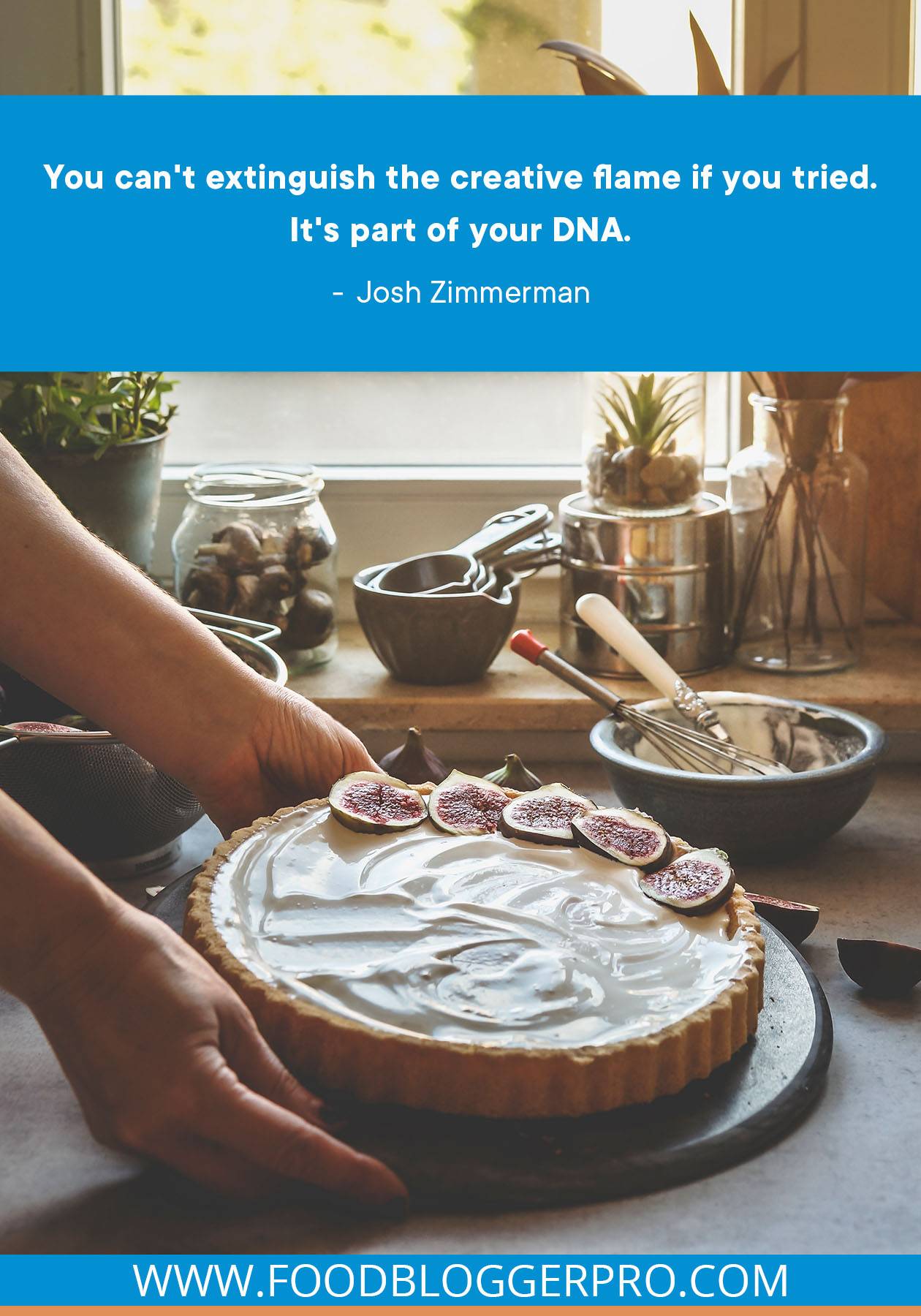
Josh Zimmerman: Yeah. What happens is we start to operate in a vacuum and when that happens, there’s no oxygen. So that flame, that creative flame may start to get smaller and smaller, but there’s no way that somebody who is as creative as you or anyone that’s listening to this podcast that has that flame, you can’t extinguish it if you tried. It’s part of who you are. It’s part of your DNA. And so it’s really about finding ways to give that fuel. And what happens is as you grow, you take on more and more executive responsibilities as a CEO and that puts you farther and farther away from what you actually love doing.
Bjork Ostrom: It’s the maker-to-manager transition.
Josh Zimmerman: Exactly.
Bjork Ostrom: And then
Josh Zimmerman: Manager to founder because-
Bjork Ostrom: Founder, CEO. …
Josh Zimmerman: Founder, CEO, because all you want to do is you want to be in the weeds. You want to be that technician in there when you have to be making high level executive decisions and not long after you’re not doing the things that you love doing. You’re managing people, you’re doing payroll, you’re dealing with HR. All of these things why you started, you’re not doing those anymore.
Bjork Ostrom: I think of it, I have a friend who had a couple restaurants. He started super successful restaurants, and Lindsay and I went once and it was a restaurant in Stillwater, Minnesota. It’s no longer there, but we’re sitting out on the patio. It was a weird time. It was like 3:30, so there’s nobody there. He came out, he started chatting with us. We’re like, how have things been going? He’s like, “Oh, the restaurant’s doing well, but one of the things I continually realize is that when I was starting a restaurant, I thought I was getting into the food business, but I’m actually getting into the paperwork business
Bjork Ostrom: And it’s like, oh shoot, what a talent.“ And yet as the founder of a restaurant, what he realized is that he was doing a lot of paperwork. And one of the things I think about as creators make this transition to manager or to CEO executive within the business is I think a lot of those people, if they would’ve seen that job listed on a LinkedIn profile, they never would’ve applied for it because they would’ve been like, ”That sounds miserable. I would not like to be doing that work.” And yet because of the nature of growth and business and adding team members,
Bjork Ostrom: The natural flow is that you as the founder then have three people who are working for you and then you start to have those recurring meetings and then you have team dynamics that you’re navigating. To your point, everybody’s an individual, everybody’s different and there are some select creators who probably really lean into that and realize, I love being a CEO, I love being a manager. This is a good fit for me. I’m going to create processes. Yeah. Not many. Okay. Yeah. Touche. But you’re describing the exact scenario that Lindsay navigated four or five years ago where she suddenly found that she had a team of really great people, really amazing people. But what she felt was, “I’m now needing to create in order to keep this pipeline
Bjork Ostrom: Going because people need me to create in order to have deliverables that then they work on. ” And it goes back to that idea of what we’re doing is we’re showing up every morning and we’re using our brains to create and I feel like what we’re needing to do is figure out how to create the best environment for our creativity, our brain, our thinking to thrive. So what does somebody do given the reality of that path for so many creators if they are also ambitious and they want to grow and they want to scale and they don’t want to experience burnout by building a team and all of the realities that come along with that.
Josh Zimmerman: I would say don’t go into this business then.
Josh Zimmerman: I mean, sometimes my job is to tell people when the baby’s ugly and I’m not here to just tell people yes and go you. Part of building a successful business is being a leader and doing those chores of … But I think when you explained it, if you saw this job on LinkedIn, you would never apply to it. Right, most creators are not CEOs and even people who aren’t creators who are founders aren’t CEOs. You can go to the best school in the world, no one can teach you to be a CEO. It’s not easy and it’s not fun, but there’s a real interesting thing that I’ve noticed when it comes to CEOs in corporate and creators who are running their companies and they both have something that is similar almost to a T every single time, which is they are lonely because a CEO can’t go to the board to talk about their problems and they can’t go to the people below them to talk about their problems.
Josh Zimmerman: So who are they supposed to talk to? Same with creators. Do you go to your friend and say, “Listen, I just made a million dollars off this cookie
Josh Zimmerman: Recipe.” Well, no, then you’re going to have to explain the entire process of RPMs and CPMs and page views and it’s like, I want to avoid all of that. So then it starts to get really isolating. And so looking at how to build how to work, what you explained with Lindsay of that she was creating content or creating recipes so it could fill the pipeline is where I would say timeout. That’s not why you started this. You’re now working for the company. The company’s not working for you. So what do we need to do to switch that and have the company work for you? And sometimes that means bringing in a C-suite individual fractional who is not from corporate.
Bjork Ostrom: Can you explain what that means? So for those who aren’t familiar, C-suite individual, CEO, CFO- COO. That’s what you mean by suite. And then can you explain the idea of bringing somebody in fractionally in one Sure. Those positions?
Josh Zimmerman: So it means that they’re not full-time. It means that they may come in only 10 hours a week because you don’t need a COO full-time, but you may need somebody that has been a COO and you only need them a fraction of the time. So that’s what it means when I say fractional.
Bjork Ostrom: So these are high leverage really. We have a fractional CFO that we work with 10 hours a month, it’s more than we need. He’s really great at understanding the work that we do, putting together the spreadsheets we need. We don’t need them 40 hours a week for sure. But we do need his expertise just at a fractional level.
Josh Zimmerman: Yep, that’s exactly right. What I would strongly suggest is that if somebody is looking for somebody in a fractional role is that the person that you bring in has worked in startups before and don’t go for the big shiny person that worked at a big company because-
Bjork Ostrom: So different.
Josh Zimmerman: They’re used to having a team of 50 people do the work and what you need to look for is somebody who’s willing to get their hands dirty and work with you, not tell you what to do and advise you. And that’s hard to find, but it is something that starts to take off your plate the things that are weighing you down so you can then think about, you and Lindsay can think about how do we want to move forward with our business and what are the things that we can do that are fun to help grow the business? Finances is usually not the fun piece. The other thing I will say is it’s really important to delegate, not abdicate because that’s usually a death sentence. When you abdicate something, then it’s like, I don’t want to see it. And then you come back and somebody spent all your money and it’s not a good place to be.
Bjork Ostrom: Can you explain the difference between those two?
Josh Zimmerman: Sure. So delegating is saying, “Okay, here’s your role and here’s what I’d like you to do and I want you to report back to me. We’re going to meet and I want to see have you hit these KPIs.” I’m delegating this to you. Abdicating is I don’t want to see it. Just handle it. Don’t talk to me about it. Just do it. What ends up happening is you … Listen, I hate bookkeeping. I have a bookkeeper. Abdicating it would be giving everything to my bookkeeper and be like, “I don’t want to see any of this again. Just give me the P&L. Give me everything that I need for my accountant.” That would be advocating.
Bjork Ostrom: And then forward once it comes in.
Josh Zimmerman: Just
Bjork Ostrom: Forward the email. Just
Josh Zimmerman: Forward. Delegating would be, “Hey, I need you to do this and do my bookkeeping and we need to meet once a month to go over the P&L and I need to check and make sure that you’re doing everything correctly and that it’s going into the right categories, et cetera. And as we prepare for taxes, here’s what I need.” So there’s accountability in checking in because if I didn’t at the end of the year, I’m going to be left with a mess because they haven’t had any guidance for me. So that’s the big difference and that’s across the entire company.
Bjork Ostrom: You’re in this position where let’s say I’m just trying to paint the picture. So you start out, it’s just you, you’re doing everything, you’re cooking, you’re doing the emails, you’re setting everything up and then you’re like, in our case it’s like, “Hey, we need some help with Pinterest.” So we hire Lindsay’s friend Angela. She comes on, she helps. It’s like, “Okay, we’re getting some momentum. We have some more money. We’re going to reinvest it back into the business. You bring somebody else on who helps with the day-to-day.” Eventually you get to this point where potentially if you’re lucky you experience the difficult reality of seeing the thing that you used to love doing change where now you’re maybe managing a lot, you’re maybe doing some of these roles that you don’t want to be doing or you wish that you could get back to doing the other work.
Bjork Ostrom: And what I’m trying to figure out, what is the best way to have that transition where
Bjork Ostrom: You bring somebody in who helps take on some of the stuff that you don’t like to do, you talk about that fractional C-suite type role and how do you do that in a way that truly allows you to go back to doing the thing that you wanted to do? Because I feel like there’s two paths really. One is that you start out, you scale up, you realize, I don’t like this reality of multiple people being accountable to me. There’s just more dynamics, relational dynamics that exist when you have more people, and then you decide to scale back down. And that’s the approach that happened with Pinch of Yum. It’s like we could have probably 10 people doing work that is additive, that is valuable, but for a number of reasons, both myself but also Lindsay, it’s really her business first and foremost and her personal brand decided that’s not what she wanted.
Bjork Ostrom: And so we have a really lean team that allows her to have some flexibility and autonomy that is the most life-giving thing for her in this season. Another way to potentially achieve that is to bring somebody in who kind of handles some of the managerial executive type work. Can you talk about how you’ve seen that successfully navigated for creators who do want to continue to scale revenue, potentially team size, growth of the business? What are the most successful examples of bringing somebody in to help with the day-to-day of the executive level type work? And how’s that different than just hiring somebody to do individual contributor type work?
Josh Zimmerman: How much time do you have?
Bjork Ostrom: Another episode.
Josh Zimmerman: Right, right. Part two. What you and Lindsay did was like Chef’s Kiss perfect is that you knew where you wanted to go and you may want to expand more, but you got back down to basics of what do we really need?
Bjork Ostrom: And in some season we might. I think that was the thing we realized in it was like, oh, we have two little kids and …
Josh Zimmerman: Yeah. So that’s part one. The other option was expanding even more. What that takes is a strategic plan and a strategic plan is not one that you get off of Google.
Bjork Ostrom: ChatGPT.
Josh Zimmerman: Or ChatGPT or Claude or any of the other ones. It may sound really good, but it’s not. Or you hire someone to do it for you. That’s also not good because what a strategic plan does is it looks at where you want to be. We do a strategic plan in five years and then we backwards plan what each of the objectives are every quarter and it’s a living, breathing document. What staff do you need? So you may not be at the point where you need a CFO, but you may need to have that on the future of Q1 of next year, you want to start interviewing people. So being really intentional about what growth looks like and what’s important to you before … What a lot of people do is they do fire-ready aim instead of ready, aim, fire. And the creators that I work with really don’t like doing it, but it helps build guardrails and also clarity around the metrics and the data that they need in order to make informed decisions on hiring, whether that’s job descriptions, HR hiring products, that is the way that you can successfully scale. And when a update to Google comes out, you’ve already looked at that in your SWAT analysis. What are the threats that are happening and what are we going to be able to do to pivot? If the hospitality industry had in their SWAT a pandemic, they may have been able to pivot a lot quicker than they did. So making sure that you have a clear vision of where you want to go before you hire anybody is really important. Now, that doesn’t mean that that vision isn’t going to change and that’s okay, but that’s why a strategic plan is so important where it’s not like I’m going to write it out and then never see it again. It should have coffee stains on it. You should be looking at it every day and that’s going to then help inform how you move forward in each sector of your business.
Bjork Ostrom: Yeah. It’s interesting. We talk about that same analogy, ready, aim, fire, ready, fire, aim positively within the context of just pressing publish on content. And I think a lot of the most successful creators have that as a mechanism that exists within them, which is like, I’m going to publish and I’m going to learn from it. And then from there I’m going to iterate and then I’m going to publish again and then I’m going to learn from there and iterate. What I hear you saying is you kind of have to dismantle that when applying it to a strategic plan because you can’t just build it as you go. That’s the whole idea of a strategic plan is it has to be codified to the best version of it today that you can create predicting, “Hey, in five years, where do I want to be? ” And then working back, what does that look like on a quarterly basis in order to then get you to the point where, “Hey, I’ve achieved five years from now where I want to be.
Bjork Ostrom: ” What I hear you saying is it’s kind of always going to be five years out where you’re continually evolving it, you’re thinking about what the plan looks like, how it changes, but you’re pursuing this goal, but you have to do the work of creating that plan and not just wing it. Is that what you’re saying with a strategic plan?
Josh Zimmerman: Yeah, and it can be one year. It could be half a year. Standard is five, but most of my clients don’t like doing five years. So we do three years. It’s too far out. Hitting publish and learning from that is part of the strategic plan because what the strategic plan is is it’s exactly that. It’s hitting publish but hitting a, “Hey, I want to achieve this. What am I going to learn from this? So I think I’m going to make this much this quarter if I do this and this and this. ” Oh, you know what? I didn’t hit that. Why didn’t I hit that measurement? Okay, got it. And that’s not a failure, it just is we’re learning. And so we actually adjust that end of, whether it’s a five-year or two-year, we adjust that metric to what we learned from that month or week or quarter.
Josh Zimmerman: And so leaning into the creativity of a strategic plan where you can have fun with it as much fun as possible,
Josh Zimmerman: Where it is a publish play. It’s a play on publishing, what do I get to learn from this? And if you’re able to start to implement the things that you’ve learned, just like when you publish a video or a post, you start to iterate and you start to learn. People don’t learn by succeeding. They learn by failing and just failing doesn’t mean you’re a failure. There’s a big difference. And so there’s a lot of pressure on founders and creators, I can’t fail. If I fail, I’m a failure. And I always try and remind people that you didn’t get to where you are by succeeding. You did it by trying and learning from what worked and what didn’t work and then also understanding that a lot of your business is outside of your control.
Bjork Ostrom: Algorithms and- All of that. Yep. Yep.
Josh Zimmerman: So looking at that as a factor in your business plan, what do you do to account for that and not be reactive but proactive, which is another piece of why burnout happens is because you’re always reacting to things instead of being proactive on
Bjork Ostrom: It. Yeah. So all of this in pursuit of healthier days, les burnout, can you paint the picture of that second scenario that we talked about where somebody came to you and says, “I’m feeling burnt out. I’m not inspired.” And going through that process of a strategic plan and getting back to a place where not only is the business successful, but they’re in love with their work again, be at a high level, but what does that look like and can you paint the picture of what that experience can be like, whether through a story or through the average of five different stories in order to anonymize
Josh Zimmerman: It? So I’m bound by confidentiality, so I can’t say who I’ve worked with unless it’s on my website or they’ve given me express written permission and each person is different and each company is different. But what I’ve seen is that when someone comes to me that is burnt out or thinks they’re burnt out, it’s usually a five alarm fire. And so what we do is take a look at really what’s happening and is it really a five alarm fire and then start to dismantle the most important parts of what they’re trying to do and one, see if it even is a business. And if it is, then what are the pieces that they don’t enjoy doing and what are the pieces they do enjoy doing and then starting to reshape how the business looks, but that is also how they look, how they are going to show up each day.
Josh Zimmerman: So one of my clients has a extremely successful YouTube channel and blog and yet they have found themselves in positions where they’ve hired too many people or they haven’t hired enough people and there’s a huge amount of thrashing going back and forth because they don’t know. They’ve been pulled in so many different directions that they’re just sort of in analysis paralysis. So in that situation, what we worked on was one, helping figure out what support they needed to actually take a moment or a few weeks or a few months to decompress and get out of the flight, fight or fear mentality and then start to slowly build back the different pieces that they really liked. And so what my clients really don’t like is how long it takes. I can never make a promise of how long it’s going to take. People always want immediate answers and they want action, right?
Bjork Ostrom: Done yesterday.
Josh Zimmerman: Totally done yesterday. Totally get it, but that’s not how it works. It’s customized to each person. So I’ve seen people who’ve been able to do this within a few months and I see other people who do it in a few years, but it really goes back to how somebody looks at what they’re building, like why? We need to get back to the why. Why are you doing this? Because frankly, nobody cares.
Bjork Ostrom: What do you mean by that? Can you talk a little bit more about that?
Josh Zimmerman: Sure. Nobody cares about what you make. Nobody cares about your cookies. They don’t.
Josh Zimmerman: What they care about is the why. Why am I feeling this way when I make Lindsay’s recipe? Why am I feeling happy or sad or angry or hopefully not angry or why am I having an emotional reaction to somebody is creating? And being able to come back to that, there’s tons of recipes out there. Why should someone care about yours? It’s not because your recipe is good, it’s because your recipe is good and it has a good story to it. And on top of that, there is a connection that is made, a parasocial relationship, but there is a connection that’s made that is, “Oh, I’ve made this recipe and because of that, I was able to share it with my friends and all my friends are asking me for this recipe.” And so on the other end of it is people being like, “This recipe is bringing me joy.” On my client’s side is, “Well, why does it bring you joy?
Josh Zimmerman: Why are you creating this recipe? What is it about this recipe that why did you create it and how does it make you feel?“ And people are like, ”Well, this is too woo-woo.“ And I’m like, ”Well, just hear me out. ” And once we get back down to that why, then you see the passion
Ann Morrissey: Start
Josh Zimmerman: To ignite again. So the answer to your question is there’s a lot of unearthing a lot of the stuff that has piled up in order to get to that core passion. And once that’s revealed, there’s really no stopping them.
Bjork Ostrom: One of the things I’ve been thinking a lot about with our house lately is how good we are at acquiring things and how bad we are at getting rid of things.
Bjork Ostrom: I’ve also thought about that in the context of meetings or just in general, I’m 40 now, over my life I’ve accumulated more than I’ve gotten rid of things and that’s speaking in responsibilities and stuff. And I think the same is true within entrepreneurial arc. We’re really good at adding a meeting, adding a new platform, adding a deliverable. We’re not as good at getting rid of those things. And I’ve been thinking about that within the context of a lot of different things, but how do I load balance things that I’m adding and things that I’m getting rid of? And it sounds like part of what you’re saying is we need to understand that in order to … I think you used pile on.
Bjork Ostrom: In order to get some of those layers off to get back to the thing that we really enjoy doing, we have to figure out how to take those things off that have been piled on, which takes a lot of work, takes a lot of effort and that’s what you do with creators. So as we close out-
Josh Zimmerman: I would just say to you that for your situation, which I hear all the time, I would ask yourself a very simple question. If I say yes to this meeting, what am I saying no to?
Bjork Ostrom: Yeah.
Josh Zimmerman: And if I say no to this meeting, what am I saying yes to?
Bjork Ostrom: Yeah, because both is true always.
Josh Zimmerman: Right.
Bjork Ostrom: And
Josh Zimmerman: So that then if you can start to look at the decisions you make as if I say yes to this, I’m going to say no to this, that then helps to contextualize really how much are you able to hold on your plate. And then it starts to bring some awareness into, I can’t do all of this on my own. So that’s one thing that I would say is you’ve put all this stuff on, right? What needs to come off, and this is the dangerous piece is people saying, “I want this off,” and they take it off and they advocate it versus we need to clear the plate on the things that are just noise and then what are we saying yes to that is actually nurturing and nourishing us versus depleting us. And that’s where the burnout usually starts to happen when we’re putting so much on our plates that isn’t nourishing us.
Bjork Ostrom: Yeah. I can almost see it as in that process, you’re just completely getting rid of some things. You’re saying, “We just don’t do these things. We’ve done a lot of that. It’s an opportunity, it would help, you’d make money from it, it would grow, but we just are saying no.” The other would be delegation and I think of Dan Martel’s 1080 10, you’re not giving somebody 100% and just walking away, you’re shaping up 10% of it, you’re letting them do 80% of the work and then you have the 10% at the end that you’re checking in on and being aware of. So it’s like completely getting rid of stuff so you don’t need to do delegating some stuff and then holding onto the things and fully owning the things that bring you the most joy.
Bjork Ostrom: That to me, when you look at getting up the next day and you can see a day that is a majority, I love to do these and maybe a little bit of the 1080, 10 here and there, but you’re not doing 100% of the things that you despise, maybe just doing 5% of it to make sure that it’s up to standards. That feels like it could be a really beautiful day, week, month life that you get to live as a creator. I know you’ve helped so many people make that transition when they are feeling burnt out, when they’re not excited about their work. Talk a little bit about how you work with people. If somebody listened to this and it resonated with them, how they could reach out, what does that look like?
Josh Zimmerman: Sure. I mean, I keep it really, really simple because the creators and clients that I work with are really, really busy. So if they’re interested, they just can reach out [email protected] and we have a complimentary consultation with them and see if it’s a fit and we go from there. I never make promises because I think that’s a setup and I don’t use fear-based marketing.That’s just not who I am and my job is to help my clients and that’s usually one step at a time. And if I can be of service to somebody, that’s great. If I can’t, I’m usually down to help them find who they are, who can help them because I think the world needs more people like you and Lindsay and the people listening because your job is nourishing. That’s what you do. And so my job is to help put everything that you put out take some of that back in.
Bjork Ostrom: Yeah, that’s great. Josh, thanks so much for coming on. Really appreciate it.
Josh Zimmerman: Of course. Thank you.
Ann Morrissey: Hey there, Ann again from the Food Blogger Pro team. Thank you so much for listening to that episode of the Food Blogger Pro Podcast. If you enjoyed the episode, we would greatly appreciate it if you could share with your community and leave a rating or review wherever you listen to podcasts. We’re excited to kick off our Gro mini series next week as we sit down with Ben Jabbawy, the founder of Gro, to talk about memberships and list growth. We’ll see you back here soon and in the meantime, we hope you have a wonderful week.