
Listen to this episode of The Food Blogger Pro Podcast using the player above or check it out on Apple Podcasts or Spotify.
This episode is sponsored by Grocers List and Clariti.
Welcome to episode 558 of The Food Blogger Pro Podcast! This week on the podcast, Bjork interviews Claire Dinhut from Condiment Claire.
Last week on the podcast, Bjork chatted with Krista Linares. To go back and listen to that episode, click here.
Trusting Your Creative Instincts to Build a Million Follower Food Brand
Claire Dinhut first started sharing food content on TikTok when she lost her job working on a food and travel docuseries during the pandemic. Since then, she has grown to over 1 million followers on TikTok, published a cookbook, and started a Substack blending food, travel, and history into a cohesive content brand. Claire’s journey is a good reminder that you don’t need to follow a rigid formula to succeed online. By leaning into what felt natural — documenting her interests, telling stories she genuinely cared about, and creating without overthinking — she built a business that feels aligned, sustainable, and creatively fulfilling.
Whether you’re curious about Substack, growing on TikTok, or finding your own creative rhythm, this episode is packed with insight and encouragement to trust the way you create best.
Three episode takeaways:
- Monetization works best when it’s intentional — By waiting to monetize her Substack account and being thoughtful about what goes behind her Substack paywall, Claire built a smaller but deeply invested paid community alongside her massive free audience on social media. She also shares more about how she uses audience response to inform paid content and her content strategy overall.
- Find the path of least resistance — Claire’s success comes from leaning into how she naturally creates, posting often, and treating each platform differently.
- How Claire grew to over 1 million followers on TikTok without consuming social media herself — Claire explains how posting consistently on TikTok and Instagram helped her find her voice and shares the tools she uses to write, film, and edit her content (you might be surprised!).
Resources:
- Condiment Claire
- The Condiment Book
- JSTOR
- CapCut
- Follow Claire on Instagram and TikTok
- Join the Food Blogger Pro Podcast Facebook Group
Thank you to our sponsors!
This episode is sponsored by Grocers List and Clariti.

Built specifically for food creators, GRO is the ‘comment for recipe’ platform designed to help you effortlessly grow your email list, drive more traffic to your site, and earn more affiliate sales.
Learn how top food creators see 75% click-through rates and 5% opt-in rates during upcoming office hours at GRO. You can register for the event at gro.co and use promo code PODCAST to get your first month totally free.
Thanks to Clariti for sponsoring this episode!
Sign up for Clariti today to uncover SEO insights and monitor performance improvements by analyzing your WordPress and Google data in real-time. Get 50% off your first month with the easiest content auditing tool you’ll ever use.
Gain insights in a few clicks, prioritize what matters most, and optimize better with Clariti.
Interested in working with us too? Learn more about our sponsorship opportunities and how to get started here.
If you have any comments, questions, or suggestions for interviews, be sure to email them to [email protected].
Transcript (click to expand):
Disclaimer: this transcript was generated using AI.
Bjork Ostrom: This episode is sponsored by Clariti. Wouldn’t it be awesome if you could figure out how you can optimize the existing posts on your blog without needing to comb through each and every post one by one? With Clariti, you can discover optimization opportunities with just a few clicks. Thanks to Clariti’s robust filtering options, you can figure out which posts have broken links, missing alt text, broken images, no internal links, and other insights so you can confidently take action to make your blog posts even better. We know that food blogging is a competitive industry, so anything you can do to level up your content can really give you an edge. By fixing content issues and filling content gaps, you’re making your good content even better. And that’s why we created Clariti. It’s a way for bloggers and website owners to feel confident in the quality of their content. Listeners to the Food Blogger Pro Podcast get 50% off of their first month of Clariti after signing up. To sign up, simply go to clariti.com/food. That’s clarity, C-L-A-R-I-T-I.com/food. Thanks again to Clariti for sponsoring this episode.
Emily Walker: Hey there. This is Emily from Food Blogger Pro and you are listening to the Food Blogger Pro Podcast. This week on the podcast, we are welcoming Claire Denute from the food brand Condiment Claire. Claire first started sharing food content on TikTok when she lost her job working on a food and travel docuseries during the pandemic. Since then, she’s grown to over one million followers on TikTok, published a cookbook and started a Substack blending her love of food, travel, and history into a cohesive content brand. Claire’s professional journey is a good reminder that you don’t necessarily need to follow a rigid formula to succeed online. By leaning into what felt natural for her, documenting her interests, telling stories she genuinely cared about and creating without overthinking it, she was able to build a business that felt aligned, sustainable, and creatively fulfilling. If you are curious about Substack growing on TikTok or just finding your own creative rhythm, this episode is packed with insights and encouragement to trust the way you create best. Without further ado, I’m just going to let Bjork take it away.
Bjork Ostrom: Claire, welcome to the podcast.
Claire Dinhut: Thank you so much for having me.
Bjork Ostrom: Yeah, so this came out of, we actually have somebody on our team and they’re like, “I would really love…” This is one of the things that you get when you’re on a team is you get to get requests for access to interviews. And Jasmine was like, “I’d really love if you guys could do an interview with Claire.”
Claire Dinhut: Oh, that’s so sweet.
Bjork Ostrom: And she said, I have a little quote from her. She said she’s just got a really breezy, effortless style to her content creation. And she said, “I’m sure it takes a lot of effort, but I think her niche allows her to make a lot of fun, quick, compelling videos that have served her well.” So is it a lot of work? What have you learned about this career as a content creator and to what degree is it easy breezy content creation versus a grind?
Claire Dinhut: It
Bjork Ostrom: Kind of feels like it could be both.
Claire Dinhut: It’s definitely a grind, but I will say I take so much pleasure in it that even the grind, of course you have those moments where you’re just a little overwhelmed and you try to keep it together, but it’s so special to be able to have control of your full schedule and have control of, okay, today do I really want to be filming videos or would I rather be writing, et cetera. I think at the very beginning it was definitely effortless because I come from the TV world, so I was working in food and travel docuseries before the pandemic. Pandemic hits, I don’t have a job. I’m like, “Uh-oh, what do I do? ” Brexit gets formally announced. I decide I want to move to London. I have a French passport, so I know, okay, I have no job and I really want to move to London.
Claire Dinhut: What am I going to do? Started working part-time here and there for different production companies, but everyone was telling me, “You need to start on social media because now is your time. You have time. And if you really want to get back into that food and travel docuseries world, or if you want to write travel guides, et cetera, that’s where now the real power lies.” And I was like, “Okay, I guess I have to do this. ” So I started making videos and it came really easy to me. I think my style has always been, as Jasmine was saying, effortless in the sense that of course I’ll make some videos that are more beautiful, so to say, and well edited, et cetera. But my favorite video to film is honestly, prop my phone up against the wall in my kitchen, there’s no phone stand, there’s no tripod, there’s no nothing, and just get chit-chatting and tell people about this random dish I made this night, or I’m out and about and I’m learning about the history of fish sauce and all of a sudden I’m like, okay, as opposed to writing it down in my notes app, which is something I would’ve done before, why don’t I pull my phone up, film a little video about it?
Claire Dinhut: And I just really loved doing that. And so for the first few years when I was still working for different production companies, that to me felt really effortless just being able to consistently make those videos. And I loved it. I took so much delight in it and I still do. And I think those are still the videos that I make today. And it’s really interesting because that’s a style of video that people recognize as my style in a sense. So when I do put a lot of effort into a video, I did one this summer that was, okay, everything I do in a day at the mills or my family lives on a mill in France. And so because of that, people love to see what the average life is here every day. And those videos that take me so long that are so edited that some of it’s voiceover, some of it’s not, there’s music in the background, et cetera, et cetera, et cetera.
Claire Dinhut: Those don’t actually do as well as the videos that are effortless, that are the ones that are worse quality in my kitchen, bad lighting. And that brings me pleasure because I realized that people feel like we’re on FaceTime together. And I think that’s really special. But as this social media world started becoming more of my career and as I wrote the book and the reason I started a newsletter was because I just turned in my book and I was so used to writing every day and I loved that because I studied history and literature that then I really missed it. And I started writing in my notes app again, like the history of this, the recipe for this, or my Paris City Guide, my London City Guide, et cetera. And I figured I have this all written, why wouldn’t I share it? And so I told myself, I’m going to send out one newsletter every week because I won’t do something if I know I can’t uphold it.
Claire Dinhut: And so it took me a while to get started, but the second I knew, okay, I’m going to do it every Tuesday. I’m going to send out a newsletter and that’s going to be that. And now I’ve been doing it for over two years and I haven’t missed one week and it’s something that is what really takes time in my week. Videos, more so effortless. The newsletter, the research, the writing, the photos, et cetera. But I love being able to plan my week around that.
Bjork Ostrom: Yeah. There’s something that we’ve talked about before, this idea of document, don’t create, and to find the ways that you are already naturally documenting and then just transition those into, add a published button to those. So if you are somebody who’s naturally already writing or jotting down notes, like you said, maybe you’re keeping track of things in a notes app or you’re taking videos of things or photographs of things. What does it look like to transition that by adding a publish button where you are already in the process, you already naturally have the draw to do that type of creation, but then the transition to publishing obviously makes it public, right? It’s publishing. So that sometimes is a hurdle for people though. The idea of taking something that is private, a video, a thought, a recipe, and then pressing publish can sometimes be a hurdle and scary realistically. Did you find that at all in the beginning or did you also find that you naturally had a desire to publish and share things?
Claire Dinhut: No, I think with me is everything I’ve ever published, whether it’s something written or whether it’s a video is something that I really believe in. It’s something that I believe in. It’s something that I do, as you were saying, documenting. And so I’ve always just thought, you know what? If I’m going to put this out in the world, that’s fine because that’s me. And I think accountability is something that really matters to me. I think even if I do something wrong, I’m the first person to say, “I was wrong, I did it wrong, but at least I know that I did it. ” And so if I were to publish something, a recipe and maybe someone says, “It didn’t really work for me, ” then we can work on it and that’s fine, but I’m not afraid to publish it because that’s the way I did it the first time and that’s the way I’m going to write it.
Claire Dinhut: And I think it’s about not taking yourself too seriously. And as we know, this world has changed quite a lot in the past few years. And as you were saying, there is that rise of social media and especially the written social media world and blogs, et cetera. And if everyone that’s online was actually really afraid to be publishing and hitting that button, we wouldn’t get as much information as we do now. And I think if you’re able to learn something every day, that’s the most special part. And so who are we going to learn from if people are scared to press publish?
Bjork Ostrom: Yeah. Yeah. Everybody has some expertise, some skill, some knowledge, whether it’s something that you’ve already acquired or something that you are in the process of acquiring, I think a lot of this podcast is my continual pursuit of trying to understand the world of content creators better. And the great thing is we get to document these
Claire Dinhut: And
Bjork Ostrom: Publish them. It’s part of our process is learning and publishing. It’s advantageous for me and our businesses because it’s the world that we live in. But also then in and of itself, it becomes a business where we have a podcast and people listen to that and people learn. So to your point, makes a lot of sense. One of the things that’s interesting about what you’ve built is you have your social accounts, over a million followers on TikTok, over 150,000 followers on Instagram, and then you have a Substack. And we’ve talked a lot about this transition in the world of food creators or people who are just creators in general. There isn’t as much of a need to have a standard true website. It still can be helpful if that’s your focus and that’s what you want to do. But we see a lot of people who maybe five, six years ago, like a case in point for you, starting during COVID, during the pandemic, getting some momentum.
Bjork Ostrom: And then my guess is once you started to get some of that momentum, starting to think, okay, what do I want to do with this? Now that I have attention, where do I want to direct that attention? You could do sponsored content, you can do a book, which I know you’ve done, you can do Substack. How did you make decisions about how you wanted to turn this into a business? And at what point did you start to make those decisions?
Claire Dinhut: Yeah. I think being in the UK made this a bit different in the sense that in the social media world, in terms of sponsored content sponsored videos, the money is not the same as in the US. So I was still working for different production companies here and there, trying to keep myself afloat, build that following because I realized that I really did enjoy making videos. So I figured, you know what? Why not stick with it and see where this goes? Because even if I don’t make money from it, it’s something that I love. At this point, we’ve built a little community, and if I’m going to be churning butter anyways, why not churn it for people who like to see it? And the book was something that I also never thought I would write a book. And the book was actually, a publisher reached out and asked me if I’d ever considered writing a book because they would love for me to write a book about the history of condiments.
Claire Dinhut: I was like, “That’s my dream come true. I studied history and literature, so funny.”
Bjork Ostrom: History major.
Claire Dinhut: Yeah. I was like, yes, absolutely. And as I started seeing the book in my head though, I knew that I wanted it to be playful and fun and still have some recipes. And we kind of were able to build this wacky little book that I have, which I feel really appreciative of. But again, as you know, in the literary world, it’s not like there’s that much money either. And so I’ve always stayed away from doing a lot of sponsored content in terms of videos and social media platforms like TikTok and Instagram. And I will only work with brands that I genuinely really support, that I already really support, that maybe I’m already using or I’ve worked with the luxury collection this year, which is Marriott’s, it’s one of their hotel groups and they have a whole sustainability initiative and that’s something that means a lot to me.
Claire Dinhut: So I do do sponsored posts here and there, but I don’t rely on that in terms of income. It’s kind of like, okay, if it comes, great. And if not, I’m not going to chase the next deal because that’s something that doesn’t feel right to me and not something that I started off with. And as you were saying, you don’t need websites anymore because you’re able to just publish on Substack and the platform is really easy to use. And I think especially when I was writing my city guides, I love being able to share where I’m going in different cities, whether it’s Florence or Paris or something as random as I was just in South Cakos and I can’t wait to tell people about South Cakos and this choral lab I went to. And to be able to share that in a written document online where people can look through it, not have to scroll through a bunch of videos is something that I think has a lot of power.
Claire Dinhut: So despite the following having power, I think the written world is so powerful because you can always refer back to it. And especially with a search engine that’s as strong as Substacks, I think it’s really important for creators to, whether it’s migrating recipes or migrating … I write random food history content too, and that for me will never be behind a paywall because I don’t think that you should pay to learn.
Bjork Ostrom: Yeah. How did you make decisions with Substack? What would be paywalled and what wouldn’t be? Because I know for a lot of people who are used to publishing on a site, everything is free and then you monetize from ads or maybe sponsors potentially. But as soon as you get into a world where like Substack is a for instance, you’re having to make a decision, okay, this is just speaking specifically about recipes, but should these recipes be paywalled? Should these not? I know that you do city guides as well. So how did you go about making the decision initially and then did it change at all as you posted more on Substack? Yeah. I know it’s been two years, is that right?
Claire Dinhut: Yeah, it’s been a little over two years. At first, everything but the city guides were free. So even the recipes and my publisher basically came to me and said, “You’re writing a book right now. You can’t be giving out free recipes left and right because that’s just not going to be good for the future of the book.” And so I ended up putting the recipes behind a paywall too. And I think in terms of the city guides, the reason why I wanted them behind a paywall is my following there isn’t major. I have around like 40, 50K, which I am so appreciative of, but the paid following is obviously smaller than that. And I think it builds almost a smaller community. And I don’t want to share necessarily my favorite sushi spot in Paris with random people on the internet who aren’t even following me on Substack who can just learn about it.
Claire Dinhut: If it’s a small mom and pop shop, I want to keep that within the community. And I think that’s really special. And even I’ve been on a book tour for the past year or what feels like the past year. And when I’m at these events and people say like, “Oh no, no, we went to this place when we were in Paris and when we were in Tokyo, we went to that for a caucus/katsuboshi restaurant and we waited in line like you said.” And it’s really special to have that smaller group of people because as much as I enjoy sharing everything with the world, to have that special connection and maybe those shared experiences specifically that people get through the city guides, it’s just really special to be able to talk about.
Bjork Ostrom: Yeah, that’s cool. And it makes a lot of sense. You think about a little ramen chop in New York, like Lindsay and I went to a ramen chop in New York and it’s like if you post that to, let’s say on the extreme end, a million followers on TikTok, it just changes the more that people do. Obviously people discover this stuff and it gets out eventually, but there’s something around keeping something kind of within the community and it feels like it can still be a secret, but valuable for you to share it. How do you go about the flow of, let’s say on Instagram or TikTok, everybody’s seeing the content and the goal is to get as many people as possible, my assumption would be, to see a piece of content. From there, how do you view the outcome of content? Are you trying to occasionally mention Substack?
Bjork Ostrom: In our world, we would create a recipe, publish that to Instagram. It would be a reel and there’d be some prompt or call to action that we’d have, whether going to Google and searching for it or commenting to get the recipe in order to get people to go over to see that recipe monetizing via ads. What does that look like once you have Substack as one of the major business components and driving people there, the balance between saying, “Hey, find this on Substack, sign up for my Substack,” versus just creating content and publishing that content. How do you make decisions on pushing people or encouraging people to sign up for Substack?
Claire Dinhut: Yeah, this is an interesting question because I really, I’m not great at this because as I was telling you before this podcast, I like to wing everything because I feel like it just makes everything more authentic and interesting for myself as well. But a lot of times when I’m focusing on writing a Substack for the week, if it’s a recipe or if it’s a city guide, those are videos that I’m sharing naturally anyways. So if I’m making a French yogurt cake in my kitchen because I want to make a Thanksgiving yogurt cake this week, I’m going to test out a bunch of recipes and to me, I’m just going to film them. So I’m like, “Okay, I’m on trial number three and I’m doing this because I’m working on the recipe for Substack.” So those are things that I’ll naturally share,
Claire Dinhut: But the TikTok algorithm is weird too, where if you write Substack, then the video doesn’t do well and it doesn’t like you mentioning other platforms. And Instagram I think is much easier in the sense that you can actually have clickable links as well, so in your stories. So for example, today I shared my Thanksgiving prep ahead recipes, like the recipes that I can make today in preparation for later this week. And that was great because people, if they want to read about it, they can read about it. And that’s again, that’s not behind a paywall. These are things that I’m going to prep in advance. And so I do try to migrate people over because I do, again, I personally love Substack and I love reading certain Substacks and I’m so happy when I get a new post from a page that I follow, but I know that a lot of people find it difficult to have certain things written versus on video.
Claire Dinhut: So I try to do a nice balance of both. And then Instagram I really use primarily for being able to have those clickable links.
Bjork Ostrom: Sure. When you say balance of both, is that within Substack or you’re saying to Instagram and TikTok doing video content and then doing written content within Substack or are you doing video content in Substack as well?
Claire Dinhut: So Substack is great because you can actually link TikTok videos within an article.
Bjork Ostrom: Got it.
Claire Dinhut: So let’s say I’m doing this yogurt cake, for example, I can write a paragraph and then say, okay, I tried this iteration and then I can direct link a TikTok video that I made a few days before flopping on maybe the first recipe and it will automatically play. So again, I just think the interface is really nice and really easy to use as the writer. So it’s a nice balance of kind of teasing it by making those videos, but not on purpose even, just making those videos because I’m taking people along for the ride. And I really do spend the entire week prepping for that Tuesday. What is that going to be? And if it’s a city guide, it’s usually because I’ll be in that city the weekend before. And so that’s why I also chose Tuesday to be the day to send things out because if I’m on a weekend trip, if I’m gone Friday, Saturday, Sunday, Sunday flight back, I’ll really write it.
Claire Dinhut: I’ll be writing it in my notes app as I go and then I can spend all day Mondays. I don’t schedule any calls. I don’t schedule any Zooms and I’m basically just sitting at my counter figuring it out and like that.
Bjork Ostrom: Yeah. It goes back to that idea of document over create where if part of what you’re doing is documenting your days or your weeks, part of your days and weeks, a lot of them, I would assume, is preparing for writing an article. Even you had a kind of day in the life of a creator video, and then within that it’s mentioning, “Hey, one of the things I’m doing is getting ready to publish this newsletter.” Within that, you’re not saying, “Hey, go sign up for this newsletter.” It changes the feeling of a piece of content, but it’s just saying like, “Hey, this is a part of my day. This is what this looks like. ” And naturally then, if people are interested in the city guide or in following along in a different way, that kind of creates awareness for them around the fact that it actually exists in a really natural way that doesn’t feel markety.
Claire Dinhut: Yeah. And it’s always interesting because I know a lot of people are against looking at blogs online or signing up for Substacks and newsletters in general, but they want answers to certain questions that can’t necessarily be answered with a video. So if I’m filming a video in Paris and I’m making a 60-second video about this pho place because I love having fa when I’m in Paris and it’s freezing cold and there are about three, four spots that I love and I share one of them, they’re like, “Okay, what are your other spots?” And a simple comment back that I can say is, “I have an entire city guide on my Paris Substack.” And it’s interesting because a lot of people wouldn’t then take the step to go online and read it, which is fully fine. That’s up to them. And I never want to push anyone to subscribe to something that they don’t want to subscribe to, which I know maybe isn’t business savvy of me, but it’s interesting seeing the rise of it, especially in the last six months.
Claire Dinhut: It seems like a lot of people are finally starting to realize, okay, no, yes, creators are online, but it’s not actually just to their benefit. It’s actually really helpful. And I wouldn’t be on Substack if I didn’t find it helpful, if I didn’t like subscribing to certain things or reading recipes online or learning about random food histories, because that’s the kind of content that I consume.
Bjork Ostrom: Yeah. Can you talk about what it was like to launch your Substack? So what was it like in … My guess would be that it’s like any platform, it’s hard to get started, but then you eventually pick up some momentum, gets a little bit easier. What was launch like for you in that first year really as you were figuring it out and getting started?
Claire Dinhut: It was interesting because as I mentioned before, I never realized it would be a tool, a financial tool whatsoever. So I had no pressure starting it. I just had a Notes app full of food histories and random recipes I had jotted down. And my city guides I’ve had since high school. It was something I was doing. I was writing for Spoon University in college. All of my friends’ parents always knew, okay, if we’re going to France this summer, we need to ask Claire, what are her top spots? So there was a lot of content that I already had that I just hadn’t shared before that I didn’t realize was something that people wanted necessarily. I had emails to friends’ parents about where to go in Botswana, but no financial plan for that. And I started October 2023 because I turned in my book September 2023.
Claire Dinhut: And so it took me a month to really realize, what am I missing right now? Why do I feel … I don’t feel empty from having written the book because I’m going back and forth on copy edits, but what do I miss? And it was that research element and it was research and writing. And so when I launched-
Bjork Ostrom: As somebody who loves history, it’s like it makes sense that that would be something you’d be interested in. It’s these parts of you that are all coming together, travel, research, history, food.
Claire Dinhut: Yeah. And when I was working at production companies, I was a research assistant to the production team. So for me, it was always about digging into primary sources. I still have one of my main tabs on my computer is JSOR because I love looking at primary sources and I have my college alumni email. And when I’m writing these food history things on Substack too, I’m digging deep. I’m going to find the original pumpkin pie recipe and understanding, okay, why do they use this versus that? Because that’s what I pleasure in. And do I need to be doing that? No. Would people read it without that level of effort? Yeah, probably. But I feel so grateful that this is my job, that I’m allowed to do this and I can do that. And so what I always tell my subscribers on Substack is they really allow me to have the job that I have.
Claire Dinhut: And if they want me to have a Madrid City Guide, I’m able to travel to Madrid. I’m very lucky that again, I’m in London, so I can buy a flight to Madrid for 20 pounds, but that trip, I don’t have that anxiety when I’m going to a coffee shop and buying a croissant if I’m in Paris because I know, okay, if I share this on Substack, I probably will see some monetary compensation because I know that this is what people want and people have been asking for the city guide or asking for bakery recommendations, et cetera. So when I started on Substack, I didn’t have that idea in my head at all. So I was just sharing everything freely, blah, blah, blah, and I was so enjoying it. And the following started coming and I was like, okay, that’s interesting. And it was the second that I started sharing more French content specifically that I saw the numbers really increase.
Claire Dinhut: The Paris City Guide, and then last year was the Paris Olympics. So I did a printable checklist of, okay, if you’re in Paris, here are 10 things that you should try when you’re there. And I’m not telling you exactly, have steak tartare at this place, but I’m saying, “You know what? Try this when you’re there.” And that’s I think what my city guides are more so about. Of course, I’ll have specific recommendations, but it’s more so, okay, we’ll use Paris as the same example. You should really have Escargot when you’re here or you’re in Cape Town, you should really have a koe’sister, which is a Cape Malay pastry. And you should understand why is it that you should be having those things? And not necessarily this is the only spot that’s good and this is the perfect cook sister. No, maybe it’s not, but you should be able to experience that when you’re somewhere.
Claire Dinhut: So I think it’s allowing people to really dive into places. And so it was all of that French content and realizing that, okay, learning about different cultures is something that people were eager to read about. Of course, the travel videos always do well and that’s a niche that I really love tapping into because I do love traveling, whether it’s high or low, I’m so easy with it all. I just like experiences and adventure. And so understanding that French content does well, let me see if I put my other city guides on there. Okay, those are also doing well. Okay, maybe some French recipes. Okay, those do well too. And so it’s this kind of ecosystem of just different cultures and people wanting to understand them through flavor, which to me is the main thing. And I think that’s why I never, when I started on TikTok, my username was not Condimentlaire and the condiment world kind of just came to me in the sense that we all make every culture around the world can make a roast chicken or make some chicken dish.
Claire Dinhut: And it’s what you put on it that makes it so yours. And that’s the flavor element and that’s the condiment. So the idea that learning about different cultures through flavor, whether it’s a recipe or whether you’re going to a different city that maybe you’ve never been to before and having to try a specific dish that you might not like it and that’s okay, but you push yourself to try it. And in the meantime, when you’re writing about it, you learn about its origins, I think is something that’s really significant because it stays with you. It doesn’t come in one ear and out the other because you’re tasting it, you’re eating it, there’s that physical … It’s special.
Bjork Ostrom: Yeah. It’s interesting. It makes sense, but I’ve never really thought about the importance, not only of experiencing a well-known dish or food when you go to a certain city, but also then the explanation of why. Why is that important? What’s the history with it? And that I’m sure is for people that follow you, a huge component that doesn’t exist in other places. You could have a city guide that is a city guide of like, “Hey, got to go here when you’re in New York and this place and this place.” But then to double click on that and say, why, what is it about that food? What is it about that flavor that represents this city or this area? What’s the historical kind of context around it is so valuable and it also takes work to get that, which you’ve talked about like the research
Claire Dinhut: Element of it. Yeah, the research element, but I think also being able to travel to a city and ask around and walk into a random cafe, ask some random guys sitting at the bar drinking an espresso. “Okay, is this your favorite espresso? And if not, where do you go and what do you order there every morning? ”I don’t necessarily, when I’m traveling, I don’t care that much about going to the top 10 restaurants in that city, and that’s not what my city guides are. I want to know where the locals are eating, but more importantly, what they have on their table, breakfast, lunch, and dinner. To me, that’s what’s fascinating. And as I mentioned before, the Cape Malay us sister, that’s on my Cape Town City Guide. But if I were going to Joe Bergen writing that city guide, that pastry would not be there because there isn’t that same Malay influence.
Claire Dinhut: And so those spices aren’t used, et cetera. And I was in Valencia a few years ago because my friend Nicola and I went to a citrus farm. We went to the Totally Citrus Foundation because we wanted to learn about all these different citrus. And again, so special that my job allows me to do that. And everyone was saying,“ You have to have paella there, you have to have paella there. ”Okay, I’m not a huge paella fan, I won’t lie to you. But on every menu, there was paella Valenciana. So I was like, Valencia and paleo. Okay, I wonder why that is. And a lot of people are like, “ Oh, you won’t like it. It has snails and rabbit inside and French. I love a snail. I love a rabbit. ”So I was like, ” Okay, great, but why are those the two quote unquote proteins that are in this rice dish?
Claire Dinhut: “I And a lot of the waiters didn’t even know. And so I went on this whole deep dive and Valencia had a bunch of fields. It was a big farming community before, and that’s what you could find in the fields. And they had rice fields. And so all of those things together, and that’s why when you’re in Valencia, if you have a paella, maybe try that one because that’s the one that really is unique to that city. You might not find that in Madrid, you might not find that in Barcelona, or maybe you will. But when you’re in a specific city that has a specific dish that’s meaningful, whether it was born out of necessity or born because that was just what was around, that sticks with you because there’s a reason why you’re trying it.
Bjork Ostrom: Yeah, that’s really cool.
Before we continue, let’s take a moment to hear from our sponsors. If you’re a food creator, chances are you’ve come across comment for DM tools. Using that functionality within Instagram can result in some huge wins, but the tools are really complicated and they’re oftentimes built for marketers, like people who are in the tool day in and day out, not built for food bloggers or recipe creators specifically. That’s where Grocers List comes in. It’s built from the ground up for food creators. So if you’re looking to grow your email list, get more traffic to your site or maybe earn more affiliate sales, all without spending a ton of extra time or having to learn a complicated tool, then grosser’s list is for you. And what’s really cool is they’re seeing some pretty impressive numbers like 75% click-through rates, which is kind of mind-blowing, and 5% opt-in rates from people who are engaging with content that is sent through the Grocers List platform.
And they’re actually doing an office hour session soon. So if you want to see the behind the scenes of how creators are using it, you can sign up at grocerslist.com. And a little bonus for you as a podcast listener, if you use the promo code podcast, you’ll get your first month completely free. Again, that’s grocerslist.com promo code podcast.
Bjork Ostrom: So day-to-day with your business, I referenced this kind of day in the life where you kind of walk through what it looks like to do what you do. Can you talk a little bit day to day, week to week, what does a day look like for you as somebody who is creating full-time? And as you’re doing that, so it was interesting to hear any tools that are especially helpful for you, whether it be apps that you’re using, software, like a team member that you work with or agency, any of that stuff from the creator, behind the scenes perspective, what does that look like and what are the helpful tools for you?
Claire Dinhut: Of course. So every week looks quite different in the sense that I travel a lot for work now, and before that wasn’t necessarily the case. If I’m home, I’ll take you through an ideal day. But for example, it’s November 25th today. I’ve spent two nights at my apartment since November 1st. I’ve been in six countries in the past two, three weeks, and I’m so tired. But to give you an idea of what my ideal work and life day is in London is I’m an early bird. I’ll probably wake up at six-ish just naturally, and I’ll wake up to a lot of emails from the US because I still work with the US quite a lot because that’s where a majority of my following is. So even a lot of the brands that I work with are in the US. And up until the summer, I had a US management company.
Claire Dinhut: And then we very cordially parted ways just because I think the time zone situation and I really want to establish myself more in the UK because I know that that’s where I’m going to be forever. And so I wake up, I probably spend an hour and a half, an hour, an hour and a half on email. So have my coffee, have my matcha, do my emails. I always work out first thing because to me, I’m an ex- athlete, so being able to move my body is really important. And even if I work out, I pace a lot. So I need to get my steps in and just if I have a call, if I have to listen to a podcast in preparation for something, if I’m researching something and there’s carrot history on Spotify, I’ll walk and I’ll listen. So emails first thing with the US, be able to work out, take that break, which I feel so lucky about.
Claire Dinhut: Kind of come home, eat and figure out what … I always write a giant to- do list.
Claire Dinhut: You call it an agenda in English too, right? Sure. Yeah. Yeah. So this little French agenda that I get from the grocery store that I’ve gotten since I was little that I would bring to school and I write everything down that day and I need to absolutely cross everything out to feel like I did it. Something as simple as taking out the trash. I write down this whole list and I usually then sit down for, either sit down, work on my newsletter, start prepping a recipe. If I’m starting to prep a recipe, I’ll go out to the grocery stores, get a bunch of stuff, come back, kind of work on the recipe. Yeah. And then my days, then I kind of start getting all those emails coming in. And it really depends if, am I in the process of writing a book or am I not?
Claire Dinhut: Because if I am, then a lot of those emails, I’ll try and spend a few days a week really going through them. Growing up, I realized that my attention span isn’t great, but because of that, I had to train myself because of … I used to fence and I had a lot of schoolwork, et cetera. So I always knew, okay, if I have a one-hour window, I need to get everything done because for me, sport is my priority, but my parents care about school, so I need to do this before I can then enjoy my sport. But because of that, I have to have my homework done in X amount of time, for example. So even now, I think it’s just I’m nearly 30, but I know that I have a to- do list and I need to get everything done the second it comes through, otherwise I’m not going to do it or it’s going to really weigh on me.
Claire Dinhut: So I think in terms of the tools, that agenda, that written notebook is so important to me. I also have a wall monthly calendar where I have different colors for when I’m traveling, when I’m not, just to kind of see, okay, I have these three nights in London at the end of the week, I want to see my friends, I want to go to my grocery store, I need to make these recipes for two weeks from then, but I won’t be in my kitchen beforehand, et cetera. Yeah. So I would just say the day is I work from home. So it’s really dependent on, do I want to be standing in the kitchen all day or am I going to be sitting and writing? And if so, when am I going to be able to take my hour long power walk just around the park?
Claire Dinhut: It doesn’t matter if it’s raining or if it’s not raining. And I’m lucky that I live close by to a lot of my friends and a lot of them have real people jobs, for lack of a better word. So if that’s waiting for them to get back at like six, seven, eight, because again, it’s the UK, it’s not the US. So no one is working really until midnight and seeing them for quick dinner, having them over for dinner or going over to their house, that is pretty much my ideal day in London.
Bjork Ostrom: That’s really cool. So when you’re writing, you’re at your computer, do you write within Substack or are you writing within another document that then you bring into Substack?
Claire Dinhut: No. So I’m really unwell in the sense that I write everything in my Notes app. It’s so not normal. I love my Notes app. I write my entire Substack article
Bjork Ostrom: Stuff. People talk about how underrated the Notes app is. It syncs everywhere, so you always have access to it.
Claire Dinhut: It syncs everywhere. And so as I was saying, if I’m on a trip over the weekend, say I’m in Valencia and I go to this Horchata place because they make Tiger Nut Horchata there, interesting. And it was on my … I’ll always write a city guide of what I want the places to be, but then I’ll hit every spot and you’d be like, “You know what? I’m deleting that one because I didn’t really love that. ” I can just go on my notes app, delete that one, but then look, okay, where were the other spots that I want to do? And then by the end of the trip, I kind of have this compiled list of things that I’ve crossed off, things that I’ve added in. If I’m, for example, I was in Paris for the day yesterday and I went to a new coffee shop that I really liked.
Claire Dinhut: I can pull up my Paris City guide on my notes app and at the top I have this little add-in thing and every few weeks I’ll go in and I’ll actually update my city guide on Substack because you can update it without sending an email blast about it.
Claire Dinhut: And so I added this spot and I deleted another spot that I think used to be good and wasn’t good anymore. And so today went on in the morning and I added that spot and deleted the other spot. So I do love my notes app and I like the font. I like everything about it. You can bold, you can italicize, you can add links like that.
Bjork Ostrom: How about editing? Video is an important part of what you do. What are you using to storing stuff within the photos app and then what’s your editor? Is there a different process that you use?
Claire Dinhut: Yeah, I actually film a lot in TikTok. I film a lot in
Bjork Ostrom: TikTok.
Claire Dinhut: Straight in TikTok because again, it’s that idea of when I’ve just learned something or I’m really excited to show someone something, I will just pull up my TikTok, add the little record button and I’ll be like. And then obviously I’ll save it to my drafts and then edit it in there. But if I’m ever working with a brand, for example, it’s not practical to edit a video on TikTok because you can’t export it without the watermark unless you post it. So that I’ll usually use CapCup.
Bjork Ostrom: Okay, got it. And then when you have Instagram and TikTok, do you view those as equal? You have more followers on TikTok, but also Instagram’s a different platform. Maybe people take action differently. How do you view those two platforms differently? And then are you creating differently on those platforms?
Claire Dinhut: I am. I kept my Instagram private for a very long time. Even when I was writing the book, my Instagram was private because that felt like it was just too personal. And even though I do have a million followers on TikTok, I don’t actually really share anything about myself. I’ll share recipes. I’ll share the guides. I’ll share my life even at the Mills in France. But if I’m going through a breakup, I’m not ever going to pull up the camera and start crying and explaining everything, which I think it’s so brave of people who do, but I like that level of privacy. And so for me, my Instagram is, you can see who’s following you, you can see who you’re following. And I didn’t need people to know the friends that I was following or the tagged photos from my friend’s 30th birthday party or my friend’s wedding.
Claire Dinhut: It just didn’t feel right to me at first. So I kept it private for a long time. And yes, I could have two Instagram accounts, one private and one public, but I’m not someone who actually likes social media at all. So even on TikTok, I’m uploading videos and I’m quitting. I’m not someone who scrolls even on Instagram. I’m not looking through reels. I’m not looking at my explore page unless it’s like some weird sports highlight or how to plant the perfect tomato or learn about this new variety of persimmons. I’m not on Instagram and-
Bjork Ostrom: Post and ghost. Yeah.
Claire Dinhut: Literally because I’m so grateful that it is my career. So I see it as when you clock out of the office, let’s say if you had a sit down desk job, you probably wouldn’t want to go sit at a desk for fun. And so to me, that’s what consuming content kind of is. And yeah, so I kept my Instagram private for a very long time and then I finally made it public. And because of that, I was really hesitant to post the videos that I was posting on TikTok. I think especially there are days where sometimes I’m posting five times a day on TikTok and I just don’t think that’s nice for anyone on Instagram because it feels like you’re getting so much more content. TikTok is normal to watch five seconds and then scroll. I feel like with Instagram, at least before reels kind of became more of a thing, it was more so, okay, standard images, this is what you’re really looking at.
Claire Dinhut: They’re your friends. Maybe you follow a few celebrities here and there, but it’s really curated. And so that’s how I kind of had kept my Instagram. And I’ll post photos of beautiful dishes that I’ve made or maybe a recap of what my weekend in … I’m just going to keep using Valencia as an example. Valencia was like. And I really like that. And sometimes I think in the past six months, I’ve really started sharing some of my TikTok videos on there. But usually they’re the TikTok videos that I find are more manicured, that I definitely have edited with CapCut, that maybe look a bit nicer, have better definition. And I shouldn’t, I should really be posting everything because I think that probably would help with gaining a following, but I don’t mind. I think I like that it’s a bit smaller. I like that it’s a bit more curated.
Claire Dinhut: I like the aesthetic of it. It’s just kind of fun for me.
Bjork Ostrom: Yeah. Do you have other platforms that you think about as a part of your strategy for posting? There’s Facebook. I know we’ve kind of experimented a very high level with WhatsApp, which I know a lot of that people aren’t posting on WhatsApp, but other platforms that you think of or is it really primarily TikTok and Instagram?
Claire Dinhut: Well, last year I was considering YouTube, but again, when I start something, I like to know that I can maintain it. So I like consuming long form content. Even though I make short form content, I like consuming long form content. And I made a thing about three long form videos and they really were taking away from my week in the sense that I wasn’t focusing on my newsletter. And it really made me realize, okay, I put so much effort in this substack and I like what I’m doing. And it kind of just made me not resentful because that’s a really strong word, but I wasn’t enjoying making long form content because it wasn’t allowing me to do the rest of the stuff that I loved. And I also found that when I was filming it myself with a camera, then I wasn’t pulling my phone out to share random tidbits about my day.
Claire Dinhut: And that really made me appreciate short form content because you’re able to make a video right away, post it right away, and get feedback right away. So if someone has a question about the recipe you just made, if you want to respond to that comment right away, you can. But if you’re making a long form video that maybe takes you a month to compile or a week to compile or you’re doing a weekend away, when you read that comment a week later, yeah, sure, you can comment back, but it’s not the same as being able to pull up your phone and be like, “Okay, this red shirt you just saw that you’re asking about, look, it also comes in blue and be able to show that right away.” I think in terms of another platform, I started posting YouTube shorts that fine, I’m just reposting everything that I’m posting on TikTok, but I am bad about it and I always forget.
Claire Dinhut: So that is a big reason that it’s maybe not doing so well. And otherwise, Substack started doing podcasts on the app and they do lives and that’s something that I’m interested in exploring a bit more because I do like doing a live and I did a few for my book tour, which did well. And I think being able to have people cook along with you is really lovely. I think the time zone makes it a little tricky because I’m very lucky that my following’s kind of all over the world. So from Los Angeles to Australia, to the UK, to South Africa, to the Philippines, it just is really special to have those people around the world. But every time I’ll do a live, people are upset that it’s not in their time zone. So a lot of times I’ll have to do it, for example, evening time in London, but then it’s really dark and it’s just you don’t really want to be making pancakes at 9:30 PM.
Bjork Ostrom: Yeah, yeah. Yeah. That makes sense. I think so much of it comes back to, and it’s a really good reminder to find the ways that you most naturally create as a creator. Where’s the path of least resistance? Where do you find yourself naturally being pulled? Not only from a content perspective, like what is the subject, but then what is the medium that you are talking about that subject? And so much of that comes down to being able to consistently create over a long period of time about a thing that people find interesting and that you want to create content about. And it feels like you have figured that out. It’s stuff that you’re interested in, content that you’re interested in in a medium that you’re excited about, short form video and written content. And then to do that consistently over, in this case, five years for video content, two years, never missing a week for Substack.
Bjork Ostrom: And the result of that cumulatively is that you’re able to get some incredible traction. It’s not a guarantee by any means. There is just like in the world of fencing, you can have people who are committed to it and show up in practice every day and they might not get to a certain level just because for whatever reason, like you are not a fencer in the way that other people are. We talk about that with sprinting. There are some people who are just really good sprinters and no matter how much they practice, they’re not going to be able to sprint like a really good sprinter. I think there’s something to be said about that in the world of content creation. There are some people who are just naturally content creators, but it’s also a skill that you can learn and you will undoubtedly get better if you show up, if you watch, if you observe, if you think, how can I make this better next time and continue that feedback loop that you talked about where you look at it, you observe.
Bjork Ostrom: Even within your Substack example, seeing like, “Hey, people really resonated with content about Paris. What happens if I do that again? Okay, what happens if I do an iteration of that, a city guide on another city? Do people resonate with that? ” That’s the value that you get from this idea of kind of ready fire aim as opposed to ready, aim, fire. And so many people spend so much time aiming and they don’t fire. And I hear that in your story, which is really encouraging to hear.
Claire Dinhut: Yeah,
Bjork Ostrom: Thank
Claire Dinhut: You.
Bjork Ostrom: As we close out, what’s your advice for somebody who’s interested in entering into the world of Substack? I know a lot of listeners have thought about it, they’ve talked about it, maybe intimidated by it. Any advice that you’d give for people who are interested, maybe they have a following that they’ve built and they’re trying to figure out what to do with it, what’s your
Claire Dinhut: Advice? I think just post, post, post, post, post, post, make everything free for everyone because that’s going to be a learning tool for you. You’re going to be able to see, okay, if everything is accessible, what are people actually driving to? And you know, again, the Substack Search Edge with Google is great where if you write chocolate chip cookie, on that first page, you’re going to get a Substack article for a chocolate chip cookie. So post everything, don’t be embarrassed by it. If it’s something that you believe in or it’s a recipe that you’ve actually made that you’ve created, if it’s a history that you’ve researched and you’re not just plagiarizing someone’s work, post it, post it. And guess what? If it does well, great. And if it doesn’t, that’s okay. And you’ll kind of be able to see based on the ones that are doing well, what people want, but also what you like.
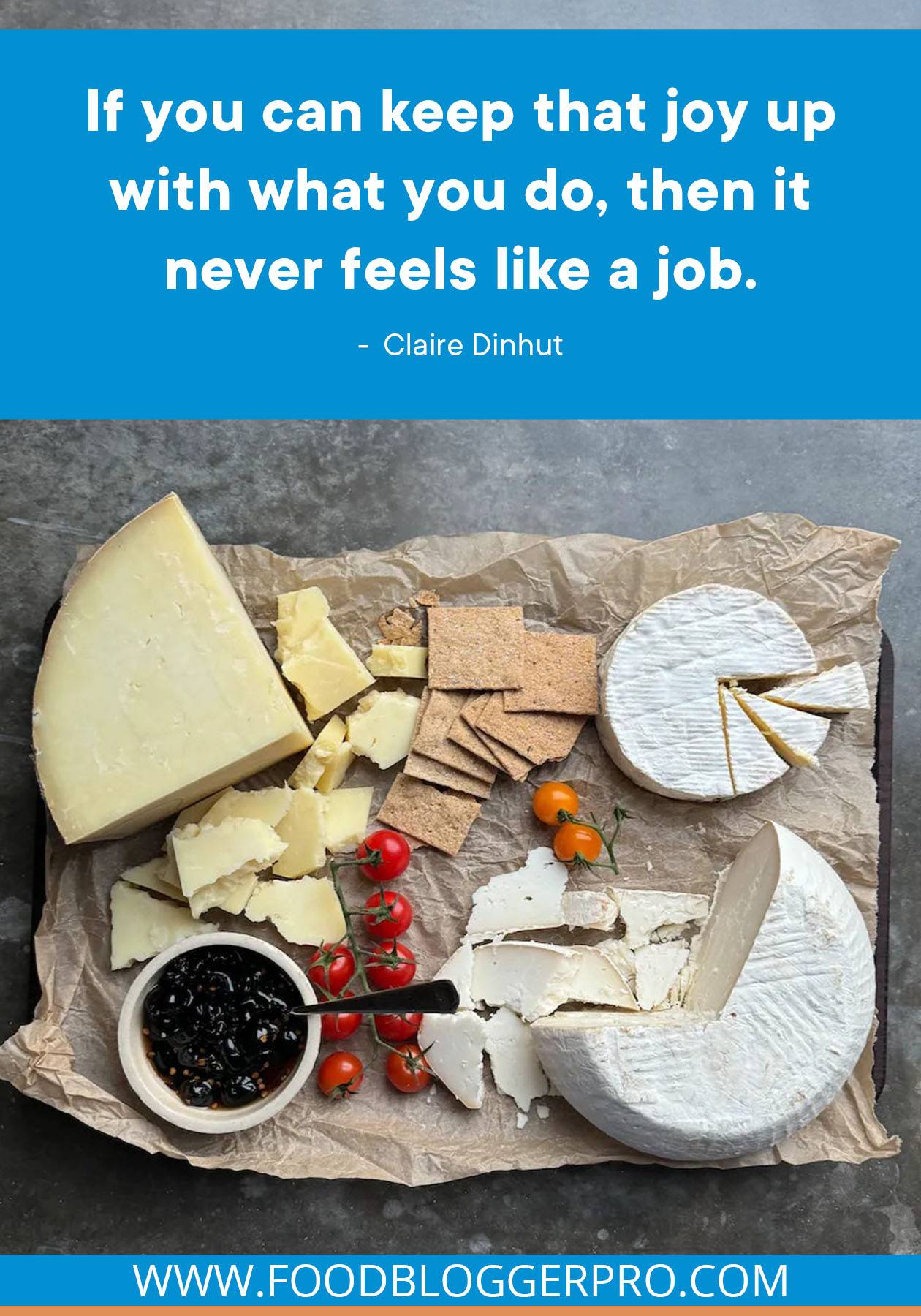
Claire Dinhut: And for example, my food history ones never do as well as a recipe, even though they take me three times the amount of time probably, and they’re free as opposed to behind a paywall. But I love doing it. And I think if you can keep that joy up with what you do, then it never feels like a job. And yes, I mentioned being really overwhelmed in the past few weeks because all of the travel, but I’m so grateful for it. For myself, I have the dream job and I love what I do and I fall more in love with what I do every single day because I’m able to learn every day based on what I want. So if you’re tapping into what you love and if you want to write about it, do it, write it, post it, and you really can’t lose.
Bjork Ostrom: That’s great. Love that, Claire. If people want to follow along, best place to do that, my guess would be TikTok, Instagram, and then maybe a shout out for where people can pick up your book as well.
Claire Dinhut: Yes. So my book is available basically anywhere online at any major booksellers as well. It’s called The Condiment Book, and I’m Condi Minclaire on literally every platform. So it’s very easy to find me. And yeah, just let me know what your favorite condiment is on any of those platforms because I’m always intrigued because it’s always something you grew up with or have a great memory with. So it tells you a lot about a person.
Bjork Ostrom: That’s awesome. Claire, thanks for coming on.
Claire Dinhut: Thanks so much for having me.
Emily Walker: Hey there. This is Emily again. Thank you so much for listening to that episode of the Food Blogger Pro Podcast. As always, if you enjoyed the episode, please take a moment to share it with your community or leave a rating or review wherever you listen to podcasts. It makes a huge difference for our podcast. Bjork and I will be back next week with another food blogging news roundtable episode. We hope you’ll tune in then, but in the meantime, hope you have a wonderful week.
Hi! I loved hearing Claire’s story — it’s inspiring how she just trusted her instincts and let her creativity grow into something real without overthinking it. Her approach to building a brand that feels fun and true to herself really stuck with me.
Hi Ava! So happy you enjoyed this episode 🙂