
Listen to this episode of The Food Blogger Pro Podcast using the player above or check it out on Apple Podcasts or Spotify.
This episode is sponsored by Member Kitchens and Clariti.
Welcome to episode 559 of The Food Blogger Pro Podcast! This week on the podcast, Bjork is sitting down to chat with Emily Walker from the Food Blogger Pro team!
Last week on the podcast, Bjork chatted with Claire Dinhut. To go back and listen to that episode, click here.
Debunking SEO Myths, AI Frankenstein Recipes, and Paid Newsletters
Welcome back to another Food Blogging News Roundtable! In this episode, we’re diving into the biggest stories impacting food creators right now.
Bjork and Emily discuss everything from the “SEO is dead” panic to AI-generated Frankenstein recipes, smarter email automations, paid newsletters, and what’s actually working on Pinterest in 2026.
Three episode takeaways:
- Search isn’t dead, but it is shifting — Data from Graphite shows SEO traffic is only down slightly (–2.5%), and overall search traffic has remained relatively stable, even ticking up slightly in 2025. Bjork shares how Pinch of Yum’s search traffic has changed in the last year (and what they’re doing about it) and we discuss why the recent search changes feel so different than past algorithm updates, how you should change your strategy, and lean into other methods of discovery.
- Google’s Personal Intelligence is sharing bad recipes —Google’s new Personal Intelligence feature inside Gemini is generating personalized recipe responses — but sometimes botching the recipes and incorrectly attributing them to food bloggers. These Frankenstein recipes can damage trust when users think a flawed AI-generated recipe came from a favorite blogger and it’s a reminder that AI accuracy and attribution still have a long way to go.
- Owned platforms like email and paid newsletters matter more than ever — With traffic fluctuations across search and Pinterest, now is a great time to consider starting a paid newsletter. Bjork and Emily discuss the opportunity for paid newsletters to create recurring income, reignite the creative spark, and deepen audience relationships.
Resources:
- Subscribe to the Food Blogger Pro newsletter!
- Pinch of Yum
- Debunking The Myth That Search Is Dying
- Google Personal Intelligence Creates AI Frankenstein Recipes
- 10 email automation templates that save creators 20+ hours a week
- The Top 5 Reasons Food Bloggers Should Consider a Paid Newsletter (And Who Probably Shouldn’t)
- How to win with the Pinterest algorithm in 2026
- Thinking, Fast and Slow
- Inside Crowded Kitchen’s Strategy for Growing to 2.4 Million Followers on Facebook
- Inspired Taste
- Food Dolls — interview airing March 10!
- Simple Pin Media
- Email Emily
- Best Served Hot
- Join the Food Blogger Pro Podcast Facebook Group
Thank you to our sponsors!
This episode is sponsored by Member Kitchens and Clariti.

Member Kitchens allows you to build a thriving membership community on your own-branded platform — no tech skills required. Members get dynamic meal plans, automated shopping lists, and much more, all within an ad-free mobile app.
Getting started is simple. Member Kitchens imports your existing recipe library, so you can start selling subscriptions quickly and start thinking beyond site traffic.
Ready to add a new revenue stream to your business? Visit memberkitchens.com today to start your free 14-day trial.
Clariti is a content organization and optimization platform that helps you uncover SEO insights and monitor performance improvements by analyzing your WordPress and Google data in real-time — so you can audit your content, understand performance, and see real opportunities instead of guessing.
And it doesn’t stop at insights. Clariti helps you turn what you’re learning into actual projects and tasks — so you can go from analysis to action and actually get stuff done.
Go to clariti.com to learn more.
And, if you’re a Mediavine publisher, Clariti has a dedicated partnership just for you. Just go to clariti.com/mediavine to see what’s included.
Interested in working with us too? Learn more about our sponsorship opportunities and how to get started here.
If you have any comments, questions, or suggestions for interviews, be sure to email them to [email protected].
Transcript (click to expand):
Disclaimer: this transcript was generated using AI.
Bjork Ostrom: One of the biggest mindset shifts I see successful food creators make is this. They stop thinking only about traffic and they start thinking about product because traffic is great, but real leverage comes when you get good at selling something. You own recipes, meal plans, a membership, a system that actually helps people. The problem is that creating a product is really hard. You have to figure out the tech, the structure, the payments, the delivery, and honestly, that’s where a lot of really great ideas die. That’s why I want to tell you about Member Kitchens. Member Kitchens makes it incredibly easy for food creators to sell recipes and meal plans at scale without having to build everything from scratch. You don’t need to be a developer. You don’t have to have a complicated setup. They’ve already built the infrastructure for you. You bring what you’re great at, which is creating food content your audience loves. And Member Kitchens handles the heavy lifting of turning that into a real sellable product. And if you’ve ever thought, I know I should have a product, I just don’t know where to start, then this is your starting point. You can check it out atmemberkitchens.com and start thinking beyond traffic and toward building something that actually grows with you.
Emily Walker: Hey there. This is Emily from the Food Blogger Pro team and you are listening to the Food Boer Pro podcast. Today, Bjork and I are sitting down to chat through the latest news in the food blogging space. Once month, we send out a food blogging newsletter to our email list, and we like to get together on the podcast to chat through those news articles, provide some context, and really just to break down the biggest stories impacting food creators Right now. This month we’re discussing everything from the SEO is Dead Myth to AI generated Frankenstein recipes, easy to implement, email automations, paid newsletters, and what’s actually working on the Pinterest algorithm in 2026. We hope you’ll enjoy this episode and I’ll just let Bjork take it away.
Bjork Ostrom: We’re back, Emily.
Emily Walker: Hi. Good to see you again.
Bjork Ostrom: Does it feel like it’s been long or not long since we recorded the last one?
Emily Walker: It feels like long because January I think was truly the longest month.
Bjork Ostrom: It was the longest month. My
Emily Walker: Life.
Bjork Ostrom: It’s been an eternity macro, the world, but also micro in your world. You’re recording from a new location, you’ve moved, you’re doing all the stressful things in just kind of packing all of those in to get ’em done at the beginning of the year.
Emily Walker: But
Bjork Ostrom: We are here and we’re ready to record another episode. Do you want to give people a quick background kind of what these episodes are just so they have some context?
Emily Walker: Absolutely. Yeah. So we send out blogging newsletters to our email list every month, sometimes twice a month, but for the next few months it’s just going to be once a month. And we try and sum up what has been going on in the content creation space, the food content creation space, specifically news items, SEO, social media, that kind of thing. And in the emails, they’re short paragraphs, graphs, images, that kind of thing. And we’d heard from a lot of people, they just didn’t have time to read ’em. So we are trying to do our best to summarize them in an efficient manner and give some context from our background, our knowledge, pinch of Yum. And yeah, we released these podcast episodes usually just a few days after the newsletter goes out.
Bjork Ostrom: That’s great. So if you want to read those, sign up for the Food Blogger Pro newsletter. If you want to listen to them, you’re in the right place because
Emily Walker: You’re here. You made it,
Bjork Ostrom: You’re here, you’ve done it, you’ve accomplished it. So you’re off to a good start. One of the things that I appreciate about this type of commentary on industry related news is that it’s a little bit of, I think of there’s this book called Thinking Fast and Slow or something like that, thinking fast, thinking slow. Side note. We have an inside joke with our friends who he once quoted, he was like, this is my favorite quote ever. And then he paused and he couldn’t remember it. He was like something of a something. It was the greatest thing ever. And he was serious when he said it. And whenever I lead into something that I’m going to quote and I don’t actually know what it is, the name of that book, I think of something of a something greatest thing ever. The book was called Something of A something, and it was the greatest thing ever,
Emily Walker: Which is always great for me when I’m writing the show notes after the fact and I’m
Bjork Ostrom: Like, what is he talking about?
Emily Walker: Yes. Yeah,
Bjork Ostrom: It is called Thinking Fast and Slow. The entire premise of it is how do you be aware of your fast thinking brain and your slow thinking brain and coming back around to what I was originally going to say, which is one of the things I appreciate about conversations like this, it allows us to stay in touch with industry news, but it maybe is more of our slow thinking brain versus our fast. I think sometimes we get news from Facebook group or we get it from a 15 second reel with commentary on the state of a thing, somebody doing really well and the hack that they used or why everything is falling apart and this is the worst thing ever. And all of that’s informational, but I think it can trigger our fast brain, which kind of puts us potentially in a state of panic or fear of missing out. Whereas this is like, Hey, let’s have a conversation about what’s happening within the industry, approach it from observation standpoint, thinking slow about it, seeing what the opportunities are and thinking critically around it, which I think is really great. So thanks for working on putting all this together. The first article is a good example of that. Do you want to queue that up and talk through it a little bit about it?
Emily Walker: Yeah, sure. So the first is all about debunking the myth that search is dying. And you were just kind of saying, I think there’s been a lot of alarmist stuff out there that SEO is over 10 blue links are done for that. It’s almost impossible to make money as a content creator nowadays, and I think it’s easy to see those things and just absorb them as truth. And this article kind of goes one by one through some of the current myths that are floating around out there about Google and search in general, and one by one debunks them. So there’s a myth that searches down hugely in the last few years they saw
Bjork Ostrom: 25% and maybe in the future yeah, it’ll be 50%. Yep.
Emily Walker: And that the truth is that currently organic traffic from Google to websites is down only slightly two and a half percent year over year. I mean that is when you’re talking about the scale of Google search traffic, 2.5% is significant, but still, I mean they also talk about how certain years that’s just kind of within the normal fluctuation from 2019 to 2020. Search was up 6.9% search traffic, but then it decreased slightly in 2022 down 1.5%. So two and a half percent from 2024 to 2025 is really within the normal realm, which is nice to hear. I guess
Bjork Ostrom: Nice to hear. I think first interesting and important to look at how are people commenting on this? Is it like an investment outlook as Google as a company in the future of search? Or is it from a content creator’s perspective? Then within the content world, we need to look at industry and then also within industry pull apart anecdotal stories versus macro trends. And the interesting thing with the food industry is it’s actually down a little bit more specifically within food. So can you talk about that, what they found with food?
Emily Walker: Yeah, so traffic to cooking sites specifically decreased by 15% from 2024 to 2025. It is worth noting that the really big sites and then smaller sites, so the vast majority of food bogs fall into the smaller sites fared better than the kind of middle of the road sites. So I mean, I think, I imagine cooking sites like places like cooking.com or
52 or recipes. Those ones I think probably were hurt more than a food blog run by a person, just like one person. So yeah, traffic was down. You can’t deny that. But another point that I thought was interesting as I think, and we’ll talk a little bit about AI overviews later as well, but we know that AI overviews does decrease click-through rates about 35%, but AI overviews are only appearing in roughly 30% of search results. So it’s still not every time. And they also mentioned that before AI overviews, they had the featured snippets, which were also decreasing click-through rates. So the presence of AI overviews is still not in every search, and the click-through rates for those searches were already probably much lower with featured snippets. So
Bjork Ostrom: The
Mixed bag, mixed bag for sure, and all of its data, and it helps us inform our understanding of the landscape. Featured snippets were to somebody on the outside probably looked a lot like what AI overviews looks like, which was a snippet essentially like a block of text that showed up at the top of a search result for certain search terms. And the difference with a featured snippet versus an AI overview, AI overview, my understanding is that it is more of a customized result based on a collection of articles that it’s crawled and then has surfaced for you based on your specific search query. And I think what it’s allowed Google to do is to have more customized results in the AI overview spot that first spot up on the top based on the result that you’re searching for, and also potentially with longer tail searches that you’re doing.
It might trigger an AI overview as opposed to a featured snippet, which would be a little bit more of a formulaic, hey, that we’re always going to show this thing for this keyword. Whereas with ai, you’re able to do that a little bit more in a more customized way. But the point I think is really important, which this article talks about, which is those existed before and they actually show a chart, which is interesting to see featured snippets, which a very similar amount of searches, 20% of the time it says the truth. AI overviews decrease click-through rate considerably by 35%, only appears in 30% of the time right now. That will probably go up. But then it said featured snippets also decrease click-through rate, and then it says, AI overview says replaced featured snippets, which used to appear 20% of the time. And so what you can see in that chart is there’s a chart and essentially from left to right featured snippets is going down to close to zero while starting in July of 24, AI overviews is going up into the right.
I think the interesting thing for me will be to see if we did this in a year and they wrote another follow-up, where would AI overviews be like how far up as that goes at 50%, 60%? Do we ever get to a point where we expect all of our search results to have an AI overview? We don’t know the answer to that, but that will be the interesting thing to track. So all of this, again, super helpful to have the data. It is bad if you had something that did rank well and now AI overviews is showing up and then your search results go down, but the data itself isn’t bad, it’s just information and it informs what we’re going to do as content creators. So with all of this, it’s just important to have that information. Anything else that’s important to point out in this that you think would be relevant for food creators?
Emily Walker: I think that was most of it. I mean, I think it’s just good every once in a while to get some numbers around these things. And I feel like in general, this should be comforting. It’s not as bad as I think some people are making it out to be. And there’s still a lot of people going to Google for search and still a lot of traffic to be had.
Bjork Ostrom: Yep. One of the things they talk about is how many people are going to Google, and it’s essentially the same amount this year as it was last year. So that’s not necessarily saying search traffic that’s saying how many people are going to Google. Some of those people will see an AI overview, but it’s like how many people are going to Google? People are still going to Google a lot. And so one of the other myths it talks about is like nobody’s going to Google anymore because everybody just uses chat GBT. It’s like, well, people are still going to Google and maybe the growth rate of Google isn’t the same as what it used to be. I don’t know what those numbers are.
So the last thing that I think I would point out here is if people listening, 95% of the people listening will land in that category of food and recipe cooking. And that was a category that did have traffic decrease from search traffic decrease. That’s true for Pinch of Yum as well. If we look at our January compared to January, 2026 compared to January, 2025, it’s maybe like 15 to 20% down search traffic similar to what is reporting here. That was 2025 to 2024, but a similar trend. So then the question is what do you do about it? And the answer isn’t or doesn’t have to be you put on reruns of Parks and Rack and drink a 12 pack of root beer. Although it could be fun side story.
Emily Walker: That doesn’t sound that bad to me, but
Bjork Ostrom: Our girls had their You
Emily Walker: Supplement that with
Bjork Ostrom: Supplement while working on your blog. Here’s where the tie-in comes and building your Facebook traffic. But side story unrelated, our girls had their first rip beer. We had some neighbor friends over, we’re doing this thing called Dessert Night, and we had neighbors over shared dessert. They’re like whooping some drinks. They brought root beer barks, root beer, classic fun fact about barks. Did you know this caffeinated? And so we didn’t know that
Emily Walker: Until
Bjork Ostrom: The next day after both of our girls woke up and zombie walked down the stairs at 11:00 PM and we’re like, what in the world? Why are you up? It’s because they’re drinking caffeine.
Emily Walker: Yep. That’ll do it.
Bjork Ostrom: That’ll do it. But the
Emily Walker: Point of root beer, sorry, another side
Bjork Ostrom: Note, we got a beer side note
Emily Walker: Kombucha at the farmer’s market a couple of weeks ago, and yeah, my son loved it. My husband and I loved it. We were like, this is delicious. And we were like, I think it’s just because it’s like root beer.
Bjork Ostrom: Root beer. Yeah. That’s why it’s not kombucha, but
Emily Walker: I think
Bjork Ostrom: It’s
Emily Walker: Just
Bjork Ostrom: Yeah, exactly. Kombucha is kind of the Trojan horse that the Rooter uses to get into a health conscious family.
Emily Walker: Exactly. Yeah. It was very effective, but
Bjork Ostrom: It worked
Emily Walker: At what cost.
Bjork Ostrom: Yeah. We have now switched to root beer op, so it’s a treat. They get it. No caffeine. But the point here is let’s say that you’re looking at your business and you see the data and the data says traffic in this from this source is down. The hard part is there’s been a long standing playbook around SEO still is the primary traffic source for the vast majority of food creators. So it’s still important to see that as an important traffic source, but you as a creator need to make a prediction. And the prediction needs to be, do we think this will reverse? Will it go back up? Will it stay the same? Will it continue to go down based on what prediction you make? You then need to say, okay, so will I start to focus on something else? Will I continue to just focus on this primarily knowing that it’s good enough and it does what I need it to and that’s how we should be using this data.
And so one of the things that has happened with Pinch of Yum, you’ve been helping with this. We’ve been focusing more on Facebook, not necessarily as like, Hey, we need to implement this new strategy because search is changing. Just from some of the interviews we did on the podcast, we saw an opportunity for it, knew that we had kind of neglected it, and you and Jenna have done such a great job of helping with that, and that has replaced a lot of the traffic that we’d previously lost from Google. And so we’re in this fortunate place where January traffic looked similar to the previous year, even though search had gone down. And so there’s always an opportunity for us as creators to find different ways to replace traffic that’s going away, to replace revenue that’s going away if revenue is decreasing. And to your point, always to look at the data and say just how bad is it? So is traffic dropped in half? No. Has it gunned down a little bit? Yes. Okay. Then what do you do with it?
Emily Walker: Yeah, and I think, I know you asked me if I had anything else to say and I said no, but then you said that
Bjork Ostrom: Now you do.
Emily Walker: You have something else to say? I think it’s interesting because in the past when there’s been a Google algorithm update, the urge is, okay, what can I tweak in terms of my SEO strategy? How can I change my blog post where I’m at? Or do I need to get my site speed up? Or there’s changes you can make to your site to hopefully regain some of that traffic. This feels different as long as you’re following the general SEO best practices that have been around for the last few years. I don’t think there’s really much you can do to regain some of this lost traffic except to diversify, to lean into other methods of discovery. And I think that’s why maybe it feels different and scarier because in a way, that part is out of your control. So instead of scrambling and thinking you’ve done something wrong with your site, leaning into other platforms like Facebook, Pinterest, whatever, email, whatever it may be, is probably the better bet.
Bjork Ostrom: Yeah, that’s great point being that you might be in a situation where you’re running the playbook and the playbook is correct. It’s just the game is changing. And so it’s not like the playbook is incorrect now it’s just like the landscape, macro landscape has changed. And that’s not because you’re doing something bad or wrong. Maybe sometimes there might be some things you can improve, tweak, fix, but a lot of times it’s like you might feel like, wait, I keep doing all this stuff that people tell me to do and my traffic is down this year compared to last year for search. And that might be universally true and probably is based on this data. So that’s great. This kind of ties into the search world stuff as well. This is an article from Search Engine Roundtable. The title is Google’s, and the last one we should point out is from a site called graphite.io. This one is called Google’s ai, Frankenstein recipes RA horror. So what’s the premise of this?
Emily Walker: So I have not personally tried Google Personal Intelligence yet, but as of January, 2026, it’s a new Gemini feature that connects all your personal data. So like your Gmail, Google Photos, YouTube and search that provides even more customized responses to your search queries. And so this article is essentially walking through an example of someone, Glenn Gabe, who used this personal intelligence to ask for a key lime pie recipe and the personal intelligence new because it has access to all of his data that he likes the food blog inspired taste. And so the personal search results said, since you frequent inspired taste here is essentially this recipe, but the recipe is wrong. So the egg quantity was wrong, the bake time was wrong. I mean, there were several things that were wrong. And it’s interesting because it is more personalized. People would tend to trust it more than just a general AI overview. And because it cites a food blog by name, if someone made this recipe directly from the personalized search results, AI search results, it wouldn’t likely turn out well. And I think there’d be a strong urge to blame inspired taste or the food blog cited for the recipe not turning out well. So it’s kind of, not only is the recipe wrong, but it’s attributing a wrong recipe to someone.
Bjork Ostrom: Yeah, terrible. It’s terrible. And I feel like there are probably multiple different ways that content could show up, but I feel like at a high level, here’s how I would imagine it. Let me know if you feel like any of these are missed. Okay.
The first is what we would always expect, which is or have always expected, which is you Google a recipe and you’re Googling key lime pie. In this case that’s going to show up on a search results page. Usually you’re not going to get paid ads within the world of recipe content, but maybe you will if you Google tacos and then a nearby taco restaurant or something like that. But you probably won’t see a ton of paid. There might be some stuff occasionally depending on the search term, but what you’ll see is either kind of the traditional 10 blue links or some version of carousels, and those will have in them a description. It’ll probably have star ratings for how the reviews and ratings have been for that recipe, the title of the recipe. Oftentimes there’ll be an image with it. So that would be one way that we usually expect.
That’s what we would see. Google has experimented with having more of the recipe show up. So they’ve experimented with having just the ingredients show up. They’ve experimented with having both the ingredients and the instructions showing up in a search result. They were doing some tests with this last year, a lot of controversy around it because that would obviously result in a huge decrease in traffic of both the ingredients and the instructions were showing up in a search result. But what’s different with that experiment that they were running is that it was pulling that information in from the structured data of your site. So it was taking it from your site and it was bringing it over into the search result page. The same is happening with the first example that we talked about. It’s bringing your actual image over. It’s bringing over the actual ratings and reviews, the actual title, and then usually the meta description is either going to be what you put for the meta description or what Google deems to be the best thing from your content for the meta description. So it’s still from your content and bringing it over. What’s different about,
And of course a link yes to your site, the most important piece. Yeah, thank you. The thing that is so bad about this is that it’s bringing in the ingredients and the instructions, but because of the mechanism of AI overviews and the AI process, which requires Google to manipulate, to change, to shift the presentation of the content so as not to have something that is copyrighted. So if you Googled for an article and then Google just displayed that entire article in the search result without permission, they would be copywriting that from the New York Times or wherever it’s bringing it in from. And so if you are going to Google how to make tofu, they are going to look at the top 10 pieces of content and they’re going to mix it all together and they’re going to give a result that isn’t exactly copying any of those, but it’s kind of being informed by all of the different articles. In this case, what’s happening is they’re doing that, but also then saying, this is inspired tastes recipe. And to your point, the impact of that is similar to somebody else making a recipe and then showing up to a party and being like, Hey, everybody, Emily made these cookies. Come over and try. And it’s like if it was me that went to the party and said that, you’d be like, whoa, no, no, no, no, no, I didn’t make those. That was Bjork. And in this case it’s like, no, no, no, no. Inspired taste didn’t make this. That’s you Google. That’s you coming up with a thing. And so
Emily Walker: The part that crushed me the most was in the personal intelligence response, it said the secret, many of their fans suggest adding three large egg yolks to the filling. So that’s pulled from the comments. And I’m sure everyone listening to this knows that every single review of your recipe where it’s like, I didn’t have flaxseed, so I substituted chocolate chips. You know what I mean? It’s a wild place in those comments. So the fact that they’re saying that, oh, this is the secret to the recipe. And it was a comment too, like, whoa,
Bjork Ostrom: Red flag. Red flag, for sure. And I think what’s happening here is there is a thousand different ways that people are using this. And recipes is one specific category that it doesn’t work very well for and on. Traditional search has been around for decades. What you get is a really clear structured way for recipes to show up. There’s a carousel, it fits in well, people know how to use it. But once you get into the messy world of generalized or generated content from multiple sources, it can get kind of squishy and it can get really difficult to accurately represent a recipe creator with a result. They either should just not be doing it, like turning it off for recipes and linking to the content or directly bringing in a block from the recipe, maybe it’s ingredients, and then linking out to instructions. But they’ll figure it out eventually. And I think
Emily Walker: Right now it’s very much giving high schooler who doesn’t really want to do enough research to write the paper, but just kind of tweak some words to make it their own and then gets caught for plagiarism. That’s kind of what these are reading like to me.
Bjork Ostrom: Yes. And I think it has to be either no attribution to the recipe creator and a different recipe or attribution to the recipe creator and not the complete recipe. A list of ingredients or a recap of what it is. It can’t be what it is now. It’s not going to serve person who’s making the recipe. Well, it doesn’t serve Google well because people aren’t going to trust the result. And then it also doesn’t serve the actual publisher well, absolute
Emily Walker: Lose lose. Yeah. I mean, there’s not really much to do right now as a food creator, but I feel like just being aware of this and hoping that it improves,
Bjork Ostrom: Yes, totally. It would be a good one to check out. Adam has been, he’s reached out to me a couple times and has been outspoken about some of this. I think the other thing is to test these tools. If you have a little bit of time, and if you’re doing the Parks and rec reruns at the end of the day and having a rip beer, that would be maybe a good time to say, Hey, I’m kind of curious what this looks like and signing up for it. So being aware of it. And then the other thing that the inspired Taste folks are doing, and Adam has been great about is just pointing out when that happens and reporting on it. We had an article in Techmeme that I was interviewed for, which we could also link to, which is talking about a site that we had that was a complete replica of Pinch of Yum. We talked about that on the podcast as well. So good stuff on that one.
Before we continue, let’s take a moment to hear from our sponsors.
If you’ve ever opened Google Analytics or Google Search Console and then just looked at it for a little bit and closed the tab because it felt overwhelming, this is for you. And here’s the thing, it’s not just analytics or search console, it’s also WordPress. Maybe you’re trying to find a post quickly understand how it’s performing, and after a while you’re jumping from tab to tab trying to piece together information about how your content is doing. It really is one of the hardest parts about growing a contents business. It’s getting clarity. It’s not always necessarily effort, it’s just knowing what you should do next because your data is scattered, your priorities are getting fuzzy, and you’re staying busy, but you’re not confident that you’re working on the right things. That’s why we created Clariti. It’s C-L-A-R-I-T-I. Clariti is a content organization and optimization platform that pulls all that messy data into one clear place so you can audit your content, understand performance, and see real opportunities instead of just guessing. And it doesn’t stop at just insights. Clariti helps you turn what you’re learning into actual projects and tasks so you can go from analysis to action and actually get stuff done. It’s not about quick wins or hacks, it’s about building a calmer, more sustainable system so you can grow with clarity and confidence. Go to clariti.com to learn more. And if you’re a Mediavine publisher, Clariti has a dedicated partnership just for you, just go to clariti.com/mediavine to see what’s included.
Emily Walker: The next news article that we featured is really more of just a resource that we wanted people to be aware of. So this should be a quick little conversation, but we link to it in the show notes. And then it was also linked in the original newsletter, but Kit released 10 email automation templates that you can essentially download and plug into your own kit account that are really useful. If you’ve been kind of hesitant or just worried about the work of putting together like a welcome sequence automation or an Evergreen newsletter or something like that, this would be a great place to start. So we just kind of wanted to share that.
Bjork Ostrom: That’s great. Yep. Point to that. I think the one commentary that we could have on this is building the thing is never really the valuable part of it. Putting your personality in is the valuable part. So as much as for creators, as much as we can remove any of the building file, transferring, uploading any of that work where it’s like just you on a computer doing a thing that doesn’t result in something being published to the world is great stuff to think about. Is there somewhere else this already exists? Can this be delegated to somebody else who can do it? And as much as possible trying to prioritize your story, your content connection, publishing, all of those things are priority as opposed to tinkering, building a system, building a process that’s important still, but a lot of that has already been done by somebody. This is a great example of that existing in the world and already therefore you to be able to take advantage of it.
Emily Walker: Yeah, agree. So I guess we can stay in the world of email. Food Blogger Pro released or published a blog post a couple of weeks ago last week about paid newsletters and why you might want to consider starting a paid newsletter if you don’t have one already, and then maybe who should not yet think about starting a paid newsletter? We’ve been talking a lot about diversifying platforms, diversifying discovery and email newsletters, paid newsletters through Substack or wherever, whatever platform you choose are a great way to do that. Just real quick, I’ll go over the top five reasons that you might want to think about a paid newsletter. So you own the relationship with your subscribers, not an algorithm, not Google, not social media. It’s predictable recurring income, which is always nice to have. It’s a space for deeper or more creative content that doesn’t have to be linked to SEO.
Your most engaged readers are usually pretty happy to support you, even if it’s just that top like one to 5% of your readers that can be substantial and it strengthens not replaces your existing platforms. So just having a paid substack does not mean your blog ceases to exist. They can absolutely compliment each other. And in fact, I’ve seen I think a lot more food creators who have a substack that is a slightly different niche, maybe going like a lot of registered dieticians who might have a substack that goes a little bit deeper on the nutrition and science of things, or a food creator who really likes the travel side of things and uses a substack to go more into that. Yeah, I think it’s an interesting opportunity for people who miss that longer form writing that’s more natural, more reader focused. That’s great. And that’s something you consider? Yeah.
Bjork Ostrom: The two that really stand out here to me are number two, predictable recurring revenue, and number three, a space for deeper, specifically more creative content with number two, interested in the real estate world. And the broker that we work with, he talks about this idea of really enjoying two types of brokering. One is leases and the other is buying and selling a building. And he likes the leases because the way that he structures his agreement is that he gets a 10% recurring amount on the lease. And so if he signs a thousand dollars lease, that would mean a hundred dollars a month. That’s not a huge deal, but what it does is it allows him to incrementally build this kind of predictable baseline that he gets. And so I think of it in base and bonus. And if we as creators can figure out how do we have a base that is somewhat predictable that we know that we can rely on, it’s $2,000 a month and if we continue to run this playbook, we continue to get that money, then we can have this idea of a bonus, which is like maybe you sign a brand sponsorship deal or you look to do meal plans every six months when you have some more bandwidth when kids are in school or whatever it might be.
So this idea of predictable allowing you to have this kind of base and bonus mindset. And then the third one here, the space for deeper, more creative content. One of the things that I’ve heard from creators who have been creating long enough that they can remember a time when they just wrote a blog post and they shared their thoughts. And there’s this boiling the frog that has happened over the last decade, but really maybe over the last five to eight years, which is now suddenly you aren’t just writing. Now you are thinking about a post in terms of structure and SEO and sections. And for the creative writer, it has kind of sucked the life out of the blogging process. And I’ve heard from a lot of people who have gone to a paid newsletter, whether that be Substack or within Kit or something like that. And what it has done is it has reinvigorated this part that’s always been there for them, but has been quieted, which is the creative writer. And so regardless of if it’s a huge revenue creator, both Lindsay and I have oftentimes done things that don’t make sense from a revenue perspective, but do make sense from a enjoyment income.
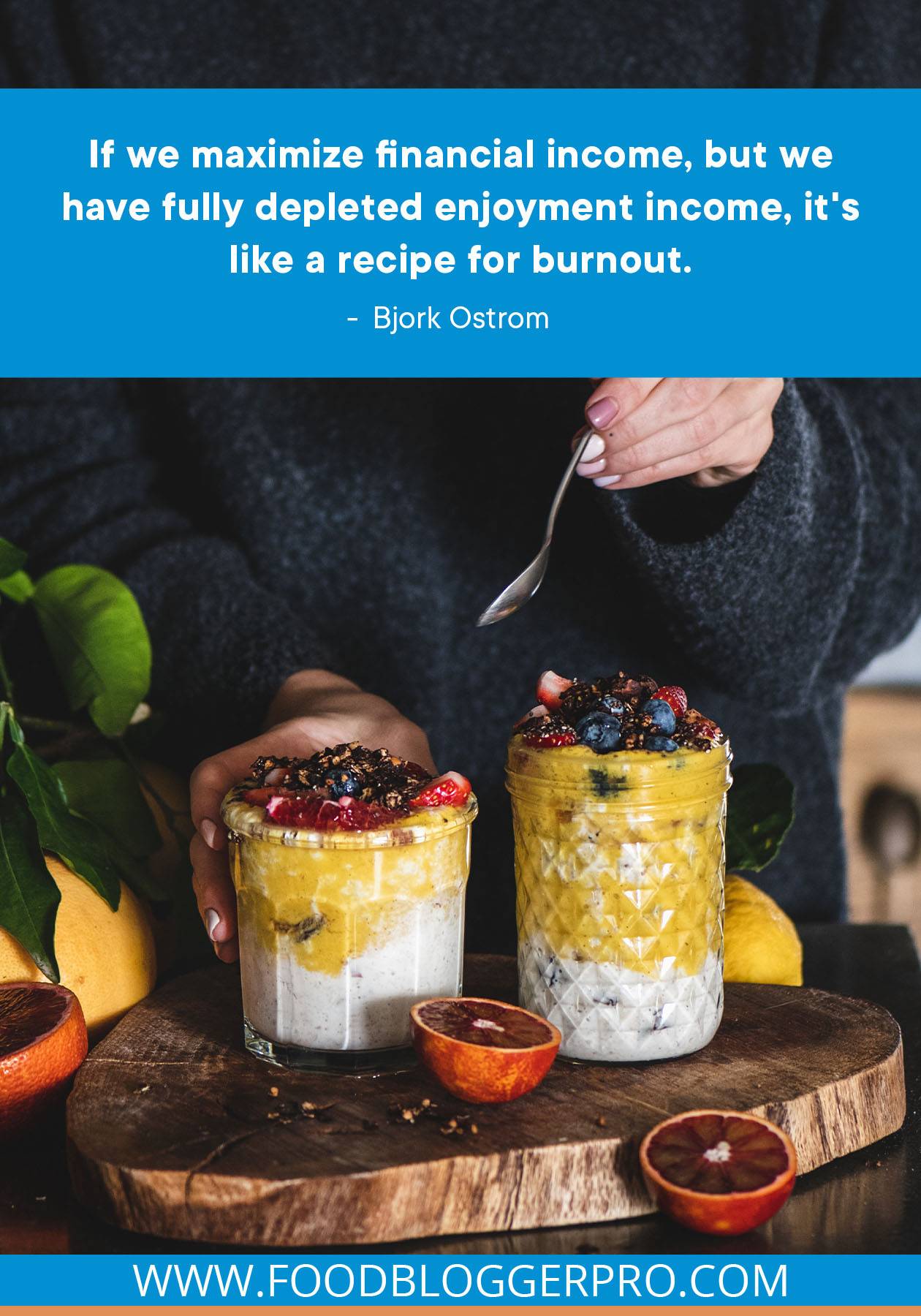
And if we maximize financial income, but we have fully depleted enjoyment income, it’s like a recipe for burnout.
Emily Walker: And
Bjork Ostrom: So I think the piece that we need to consider as creators, and it’s going to be different for everybody, is how do you manage both enjoyment, income and revenue, income in business? And if you feel your enjoyment, income being depleted to the point where you’re near bankruptcy, it’s probably worth taking some time to think about how can I build that back up? And for a lot of people, I think a purely creative newsletter, it doesn’t mean you’re not trying to be strategic with it, but it’s, you’re not trying to rank it like you would. An SEO post is super beneficial. So I love that point number three here. And then a few ones that we talk about why you shouldn’t start a paid newsletter. Do you want to talk through those?
Emily Walker: Yeah. So if you don’t have a consistent free email list yet, probably not best to start immediately with a paid newsletter. If you’re already overwhelmed with content, maybe now is not the right time if you’re not clear on what you’d offer. Again, it doesn’t have to be, I don’t think it has to be quite as narrow and niche as a blog might these days, but you still need to kind of have a plan for what you might write. Write also, probably not great if you don’t enjoy writing. I think there are some food bloggers out there for whom writing blog post is never a joy, so then don’t do this. And also, if you’re hoping for instant income, I do think some people, if you already have an email list and you have those real true followers might convert immediately to paid. But I do think it’s a bit of a slow, steady kind of growth for most people.
Bjork Ostrom: That’s great. Love it. Over on food blogger pro.com.
Emily Walker: That’s right. Yeah. So now we have our last article all about the Pinterest algorithm, and I think we have been talking about Pinterest quite a bit lately. I think a lot of people are confused about Pinterest, and I felt like this was a good reminder. This article from Sprout Social, just kind of the basics of what you should focus on Pinterest and that the algorithm as it stands, relies on four main signals right now. So pin quality, high resolution, pretty pictures, vertical images and videos that get lots of saves comments and clickthroughs and pinner quality. So are you contributing consistently to your Pinterest account? Are you responding to comments? That kind of thing. Relevance. So does your pin have relevant keywords? Are you doing keyword research? Is it pinned to a board that matches that same subject? And then does it link to your site that also is related to that keyword or theme? And then recency and freshness. So posting frequently, posting a lot. I think my main takeaway from this, I mean a lot of this should be pretty self-explanatory, but I think keyword research on Pinterest is increasingly important and you can do it within Pinterest itself, which makes it easy and pretty straightforward. And then also the importance of experimenting. So trying different pin formats, different images, different texts, different keywords, and seeing what works best. Don’t just post something and let it sit,
Bjork Ostrom: Experiment
Emily Walker: And iterate.
Bjork Ostrom: It’s one of the things that stuck out to me. We did the Facebook interview with the food dolls and they were talking about how with Facebook it changes and something that worked really well last month, you’ll see that starts to not work as well. But then a new thing works well. And I think that’s true across all these platforms where things shift, things change. And so we need to be observant of the things that we’re posting, seeing how they’re performing, testing. It doesn’t have to be the scientific process, but I think you do have to be in the data enough to know did something perform well? And then to start to develop some theories around why that might’ve been that you test. A couple other things that I think stuck out to me, this idea of pin quality and then pinner quality, meaning you as the account, you as the creator, as the publisher of these pins. And then each individual pin as well. It probably goes across platforms, but I think maybe more so on Pinterest than on TikTok. You could have three videos published and the third one could pop off and have 10 million views.
And I wonder if with Pinterest there’s a little bit more of an established account importance similar to ranking on Google where you need to have some authority there. Still a super important platform. I think similar to the first conversation around search, the question for us as creators that we need to be asking is, what is our bet? And based on that, how do we allocate time and what does that time look like? And for us, Pinterest is still an important platform. We work with Simple Pin who continues to publish content on our behalf and still is what Kate will talk about. Kate, all who’s been on the podcast is, especially for new creators, they see it as a really beneficial platform because they’re coming from a place where they have zero traffic from Pinterest. And then once they start to get established there, they start to see, hey, this is a source of traffic. And that’s kind of cool.
Emily Walker: For
Bjork Ostrom: More established creators, it can be kind of a bummer because it’s like, it used to be this and now it’s trending down, but it still is important. Even if something is trending down, if you’re not getting as much traffic from it, that doesn’t mean that you should necessarily deprioritize it, but it does mean that you should maybe start to develop some opinions on if that continues, how will you replace that traffic from other places? So I
Emily Walker: Think the last thing I would say about it is I think it could be so tempting. There’s so many things to do as a food creator, and it can be so tempting to want to turn out content. And I think whenever we do these interviews or I pull these articles, it’s the kind of recurring theme for a lot of these is to look at the data and adjust. And I think it can be so easy just to post, post, post and then be like, oh, do I want to spend an hour looking at the data comparing, seeing what’s doing well, and then go through the effort of changing my strategy, like, oh, do I want to do that? Or should I just do five more pins instead? And just a reminder that taking time to look at the data, both for your blog posts and on social media and email or whatever, even though it doesn’t, it’s not maybe as rewarding initially, is so important.
Bjork Ostrom: You don’t get the same dopamine hit as creating a thing and pressing publish and seeing that loop complete. But it definitely is work. And in a good sense, you are doing work when you are sitting at a computer, when reviewing data and using it to help inform decisions that you’re making around your content. And realistically listening to this podcast or similar podcasts or reading articles is a version of that. You’re gathering data and you’re using that to help inform decisions that you’re making. So if you have any articles, if people come across articles that they think would be interesting for us to talk about or include in the newsletter, we’d love to hear from you. What’s the best way for people to send those over?
Emily Walker: You can just email me [email protected]. I always have, I feel like my usual circuit of news sources I go to, but I would love fresh ideas. Shout out to our friend Rachel at best, served hot on Substack. She’s another great resource for food blogging related news if you’re looking for more. But yeah, please send me anything you would like us to chat about. We’re happy we’re all yours.
Bjork Ostrom: Cool. Emily, these are awesome. Thanks for the time that you put into ’em for all that you do for this community. And we’ll be back here in a month. Hopefully it will seem like a shorter month, not as long as the last month, and we’ll be back to it. So thanks everybody for tuning in. If they want to sign up for the newsletter, just food blogger pro.com to do that.
Emily Walker: Yep. And you can, I’ll include a special link in the show notes of this episode as well to sign up.
Bjork Ostrom: Awesome. That’s it. Thanks Emily.
Emily Walker: Bye. Hey there, this is Emily back again. Just wanted to thank you for listening to that episode of the podcast. If you enjoyed it, please leave a rating or review wherever you listen to podcasts and share it with your community. We’ll be back next week with another great episode. Bjork is interviewing Jessica Wine from the food blog, Whisk and Wine. Jessica just recently launched her blog, and in this episode she and Bjork chat about how to strategically launch a food blog and every step she took to make sure that her launch was seamless and set ourself up for growth. We’re really looking forward to that episode and we hope you have a really wonderful week.