
Listen to this episode of The Food Blogger Pro Podcast using the player above or check it out on Apple Podcasts or Spotify.
This episode is sponsored by Clariti and Grocers List.
Welcome to episode 553 of The Food Blogger Pro Podcast! This week on the podcast, Bjork interviews Phoebe Lapine from Feed Me Phoebe.
Last week on the podcast, Bjork chatted with Liane Walker. To go back and listen to that episode, click here.
Reclaiming Your Audience and Moving Beyond Google with Phoebe Lapine
In this episode, Phoebe joins us to talk about her evolution from the early days of blogging to the current landscape, opening up about why the constant SEO headaches finally pushed her to pivot toward Substack. She shares exactly how she’s reclaiming her connection with her readers and why shifting your focus from “content creator” back to “writer” might be the best move for your brand right now.
But this conversation isn’t just about switching platforms; it’s a masterclass in creative longevity. Phoebe gets real about the systems that keep her from burning out, including the game-changing decision to hire an SEO team so she could get back to doing what she loves. We also dive into why picking a niche that genuinely excites you is the only real secret to sticking around for the long haul. Whether you’re looking to shake up your workflow or just need permission to step off the algorithm hamster wheel, this episode is a must-listen.
Three episode takeaways:
- The Pivot from SEO to Substack: Phoebe gets real about how the “golden age” of blogging has changed. She explains why SEO headaches and the push for multimedia content led her to embrace Substack as a platform to actually connect with her audience.
- Creativity vs. Strategy: Phoebe shares how she balances being a “writer first” with the business side of things, including why hiring an SEO team was a total game-changer for her success.
- The Secret to Longevity: If you want to stick around, you have to care. Phoebe emphasizes that choosing a niche that genuinely excites you is the only way to keep your engagement high and your burnout low over the long haul.
Resources:
- Feed Me Phoebe
- Check out Phoebe’s latest cookbook, Carbivore!
- SIBO Made Simple by Phoebe Lapine
- The SIBO Made Simple podcast
- Phoebe’s Substack: Munch Menus
- Foodie Digital
- Who, Not How by Dan Sullivan
- Follow Phoebe on Instagram
- Join the Food Blogger Pro Podcast Facebook Group
Thank you to our sponsors!
This episode is sponsored by Clariti and Grocers List.
Thanks to Clariti for sponsoring this episode!
Sign up for Clariti today to uncover SEO insights and monitor performance improvements by analyzing your WordPress and Google data in real-time. Get 50% off your first month with the easiest content auditing tool you’ll ever use.
Gain insights in a few clicks, prioritize what matters most, and optimize better with Clariti.

Built specifically for food creators, GRO is the ‘comment for recipe’ platform designed to help you effortlessly grow your email list, drive more traffic to your site, and earn more affiliate sales.
Learn how top food creators see 75% click-through rates and 5% opt-in rates during upcoming office hours at GRO. You can register for the event at gro.co and use promo code PODCAST to get your first month totally free.
Interested in working with us too? Learn more about our sponsorship opportunities and how to get started here.
If you have any comments, questions, or suggestions for interviews, be sure to email them to [email protected].
Transcript (click to expand):
Disclaimer: This transcript was generated using AI.
Bjork Ostrom: This episode is sponsored by Clariti. If you’ve been frustrated trying to discover actionable insights from different analytics and keyword platforms, Clariti is your solution. Clariti helps you manage your blog content all in one place so you can find actionable insights that improve the quality of your content. Not only does it automatically sync your WordPress post data so you can find insights about broken images, broken links and more, it can also sync with your Google Analytics and Google Search Console data so you can see keyword, session, page view and user data for each and every post. One of our favorite ways to use it, we can easily filter and see which of our posts have had a decrease in sessions or page use over a set period of time and give a little extra attention to those recipes. This is especially helpful when there are Google updates or changes and search algorithms so that we can easily tell which of our recipes have been impacted the most. Listeners to the Food Blogger Pro podcast get 50% off of their first month of Clariti after signing up. To sign up, simply go to clariti.com/food. That’s C-L-A-R-I-T-I.com/food. Thanks again to Clariti for sponsoring this episode.
Ann Morrissey: Welcome back to another episode of the Food Blogger Pro podcast. I’m Ann from the Food Blogger Pro team, and in this episode we’re sitting down with Phoebe Lapine from Feed Me Phoebe. She’ll talk about her evolution from the early days of blogging to the current landscape, opening up about why the constant SEO headaches finally pushed her to pivot towards Substack. She shares exactly how she’s reclaiming her connection with her readers and why shifting your focus from content creator back to writer might be the best move for your brand right now. You’ll also hear her go into the systems that keep her from burning out, including the game-changing decision to hire an SEO team so she could get back to doing what she loves. She’ll round out the episode by diving into why picking a niche that genuinely excites you is the only real secret to sticking around for the long haul. Whether you’re looking to shake up your workflow or just need permission to step off the algorithm hamster wheel, this episode is in must listen. And now without further ado, I’ll let Bjork take it away.
Bjork Ostrom: Phoebe, welcome to the podcast.
Phoebe Lapine: Thank you for having me. I’m excited to be here.
Bjork Ostrom: This is going to be a fun conversation. You are a creator. A lot of the people that we talk to, we put in this broad bucket of creator. But one of the things that I want to know as we get into it is how do you view your job? Because you are in the context of creating, you’re creating cookbooks. You’re creating a Substack newsletter, which we’re going to be talking about a lot on this podcast. We are going to be talking about a website and how we view ourselves as creators as it relates to a website. But how do you view yourself and how do you even talk about what it is that you do to other people?
Phoebe Lapine: Thank you for asking. I’m not very good at talking about it to other people as my husband will attest. He’s always cutting in and being like, “She does this. She does that. ” Yeah.
Bjork Ostrom: He’s your PR rep when you’re out.
Phoebe Lapine: Yes. Yes, because it is hard to sum it up. But I would say first and foremost, I’m a writer and I got into blogging during the dino age of blogging. I can’t remember what year you started, but I started in 2009, maybe 8.
Bjork Ostrom: Sure. 2010. Yep.
Phoebe Lapine: Yeah, with my first blog. Yeah. So it was a different time and it was really writing first and foremost that led me to start it. The visuals weren’t as important. The recipes were of course important, but it was more of a storytelling medium for me. And I started my first blog with my best friend from high school with the idea that it would become a cookbook because that was something that we really wanted. And it happened for us really fast. So we were one of the first blog to book deals back in 2009 or whatever. And yeah, so I think that’s kind of been how all of my different creations have kind of filtered through. And of course I’ve had to evolve and spend more time learning to become a photographer and an editor and all these other things. But in terms of what I do public facing, I’d say it always comes back to being an author and a writer. And then I do a lot of creative writing that is not public facing right now. Hopefully will be one day soon. But yeah
Bjork Ostrom: What type of writing? And people would be curious when you say that. Or is it like you don’t want to … Okay. Yeah.
Phoebe Lapine: Yeah. No, I’ve been doing TV writing screenplays and then I just actually finished a novel last week. So yeah, no one’s paid me a dime for any of these things yet, but I don’t know. This is the first time I’m saying it out loud, I think. I love it. But yeah, it’s all been percolating in the background.
Bjork Ostrom: Because I think a lot of us have aspirations to do things that are things that inspire us. And then there are the things that pay us and sometimes those overlap.
Phoebe Lapine: Yeah.
Bjork Ostrom: Sometimes they overlap for a time and then they don’t. And sometimes they don’t overlap at all. And the things that inspire us, there’s no monetary value attached to those. What is that like for you to reconcile doing the work around something that is inspiring to you that you’re excited about? Knowing that you might be kind of in the lab doing it, not necessarily a brand deal or a cookbook or a partnership or something. Talk to me about that kind of creative process because I think a lot of people wrestle with that.
Phoebe Lapine: Yeah. I’d say it wasn’t really part of my work product until COVID. COVID was my time to just experiment and write this one idea that I’d always had. A lot of my creative projects are food-related, food-themed. So I wrote my first screenplay during COVID kind of on the side. We all had a little bit of extra time, not a whole lot of emotional bandwidth in order to play around. But luckily I had started right before COVID hit. So I ended up finishing during and then kind of sat on the project for a little while, eventually got up the courage to show a few people and then eventually got the courage to kind of pursue it a little bit more in a little bit more of a tangible way. Again, yet to see the fruit from that label.
Bjork Ostrom: What does it look like to see the fruit from that labor? Do you pitch it then?
Phoebe Lapine: Yeah. It’s a whole other business, a whole other process. I mean, I just turned 40 last week, so I feel in some ways in Hollywood standards, I’m starting late and I haven’t networked or made any connections. And so I’m just kind of starting from the ground up. I’m not trying to force anything. I’m hustling as hard as I can while maintaining all these other day jobs. And then yeah, just trying to also say, as much as I would love for maybe this to turn into a second career, I’m doing it because it excites me and I’m passionate about it. So just trying to proceed as the way opens, which is a great quote that I stole from another screenwriter friend of mine and enjoy the process and kind of at least get from it what I haven’t been getting necessarily from cookbook writing and from blogging over the last decade or so. Because I think my passion as a writer has been slowly whittled out of that process. And even cookbooks eventually started to feel like a little bit of a constraint. I mean, all my cookbooks are kind of weird because they are a lot more … There’s so much front matter in them. There’s really long head notes that have had to be, again, whittled, whittled down by my editors. And I think eventually I woke up, I guess, in February 2020 and was like, “I think I have to find another mode of expression, another medium to kind of get this writer inside me out.
Bjork Ostrom: For sure. Yeah. And I think a lot of people can relate to that. There’s all different sorts of skillsets that people bring to the career of creator or digital creator, if you want to get even more specific. And I think one of the things that’s interesting when you look out over decades or even 10 years, a decade, is that it ebbs and flows as to which skillset results in success within the context of maybe growth or business success. For example, within the context of Instagram, if you were a really great photographer, that was a huge asset in the early stages of Instagram. Now there’s more along story arc and video and visual graphics as it relates to video. Very different skillset. Some people transfer over that skillset, others don’t. But for the photographers who transfer that over, there’s probably a handful of them that now feel like, wait, this feels like work in a different way. Similarly, in the world of blogging early, it was writing. You would get on and you would write and there’d be some visuals connected to it, but it wasn’t like there was a Pinterest or Instagram or Facebook in the same way that it is now that really drove the attention of a post. It was really the writing. And so you’d have these really online journals that people would write and create and post to. And a lot of people who were really skilled writers developed a following and that’s where people would comment. They would comment on blogs and they would interact there. There’s an evolution to that. And what’s interesting now is I think you can see a lot of people with a skillset of maybe systems, processes, maybe they outsource to a photographer and they have a cue of recipe development. That’s not all that it is, but you see a lot of creators who are really successful from purely a search perspective, organic discovery, developing these strong processes and systems. And it really is like the business of content creation.
Phoebe Lapine: Absolutely.
Bjork Ostrom: And I’m wondering if part of that was what you felt was the evolution of this industry, which is or was primarily writing now is writing plus photos, videos, email, social media. Was that part of what you felt shift and change was essentially the job description of what it meant to
Phoebe Lapine: Publish
Bjork Ostrom: Content to a blog?
Phoebe Lapine: And I think it started to feel a lot more like a day job to me because of that. And actually, ironically, when I started my first blog, my day job was in marketing. So it’s not like it’s a completely foreign piece of my brain. I know how to build a brand and to check a lot of these busy boxes. But yeah, I wasn’t feeling like the creativity was offsetting it in the same way. And I think a lot of bloggers, even those who are more marketing minded, are more business minded. I mean, of course, just the workload has just quadrupled over the years. There are just so many more things that go into keeping up and keeping on top of your traffic and whatnot. So I mean, my business model has kind of evolved with my main site. Can you talk about
Bjork Ostrom: The different evolutions?
Phoebe Lapine: Yes, absolutely. So I kind of had that mix of business that a lot of influencers/bloggers have. I had my ad revenue, I had a lot of sponsorships in terms of Instagram, a lot of sponsorships within my blog back when that was a thing before Instagram kind of took that market share. But I started to get really burnt out, I think, with the Instagram and the TikTok of it all probably around like 2022 or something. And I just decided I’m not going to take money from this bucket anymore. I’m just going to close off that bucket. I’m going to double down on the blog and focus just on SEO for the most part and just keep building that way. And so that is
Bjork Ostrom: So that was for a period of time, it was, just to make sure I’m kind of tracking here, sponsors, ad revenue, you had your blog, you were also posting on social.
Phoebe Lapine: And then for Instagram. A long time I was also private chefing and catering and teaching and I had like a whole physical piece of my pie too. Because again, I’ve always been very concerned about the ebb and flow of technology and making sure I’m diversified. And I feel like that’s what’s allowed me to stay afloat for 15 years because so many people can lose huge chunks overnight. And I saw it happen with myself even just focusing on SEO and the changing algorithms. I mean, for me
Bjork Ostrom: Can you talk about that? I think a lot of people would
Phoebe Lapine: Yes, I would love to because-
Bjork Ostrom: Relate to that moment.
Phoebe Lapine: It really does all segue into the Substack conversation. So I can’t remember. I’m very bad at remembering the years, but actually, you know what? It was around 2023, I feel things really shifted in terms of like AI overviews were rolling out I think around then. I know that Google really in the last two years have cracked down on health claims and really shifted who they give any sort of medical related content priority to. And my kind of bread and butter of sorts shifted when I was diagnosed with an autoimmune disease. So my first cookbook was kind of straight up, normal cookbook. Then my next two books, one was like a health memoir. Then the third one was a niche gut health book, which I actually did a podcast associated with it called SIBO Made Simple. It’s this, I mean, it’s more well known now, but at the time it was a not very well known gut issue that I dealt with and felt like there was really no resources out there, very few like mainstream doctors talking about it, very few bloggers. And so I produced the podcast, I produced a lot of content on my website around it. And my SIBO content was probably at least half of my top 10 posts. It was a huge traffic driver for me and a huge traffic driver for what ended up being my cookbook on the subject. And then actually even because the podcast subject as a whole was niche and then you can, to drill down into 36 plus episodes within
Bjork Ostrom: Each one being so niche within the niche.
Phoebe Lapine: Yeah. I covered a lot of search terms and even just the transcripts of my podcast episodes were really high up in search. So when Google, the wind shifted, that cut me in half. So I luckily work with a really savvy team for SEO and they warned me. I didn’t listen to them at first. And then I realized, wow- What was the warning? Just that any sort of like information based queries and any kind of my health related posts that did really well, it was just not going to last.
Bjork Ostrom: It would go away. Yeah.
Phoebe Lapine: They were
Bjork Ostrom: Saying like, “Hey, there’s a high probability that this
Phoebe Lapine: Yeah. I think it was mostly related to AI at the time. This was before kind of like the health claim stuff took hold, but they told me to double down on recipes. I really resisted because again, it’s like I built a brand kind of as being someone who talked about these themes in the context of food and diet. And I felt at the time as well, I have a podcast, I’ve published these books. I think I’m an expert at this point. I don’t have the credentials. I don’t have the letters after my name, but I have really built a name for myself in these subjects and it didn’t matter. Google didn’t care. So I did lose all of that overnights.
Bjork Ostrom: Google often will prove.
Phoebe Lapine: Yeah. And I think kind of like the macro learning
Bjork Ostrom: You don’t care about some of those situations. Yeah.
Phoebe Lapine: Yeah. And I think the macro learning though is that to be a blogger today, and I know this may sound aggressive and people may not agree, but it’s actually really hard to build a brand and a point of view as a blogger. I think just the … There are different ways to do it, much more so on Instagram and TikTok, but just on your blog
Bjork Ostrom: As a creator, it’s different, but just on a blog.
Phoebe Lapine: Just on a blog, it doesn’t matter as much anymore. And-
Bjork Ostrom: We do these calls within the Food Blogger Pro membership called Coaching Calls. And one of the things, it’s a little bit hard because the name is Food Blogger Pro, but really it’s like we’re creators. And if you’re going to be brand building, it has to be beyond just … It would be really, really hard. And I think this is what you’re saying, to only publish content to a site, and that being a blog, a website, and that being your only mechanism of content creation, just like it would be really hard to build a business like that starting today You almost have to build all of the infrastructure around it, social media, video, concentration, email. Is that the point that you were getting at?
Phoebe Lapine: Yeah. Not that you can’t have personality. Certainly now that we’re in the world of AI, it does help to have personality, but that’s very different than building a brand. And of course, that’s not to say that you shouldn’t have a focus. I still very much have a focus on my site. It’s gluten-free, it’s dairy-free. I’ve shifted the language away from some of the health-focused terms I used to use, like healthy anti-inflammatory. I did lots of stuff around thyroid and again, autoimmune and all that stuff I don’t really focus on anymore because now I see it as a recipe blog that is built on SEO. And so that was one of the reasons why I started to flirt with Substack and I was approached by someone there in 2022 to hop on board. And at the time, I didn’t want to cannibalize my site. It was like a little bit before I had stopped focusing on some of the health stuff. So I was putting some of those articles, posts, whatever, onto my main site. It wasn’t just recipes And it seemed to me like Substack was just another way to be a blogger and I’d be starting a second blog. So I highly regret not starting in 2022 because starting in 2025 was much harder. It’s a lot more saturated like all things. But now I finally decided what my niche was going to be. I started a Substack in April that was focused on meal prep for toddlers. So not something that I am dealing with at all on my current site. I’m not talking about motherhood. Frankly, I don’t want to talk about motherhood on Instagram either, toxic. So Substack felt like the one place where, okay, I have obviously the desire to write. I miss actually the days of blogging of just being forced to write every single week, a story, a subject that interests me and to dive into it. And I thought, okay, well, this will be my thing for a little while and we’ll see if it takes hold, see if it’s successful and see if it does in fact not cannibalize my core site. And it’s been really interesting.
Bjork Ostrom: When you say not dealing with it, you mean not dealing with it on your website, dealing with it in real life in that you do have a toddler.
Phoebe Lapine: Every day. Yeah.
Bjork Ostrom: And so part of it is relevant in that each and every day you’re thinking about like, okay, how do we make food for a little human, which we’re not in the toddler stage, but our girls are five and seven and it’s something we think about a lot. How do we put good food in front of them that they’re going to eat, but that isn’t also terrible food. So what’s interesting is that it’s, you said not related necessarily to the conversations you were having anywhere else. Did you almost view it as a separate platform where you were developing a new kind of focus and then did you bring over the email list that you had or did you start from scratch and what was that like?
Phoebe Lapine: So I decided to bring over my email list, which was about 16,000 at the time. I knew that there was going to be heavy attrition because obviously my main site, not everyone’s a parent, not everyone … Yeah, even those who are parents, different age kids and some just may not care about it. But I just felt, I know other bloggers with established or content creators with established platforms and established email lists haven’t done it that way, but I just thought I might as well take this head start. I have built a relationship with this community for a decade. I’d like to give them a chance if they would like to, to pay me something. And I think that is what’s really interesting about just the kind of consumer psychology of switching to that platform is that no one has, besides buying my cookbooks, no one has willfully given me their money up until this point. And I think-
Bjork Ostrom: In your business, pre-Substack, you never had a digital product other than your cookbooks. I lied. Or you didn’t have digital books
Phoebe Lapine: I lied. I did have
Bjork Ostrom: Digital products. Okay. Okay. Okay.
Phoebe Lapine: I kind of forgot about those. I did have an online course and a few ebooks and a group coaching program, but again, they were niche.
Bjork Ostrom: Maybe felt like an afterthought in that you didn’t remember until this moment.
Phoebe Lapine: Correct.
Bjork Ostrom: Yes. It wasn’t like a main part of the business. You had them, but it wasn’t like the main mechanism.
Phoebe Lapine: It wasn’t the main, but actually it was. For a few years, it was a pretty big piece of the pie, but I phased those out a year or two ago. And yeah, but I think again, that was a more of a high price point product. So I don’t know, it wasn’t like that many people at the end of the day who purchased those things. And what I was hoping for with Substack was obviously a much higher conversion rate. And I was surprised that it didn’t really work, honestly. Substack promised, not promised, that Substack says that you should expect one to 5% to convert to paid, and I did not see that happen. Again, I think it was kind of hard to tell with their analytics how many people I actually lost from the main list versus I was gaining on there because I’ve been really lucky in that my number has remained fairly flat and I would say that I
Bjork Ostrom: Total subscribers?
Phoebe Lapine: Yeah.
Bjork Ostrom: Yeah.
Phoebe Lapine: But it’s been up and down, but I think probably at this point, just from the number that I’ve gotten just from Substack app, I think I’ve gotten like 2000 subscribers just from Substack. Sure.
Bjork Ostrom: The network referrals,
Phoebe Lapine: Discovery
Bjork Ostrom: On the platform.
Phoebe Lapine: Yeah. And then I’ve tried to be savvy about doing content swaps or featuring other people. And so I’m sure some are, at least a few are coming from Instagram or other sources as well sharing my content. But so yeah, I would say there is definitely a percentage of people that are new and the conversion rate is a lot better. I think the more I’ve been populating my list with people who are used to paying for Substack.
Bjork Ostrom: Well, and also I’d be interested, do you know what the percentage is on those 2,000 who discovered you through Substack? Because those would be people who signed up with a mindset of like, this is somebody who’s creating content about feeding your toddler, highly aligned as opposed to the list that you brought over to your point, maybe it was a 60-year-old single woman who would be interested in your writing, but not necessarily paying for premium access to the specific niche that you were creating.
Phoebe Lapine: But you don’t know what that percentage is.
Bjork Ostrom: Yeah.
Phoebe Lapine: I’m not sure. I’m sure it says somewhere. I’m not the most analytically savvy person anyway, and Substack analytics are still evolving, I would say, to be functional. But I should try and find someone to bring in to give me a little analysis. But I think I’m still, starting in April, I’m still in the phase of just seeing what’s working even just from a content standpoint. Yeah. And there are different schools of thought on Substack and paid strategy. A lot of people don’t launch with paid and they feel like you have to earn your way to even asking for money for like a year. I don’t know, that seemed ridiculous to me. So I launched with it, but I do one paid post and one free post a week, which in retrospect was biting off probably more than I could do.
Bjork Ostrom: What’s in the paid content and what’s in the free content?
Phoebe Lapine: All recipes are paid. And then originally I launched with kind of a weekly meal plan product, not like full recipes, but I guess my niche was kind of for parents who can’t do family dinner every night. So for people who are maybe outsourcing to caregivers or who are meal prepping a lot of components to create a blue plate special. But for me, my point of view is to optimize for diversity. So in those early years to make sure your kid is like trying as many different things as possible, even if they reject them. And that takes a tremendous amount of planning, a tremendous amount of effort. And my promise, my value proposition was to take a lot of the mental burden off of you. And I use a lot of quick fix items. Every week in those menus, I give like four or five store bought things that you can try because who has time to create that variety from scratch? It’s just impossible. So brands I trust that use a good ingredients. And then I do offer some homemade versions of those things, recipes either from my main site or that I trust as well, but giving people the option and destigmatizing, just like buying the jarred version or the frozen version, I think that’s important. So that’s kind of what the meals, sorry, the meal plans were doing each week. And then a lot of them would link to certain recipes that were paywalled, But in theory, it was a standalone thing that people could use for free. I was doing that every single week and then I realized, I was like, “God, people don’t need this many meal plans.” So now I’ve stopped doing that and I’m doing it once a month. And then frankly, it was even just my interest level was being pulled in a lot of different directions like personal essays, interviews, advice roundups with other moms. And those have also been a great way that I’ve been able to give back to the community and cross-pollinate with some of the creators on Substack that I didn’t know previously. So yeah, I’m not sure where my paid strategy really nuts out yet, but it’s been a fun period of experimentation and I’ve had periods of really seeing traction. And then also, I think I am, in theory, a success story, I mean, I became a bestseller within a month and I am in the top 50 of the permanent leaderboard for the parenting vertical.
Bjork Ostrom: Bestseller meaning within the context of Substack?
Phoebe Lapine: Yes, which I think-
Bjork Ostrom: What does that mean?
Phoebe Lapine: Paid subscriber. Yeah, I’ll tell you what it means. It’s not that great.
Bjork Ostrom: It’s not cool. Okay.
Phoebe Lapine: So to get the little … They do their check marks by how many paid subscribers you have. You become a bestseller when you get the first check mark and you only need a hundred paid subscribers in order to do that. I was arrogant. I thought I would hit that on day one, but I did not. I realized, oh, this is not actually as easy as Substack maybe leads you to believe. Again, those conversion numbers are not necessarily accurate for everyone.
Bjork Ostrom: Yeah. It’s nice because you have these numbers and you’re able to do math on it, but there’s so much that goes into it like What is your audience? What is your product? How much are you pitching it? How good are you at pitching it? In your case, it’s like you have a good list, but what’s the overlap of that list with the audience that you’re now talking to? So it’s a good reminder to anybody who’s thinking through the decision around, “Hey, should I do this? How much time should I dedicate to it? What would it look like to do it? ” Like anything else, it’s a product and you are selling a product and Substack is a platform that allows you to-
Phoebe Lapine: And now a social media platform as well, which a lot
Bjork Ostrom: Sure. Yeah. Can you talk about that a little bit?
Phoebe Lapine: About that a little bit? People crazy. Yes. So I don’t remember when Notes launched, but Notes is essentially their version of social media and it is how a lot of people are getting discovered. However, I think a lot of people are annoyed because they got on Substack to get away from that hustle. So I think you can absolutely do Substack and not do Notes, especially if you have other platforms where you have a dedicated following. I have really dropped off of Instagram since I started Substack because I don’t have time. I’ve always had a very lean team. I have one assistant who does a few different social media things for me, but I’ve mostly been a one woman band this whole time. And I didn’t have the bandwidth to do Instagram anymore once I started. So I have not been great at kind of funneling my people on Instagram over to Substack. I have invested in a friend of mine helping me with my notes just to see what happens. And some months she pays for herself, some months she doesn’t. But the virality on Substack is so minuscule compared to other platforms. However, if you get a hundred likes on a note on Substack, you end up converting a lot of people to paid. I don’t know how it works, but it’s very interesting. Or at least getting 400 new subscribers, which hopefully down the line will convert to paid. So it’s been like that 2000 number that I mentioned that I’ve gotten just from the Substack platform has mostly been through the participation in the social media elements of it.
Bjork Ostrom: Which is Notes. And so you’re talking about 2,000 additional subscribers. The best channel for that was for you was posting to notes. People are already on the platform. It’s easy for them to subscribe to join the newsletter.
Phoebe Lapine: And
Bjork Ostrom: The hope is over time, those become paid subscribers.
Before we continue, let’s take a moment to hear from our sponsors. If you’re a food creator, chances are you’ve come across comment for DM tools. Using that functionality within Instagram can result in some huge wins, but the tools are really complicated and they’re oftentimes built for marketers, like people who are in the tool day in and day out, not built for food bloggers or recipe creators specifically. That’s where Grocers List comes in. It’s built from the ground up for food creators. So if you’re looking to grow your email list, get more traffic to your site or maybe earn more affiliate sales, all without spending a ton of extra time or having to learn a complicated tool, then Grocers List is for you. And what’s really cool is they’re seeing some pretty impressive numbers like 75% click-through rates, which is kind of mind-blowing, and 5% opt-in rates from people who are engaging with content that is sent through the Grocers List platform. And they’re actually doing an office hour session soon. So if you want to see the behind the scenes of how creators are using it, you can sign up at grocerslist.com. And a little bonus for you as a podcast listener, if you use the promo code podcast, you’ll get your first month completely free. Again, that’s grocerslist.com promo code podcast.
What does it look like for you right now when you look at your business as a creator, your time? Do you consider Substack to be your main focus from a time perspective? And then also what decisions are you making related to time and revenue? Because you could do cookbooks, you could sign a cookbook deal, you get in advance, you maybe get royalties, you could do sponsored content. How are you making decisions as it relates to Substack within your business?
Phoebe Lapine: Yeah. So I didn’t really fathom how much time Substack would take, and it was a very bad business decision from that standpoint. It does remind me of blogging in 2009. I remember doing two posts a week and just kind of flying a little bit more by the seat of my pants to just crank out content and build a relationship. And it is similar in a lot of ways. And especially since I am accruing this new audience that doesn’t know my work from elsewhere, I have to remind myself, like I have to tell stories all over again. And luckily I have a rich reservoir of existing recipes and stories and information to share in that regard. So I am trying to find ways to work smarter, not harder. I’ve been using some recipes from my past cookbooks as some of the offerings for my recipes. A lot of those posts that I have had to know index on certain health subjects, I’m going to figure out ways to tweak them a little bit, make them relevant for obviously like the audience of parents and moms specifically and put a little bit of that in there. And yeah, but overall, I mean, I post two new recipes a month on my website on Feed Me Phoebe and that has … I mean, I’m a mid-tier blogger. I’m not a mega blogger. So my growth is just, I don’t know. I’m not growing, but I’m not decreasing. It has more to do with the algorithm, honestly, and the ebbs and flows of that. So I went from two posts a month to two a week. I mean, yeah, more than quadrupled my time. You post a
Bjork Ostrom: You post a month on your blog is what you’re doing and now
Phoebe Lapine: And now it’s essentially two posts a week, yeah.
Bjork Ostrom: Are you also then publishing to your blog still?
Phoebe Lapine: Yeah. Yeah.
Bjork Ostrom: Okay. Yeah.
Phoebe Lapine: So I mean, yeah, I was taking on another full-time job. Usually I am working on some sort of book at the same time. So at the beginning, in theory, replaced that, but then I was writing this novel, which also took up a lot of time. So yeah, this year has been really split between Substack and my novel and then just the busy work of blogging because while I’d say the two new recipes a month are the one to two, it’s such a fraction of the time I spend on my blog. It’s all busy work kind of repairing and focus and cleaning the archives. Yeah. Yeah. I
Bjork Ostrom: Think- All the stuff that goes into-
Phoebe Lapine: Yeah, which people don’t realize. So it’s like it’s passive, but it’s not.
Bjork Ostrom: It’s definitely not. Yeah.
Phoebe Lapine: It’s not passive. But at the same time, I think what’s nice and what makes it feel more passive is that I could probably take an entire month off and be fine.
Phoebe Lapine: So that
Phoebe Lapine: Feels good. But that stack, I can’t just stop sending the emails because people are paying for them now.
Bjork Ostrom: That’s a really good point. I think it’s one of the things that we sometimes forget about is the nature of content as it relates to its lifespan and every platform is very different. And there’s also the ability on certain platforms for something to have a short lifespan, but to be reused. We’ve had conversations on Facebook about that, like, “Hey, if you have something that works, three months later, you can post it again and it might do really well again.” If you have a blog post that you publish and it performs well, especially if it performs well on a search engine, chances are there’s going to be a long tail for that. Not always, it’s not always going to stay there and algorithms change and other people publish content that might outrank it, but it’s very different than Instagram or it might have a week’s lifespan. Substack, the idea of reusing content probably doesn’t really exist and the lifespan of that content is probably weeks similarly, but there’s also some great parts about it like the strategy, and we talked about skillset at the beginning, is different than somebody who is thinking about technical SEO and ranking
Phoebe Lapine: And
Bjork Ostrom: Doing keyword research. In that it feels like, and this is going to turn into a question, it feels like one of the most advantageous skills to have as a Substack writer is writing. You are an author and you’re creating compelling stories. And maybe within notes, the social component, you need to figure out the algorithm and how to rank and what works well and what doesn’t work well.
Phoebe Lapine: You don’t because it’s so rudimentary.
Bjork Ostrom: Which is maybe kind of refreshing.
Phoebe Lapine: It is. I mean, it’s kind of like Twitter/very early days Instagram. People are sharing one sentence and a photo and frankly it’s doing well. It’s very, very simple. So yeah, the lifespan is, because there’s no real, I don’t know, it’s not like recycling in their algorithm. It’s not chronological, but it’s … Yeah, the lifespan of notes is pretty quick. But I actually think that the lifespan of posts are very different than a traditional email marketing program.
Bjork Ostrom: Of a Substack post.
Phoebe Lapine: Yeah, because you do have a landing page that looks like a blog. And then I think
Bjork Ostrom: Those.
Phoebe Lapine: Yeah. A lot of the best practices I remember from my early days of blogging were just like all the internal linking that is not keyword-focused, but just about reanimating old content, about being able to keep people in your ecosystem for long enough. And you have to assume 50% of my posts are paywalled that someone may pay along the way if I hit on something that interests them.
Bjork Ostrom: Yeah. So knowing what you know now, having gone through this, I know from a lot of the conversations we’ve had, and even internally we have this conversation a lot like, “Okay, what would it look like if we published a Substack?” And some of the questions we have is like, “Would we bring our list over? Would we start from scratch and build a Substack there?” Knowing what you know now, for somebody who’s considering Substack as a potential, what would your advice be for them, being that you are coming up to, not quite there yet, but like coming up to the one-year mark of being a creator there?
Phoebe Lapine: Yeah, I think, and I got this advice and I didn’t really listen to it, make sure that you … I think it does help to have a niche. I think it helps to have a niche no matter what anywhere, but especially the way their verticals work and whatnot and the number of creators on there, unless you are a mega creator like you guys and just will have enough of an audience to get even just like a small share and convert that, I think it’s really helpful to have a particular focus. And then people said, “Make sure that you choose…” That said, make sure to choose something that you’re not going to get sick of that really holds your interest because the frequency again is a lot higher than it is for a normal blog. So I think I’ve seen other mega bloggers, creators start their Substacks and they’re not quite as consistent as I am, maybe because they don’t have to be, and they just let it be something fun, just again, another outlet to write about things that they don’t really get to on some of their other platforms. And that is what it is for me. But I think at the same time, because of everything that’s happened with SEO and because I’ve kind of really doubled down on it on my blog, I again really felt the need to have that other piece of the pie just in case things go south.
Bjork Ostrom: Yeah. You mean you went through this season of doubling down on SEO and then felt the effects of some algorithm changes, some shifts.
Phoebe Lapine: This year’s been good for me. This year has been good for me, but in the past two years, yeah, have been tough.
Bjork Ostrom: And what that did was it made you want to have something else to fall back on if needed.
Phoebe Lapine: Yes, correct. Which is super smart. And I think the beauty of, even though blogs are attached to the algorithm, they are much more your own than Instagram or any of these other platforms, and I’ve always felt that way. And then, Substack to a certain extent, and email lists are something that you completely own.
Bjork Ostrom: Do you from Substack promote blog posts that you’re publishing to your blog, or is it a pretty hard line between the two?
Phoebe Lapine: No, I don’t. I kind of do the opposite. So I still send a weekly newsletter to, I know a lot of people do a higher frequency, but I’ve always just had a Sunday, a Sunday roundup that goes out and I more likely am kind of pushing people to lunch menus my Substack from there, just like reminding them of some new things that are going on. But no, I’ve kept it a fairly hard line. I do share some family meals and again, have some recipes in my meal plans that come from my main site, but I’m not really using the Substack as strategically to drive traffic to particular posts. I’m just kind of using it because I have this, again, this breadth of recipes, this massive archive that I can pull from that I don’t necessarily have on Substack yet.
Bjork Ostrom: And that weekly roundup that you’re sending on Sunday is to your blog audience or that’s
Phoebe Lapine: Yeah, my blog audience.
Bjork Ostrom: So you have two email lists?
Phoebe Lapine: The original list, the original list.
Bjork Ostrom: Yep. And so essentially you have that list that was brought into Substack, but you can also then email those people from Kit or Flodesk or-
Phoebe Lapine: Yeah, I do Kit. Yeah.
Bjork Ostrom: Okay. Yep. So you still have the ability to email people and are people who are coming to your blog able to sign up for that list? Is that what you’re promoting within the context of your blog?
Phoebe Lapine: Yeah, but I haven’t even put my Substack in the navigation of my blog. It’s just right now it’s a separate thing. On my Instagram, it’s more front and center pinned to the top, but yeah, I’m kind of viewing them as two separate beasts right now.
Bjork Ostrom: Yeah. And is part of that just from a clarity perspective on marketing, different audience, and it almost feels nice to have two completely separate spaces to not have to think about a lot of the back and forth?
Phoebe Lapine: Yeah. I mean, again, it kind of goes back to what blogging is now. I don’t feel like I have a dedicated audience on my blog necessarily. Of course, in my email list, but again, a lot of the people coming in from SEO are new, so they don’t know what I’m about. They’re usually just there for the recipe. It’s not really how I’m necessarily retaining people. I think I am converting people to my email list and hopefully they stay that way, but I feel like that would be much more of the personal interface, the getting to know me piece of it. And Instagram too, I’m sure people filter if they like a recipe, they find me there as well. So yeah, I think it’s more from those two channels that I’m trying to be better about talking about the Substack, but I haven’t been great at it. Yes.
Bjork Ostrom: Which is like, man, if you looked at the list for any of us, but I just know our list of all of the opportunities, all the things you can do, all the optimizations is like a very, very long list that will never get through all the way. One of the things I really appreciate about you sharing your story is that you’ve been doing this for 15, 16 years, kind of similar to us. And what it takes is constant iterations. And Lindsay and I have been saying this, Lindsay started saying it and I really appreciated it, but beginner mindset, even though we’ve been creating content and running a business for 15 years, you’ve been doing the same, we’ve been trying to approach things with a mindset of like, we’re kind of beginners. In some ways not, we’re seasoned vets, but in other ways, we’re completely new at this. And every day, every week, every month, there’s going to be something that’s going to require us to not take the stance that we fully understand this, but to take the stance of like, man, we are just going to start learning because we actually don’t know. And it’s curiosity and it’s the willingness to start a thing and make a mistake and look at it and be like, “Hey, actually that was awesome, but then that didn’t work very well.” There’s a lot of that. And I think for people who are in it, it’s super helpful to hear from people who have been in it for a long time to know that it’s kind of what everybody’s doing is we’re trying to figure it out, we’re trying to get in, we’re making big decisions, we’re questioning those decisions. Two years later, we’re glad we made them. Sometimes we’re not glad we made them. It’s just a lot of that.
Phoebe Lapine: I know. And I referenced my own ignorance at the beginning or my own arrogance because again, I feel like a seasoned professional. I have an existing platform. I thought it would be easy. And some of the people I talked to who did not have that and started in Substack were like, “Yeah, good luck.”
Bjork Ostrom: What do you mean by that?
Phoebe Lapine: Well, I was like, I had really high goals for myself that I have not met. And
Bjork Ostrom: The people who had been publishing there
Phoebe Lapine: To use that FCC- Yeah, I knew how hard it was.
Bjork Ostrom: This is a hard thing.
Phoebe Lapine: Yes. And so now I’ve reverted to the beginner mindset and realized I just have to rebuild, build a new thing from scratch. I guess that was really the difference. I didn’t really feel like I was building a new thing from scratch and I am.
Bjork Ostrom: Yeah, that’s great. And I think a good reminder for people, new platform, potentially new audience, even if you bring people over, if your niche is a little bit different, there’s going to be different messaging. This is one of the things that I’ve wanted to do more in the podcast I’m trying to do. I want to hear about the things that are working really well for you. So this could be tools, this could be a mindset, this could be a routine. What are the things that you are doing or the tools that you are using today that are helpful for you in your career as a content writer, recipe developer, publisher? So it’s a broad question, but generally it’s an opportunity to say to other creators, here are the things that have been super helpful for you with your job as a creator.
Phoebe Lapine: Yeah. I think hiring an SEO team, Foodie Digital, I know they, I’m sure there’s tons of people listening, use them. They’re amazing. I think, again, as someone who didn’t really outsource a lot, it was like a real line item for me at the beginning, but I could not do it without them. And they just take care of all the things I don’t care about. And they give me so much homework and so much work, but it at least means I just know that I don’t have to stay on top of the business side and the changing algorithms and all that. So I feel very taken care of having them as part of my team. And yeah, I think in terms of Substack two, investing in someone else to do the work that I just don’t have time for. If I wasn’t writing a novel for 75% of my week, I would do more of this stuff myself, but I think right now outsourcing certain things is working well for me. And then I think, yeah, just because I have this weird hybrid work life right now of things that are my day job, quote unquote, and making me money and the thing that isn’t, that is like a real marathon slog, I’ve just been really intentional about how I structure my days. And so almost every morning I go to my coworking space and I work on either my book or Substack, but just like kind of writing. I think of it as like, this is my writing time, usually till about like lunchtime or 2:00 PM and then everything after that is like what else I can squeeze in. And then like one day a week usually I have to take a morning to do recipe testing and shooting since now it’s getting dark so early. But yeah, I think I have always been a little bit more loosey-goosey about my schedule. Every day is different, every week is different. I’ve been doing this for so long that that’s been fine. It hasn’t been a problem for me. But in terms of just not scheduling calls in the morning, just like making my mornings kind of sacred writing time has been really important.
Bjork Ostrom: That’s great. Two big things kind of in a phrase. I think a lot of this phrase who, not how, it’s actually a book by Dan Sullivan and it sounds like that’s been a nice thing for you related to SEO. It’s like, who do you go to, not how do you do it necessarily? You know you need to do it, but you don’t want to be the one doing it. And as much as possible as business owners, if we can be thinking about the things that we don’t want to do or know how to do, but we know we need to do, who are we going to to do those things Is great. And then the other thing is just understanding the energy of your day and dedicating the highest energy, highest output parts of your day to the most important work that you’re doing and just sitting down and doing it. I think of that Stephen Pressfield quote, I think it was a quote from him where he was talking about inspiration and he’s like, “I only write when I’m inspired and I’m inspired every day at 9:00 AM.” But the idea being like, it really is through the methodical practice of like sitting down and writing that you are going to write. It’s not when you have this moment of feeling like, “And now there’s some time in my day, so I’m going to write.” And that could apply to anything beyond writing. It could be photography or marketing or whatever your thing is. And the balance, you talked about this, you talked about your day job. My guess is from that, you mean your blog, maybe cookbook writing.
Phoebe Lapine: Yes. I don’t spend as much time on my day job as I do on the other stuff.
Bjork Ostrom: Sure, but the thing that’s paying the bills and that’s maybe not as inspiring and then also making sure that you do the things that are inspiring and there always is a balance with that. We’re going to have to do some of those things that pay the bills in service of, number one, paying the bills, but number two, then making space to do the other things that we’re excited about doing that someday might pay the bills, but it’s not without effort and time to build those things up to get them to the point where they would be able to do that.
Phoebe Lapine: And it is also about balance. I don’t want to say that I dislike doing my blog now because there are days if I’m in a tough point where the book where I will relish painstakingly going through old posts and updating links and the monkey work or being … I think it is a specific type of creativity to come up with a good title for a recipe based on keywords and what we think someone will click on. It’s not the type of creativity that feeds me as much as these larger creative pursuits, but it’s not without its place in my life. I think it’s just making sure that I’m feeding all the beasts. Someone wrote an article many, many years ago about these three hats that people wear, the artist, the editor and the agent. And I think a lot of blogging actually falls under the agent. And it’s a different hat. It’s a completely different way of thinking. I like most people struggle to wear … I mean, it’s like impossible to wear all three hats at once. So I mean, when I’m scheduling my week, again, it’s like I just got to make time for the artist, then make time for the editor, make time for the agent and not toggle constantly.
Bjork Ostrom: Between those. Yeah.
Phoebe Lapine: Yeah.
Bjork Ostrom: That’s great. This is awesome, Phoebe. So fun to talk to you. Munch Menus is the name of your Substack. We’ll link to your site and socials, even though you’re not posting a lot on those. We’ll still link to them. Anything else that you’d want to shout out and link to within the show notes here?
Phoebe Lapine: Yeah. I mean, my most recent cookbook I didn’t even mention is called Carbivore. And yeah, it’s a more traditional cookbook that celebrates carbs.
Bjork Ostrom: Love it.
Phoebe Lapine: It’s a pro carb health book. We need more of those.
Bjork Ostrom: And with a testimonial from …
Phoebe Lapine: Ina. Ina.
Bjork Ostrom: She made it … I was like, “This is awesome.” I was looking through that.
Phoebe Lapine: Yeah.
Bjork Ostrom: Which is so cool. Well, that’s awesome link to those. Thanks for coming on, sharing your story. Really appreciate it. I know a lot of people are interested in Substack. We’ve had a ton of conversations, and so it’s super helpful for us anytime we can help fill out the picture of what that looks like. And really what it comes down to is it’s a lot of work like any of this. There’s no magic button, there’s no magic bill. It’s a lot of hustle. It’s a lot of grind. It’s mistakes in learning, and so appreciate your perspective on it and sharing that. So thanks for coming
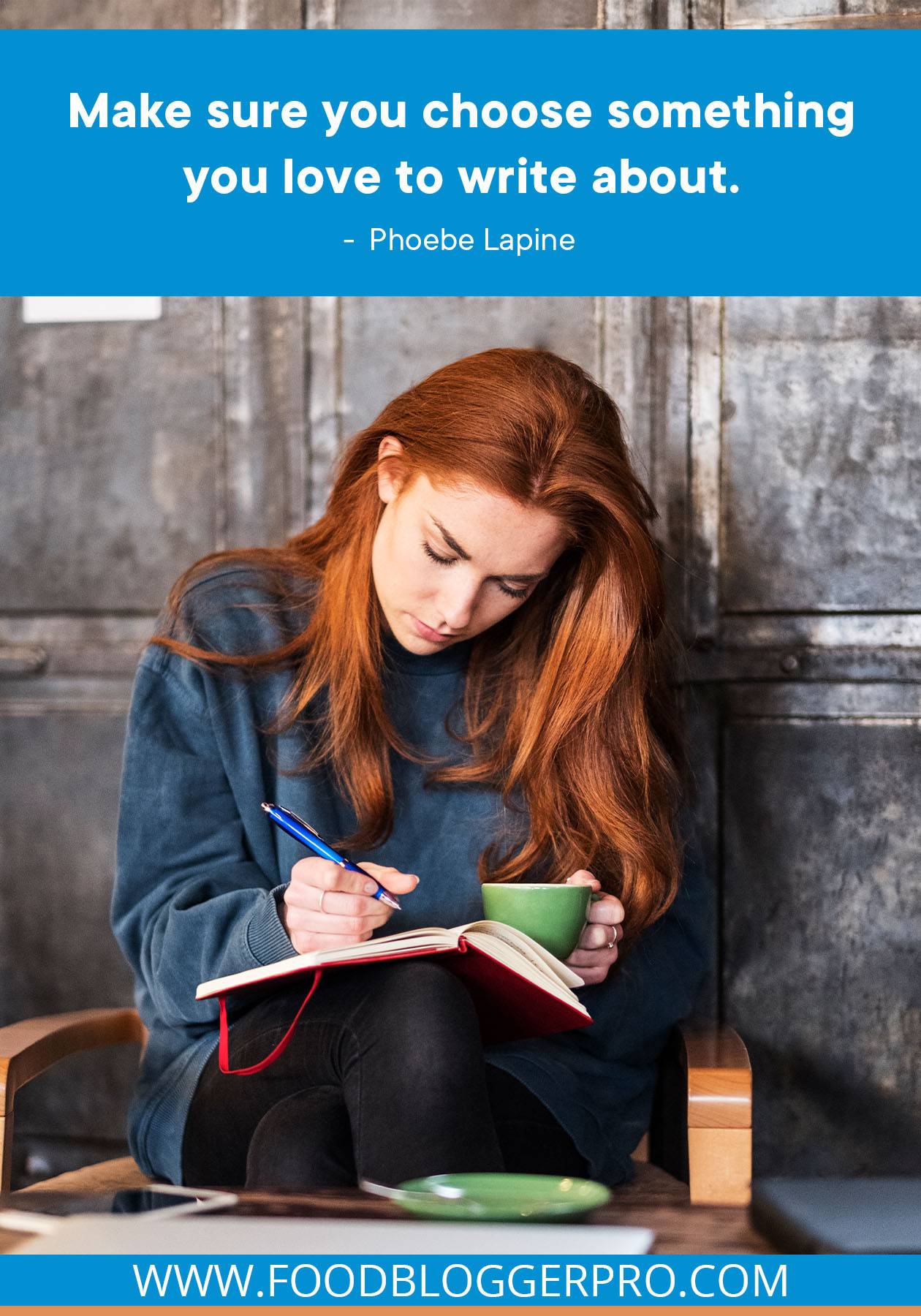
Phoebe Lapine: On. Yeah, make sure you choose something you love to write about. Yeah,
Bjork Ostrom: Because you’re going to be doing a lot of it.
Phoebe Lapine: Yeah.
Bjork Ostrom: Well, thanks for coming on. Appreciate it.
Phoebe Lapine: Thank you so much.
Ann Morrissey: Hey there, Ann from the Food Blogger Pro team again, thank you so much for listening to that episode of the Food Blogger Pro podcast. If you enjoyed the episode, we would so appreciate it if you could share the episode with your community and leave a rating or review wherever you listen to podcasts. We’ll be back next week with another episode where Bjork sits down with Emily Walker from the Food Blogger Pro team to recap the latest news and blogging trends from a blogging newsletter. We’ll see you back here soon, and in the meantime, we hope you have a wonderful week.